
Dialysis Fistula Surgery: Types, Procedure, Cost & Recovery
A complete guide to dialysis fistula surgery (AV fistula) — understand the types, step-by-step surgical process, expected costs in Bangalore, recovery timeline, and expert tips from nephrologists to help you prepare for long-term dialysis access.
What Is Dialysis Fistula Surgery?
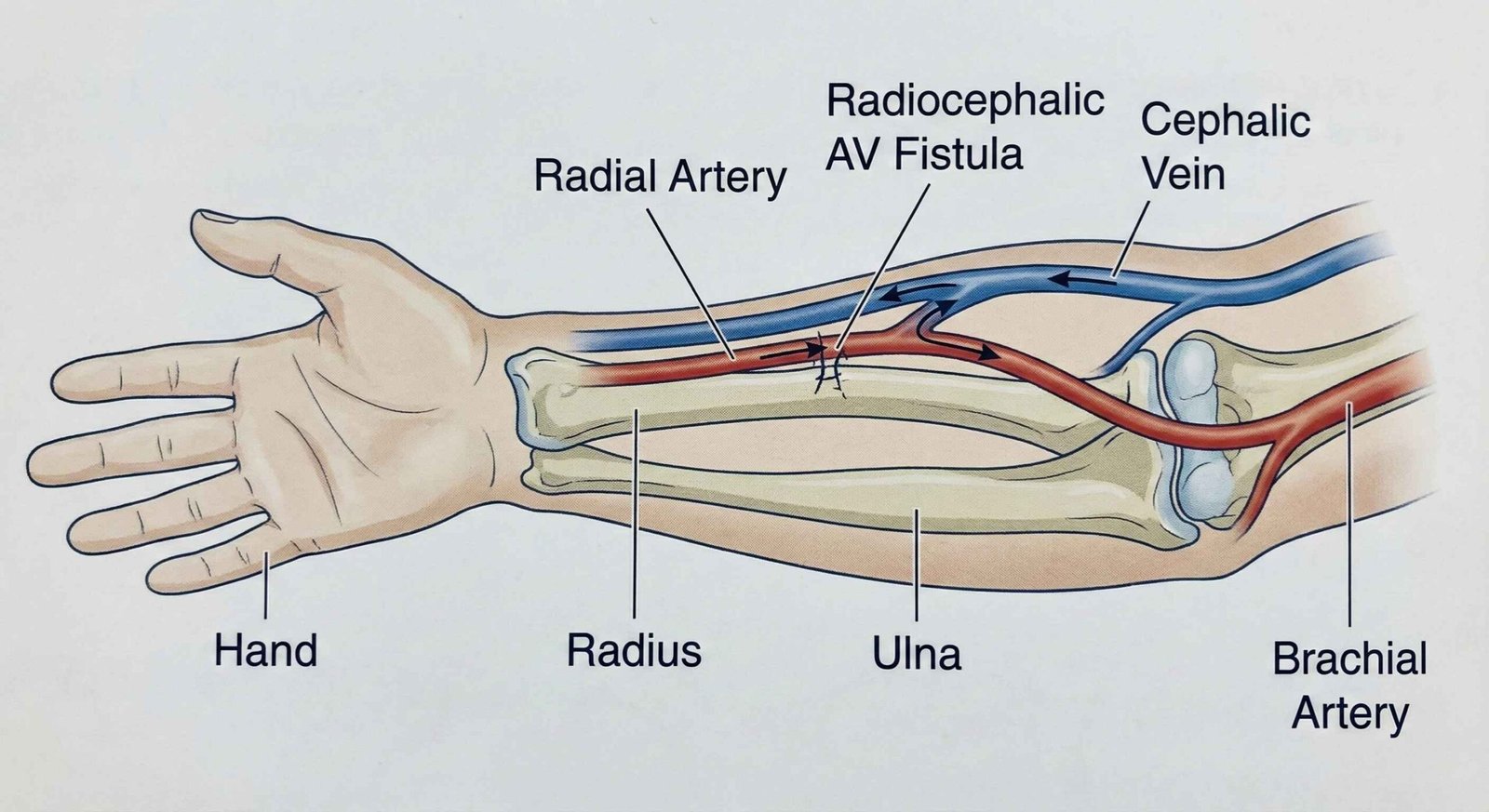
Dialysis fistula surgery — also called arteriovenous (AV) fistula creation — is a surgical procedure where a vascular surgeon connects an artery directly to a vein, typically in the forearm or upper arm. This surgically created connection redirects arterial blood into the vein, causing it to enlarge and develop thicker walls over time.
This enlarged, strengthened vein — called a mature AV fistula — becomes the access point used for hemodialysis. During each dialysis session, two needles are inserted into the fistula: one carries blood out to the dialysis machine for filtering, and the other returns the cleaned blood to the body.
The AV fistula is widely regarded as the "gold standard" for vascular access for hemodialysis because it uses the patient's own blood vessels, resulting in lower infection rates, fewer complications, and longer durability compared to alternatives like AV grafts or dialysis catheters.
An AV fistula is a surgically created connection between an artery and a vein that provides reliable, long-term access for hemodialysis. It is the safest and most durable form of dialysis access available today.
Why Is an AV Fistula Needed for Dialysis?
When kidneys fail — a condition medically known as end-stage renal disease (ESRD) — they can no longer filter waste products, excess fluids, and toxins from the blood. Hemodialysis takes over this function using a dialysis machine, but the machine requires a high-flow access point in the body to draw and return blood efficiently.
Regular veins are too small and fragile to handle the repeated needle insertions and high blood flow rates that dialysis demands. A dialysis fistula solves this problem by creating a reinforced access point that can withstand multiple treatments per week for many years.
Lowest Infection Risk
Uses your own blood vessels rather than synthetic material, significantly reducing infection risk compared to grafts or catheters.
Long-Lasting Access
A well-maintained AV fistula can function for 5 to 10+ years, making it the most durable dialysis access option.
Better Blood Flow
Provides high blood flow rates (600+ ml/min) needed for efficient and effective dialysis sessions.
Fewer Complications
Lower rates of blood clotting (thrombosis), fewer hospital visits for interventions, and better long-term outcomes.
Types of Dialysis Fistula Surgery
The type of AV fistula your surgeon recommends depends on the size, health, and location of your blood vessels. A pre-operative Doppler ultrasound vessel mapping is performed to evaluate the arteries and veins and determine the best site for fistula creation.
1. Radiocephalic Fistula (Wrist Fistula)
This is the most common and preferred type of AV fistula for dialysis. It connects the radial artery to the cephalic vein at the wrist. Surgeons prefer this location because it preserves the upper arm veins for potential future access if needed, and it offers excellent long-term patency rates.
2. Brachiocephalic Fistula (Upper Arm Fistula)
When the wrist veins are too small or have been previously damaged, a brachiocephalic fistula is created in the upper arm. This connects the brachial artery to the cephalic vein near the elbow. It typically matures faster than a wrist fistula due to the larger vein size.
3. Basilic Vein Transposition (BVT)
This is a more complex two-stage procedure used when the cephalic vein is unsuitable. The basilic vein, which runs deep in the upper arm, is surgically repositioned (transposed) closer to the skin surface and connected to the brachial artery. This makes the vein accessible for dialysis needle insertion.
The radiocephalic (wrist) fistula is always the first choice when anatomy allows, as it preserves upper arm options for the future. Your vascular surgeon will determine the best type based on your vessel mapping results.
AV Fistula vs. AV Graft — Key Differences
While the AV fistula is the preferred method for dialysis access, some patients may not have suitable veins. In such cases, an AV graft — which uses a synthetic (PTFE) tube to bridge an artery and a vein — may be recommended. Here is a detailed comparison:
| Feature | AV Fistula | AV Graft |
|---|---|---|
| Material Used | Patient's own artery and vein (autologous) | Synthetic PTFE tube bridges artery to vein |
| Maturation Time | 6–8 weeks (sometimes up to 12 weeks) | 2–3 weeks (usable sooner) |
| Infection Risk | Lowest risk (natural tissue) | Higher risk (foreign material) |
| Thrombosis (Clotting) | Lower clotting rates | Higher clotting rates |
| Lifespan | 5–10+ years with proper care | 2–5 years on average |
| Interventions Needed | Fewer repeat procedures | More frequent interventions |
| Best For | Patients with adequate vein size | Patients with small or damaged veins |
Dialysis Fistula Surgery: Step-by-Step Procedure
Understanding each stage of the AV fistula surgery process can help reduce anxiety and prepare you for a smooth experience. Here is what happens before, during, and after the procedure:
Pre-Surgical Evaluation & Vessel Mapping
Before the surgery, your vascular surgeon will conduct a detailed assessment:
- Doppler ultrasound vessel mapping to evaluate the size and health of your arteries and veins
- Review of your medical history including any prior central venous catheters, pacemakers, or previous surgeries
- Blood pressure measurements and Allen test to check blood flow to the hand
- Discussion of the best fistula site (wrist vs. upper arm) based on your anatomy
Day of Surgery — Anaesthesia & Incision
AV fistula creation is typically an outpatient procedure — most patients go home the same day.
- Anaesthesia: Local anaesthesia (numbing injection) at the surgical site, sometimes with light sedation. General anaesthesia is rarely needed.
- A small incision (3–5 cm) is made at the chosen site — usually the non-dominant arm
- The surgeon identifies and carefully exposes the target artery and vein
Artery-Vein Connection (Anastomosis)
This is the core of the dialysis fistula surgery:
- The surgeon connects the artery directly to the vein using fine sutures (end-to-side or side-to-side anastomosis)
- Blood begins flowing from the high-pressure artery into the low-pressure vein immediately
- The surgeon checks for a "thrill" — a buzzing vibration felt over the fistula indicating successful blood flow
- The incision is closed with stitches and a sterile dressing is applied
Immediate Post-Operative Care
After the procedure (which takes approximately 60–90 minutes), you will be monitored briefly before discharge:
- Arm is elevated to reduce swelling
- You are taught to check for the "thrill" (buzzing sensation) daily
- Pain medication and wound care instructions are provided
- Follow-up appointment is scheduled for 7–10 days post-surgery

Recovery After Dialysis Fistula Surgery & Maturation Period
Recovery from AV fistula surgery is generally straightforward, but the critical phase is the maturation period — the weeks when your fistula develops into a strong, usable access point for dialysis.
Recovery Timeline
| Timeline | What to Expect |
|---|---|
| Day 1–3 | Mild swelling, bruising, and soreness at the incision site. Keep arm elevated and dressing dry. |
| Week 1–2 | Stitches removed. Begin gentle hand exercises as advised. Swelling subsides. |
| Week 3–4 | Vein begins to enlarge. Continue ball-squeeze exercises. "Thrill" should be clearly palpable. |
| Week 6–8 | Fistula matures. Vein reaches ~6 mm diameter with blood flow ≥600 ml/min. Ready for first dialysis use. |
| Week 8–12 | Some fistulas may need additional time. Your doctor monitors maturation with ultrasound if needed. |
Keep it dry — Do not wet the incision area for the first 48 hours. Cover with waterproof dressing when bathing.
Elevate your arm — Rest the fistula arm on pillows above heart level to reduce swelling, especially during the first week.
Check the thrill daily — Place your fingers gently over the fistula. You should feel a continuous buzzing vibration. If it stops, contact your doctor immediately.
Avoid pressure on the fistula arm — No blood pressure cuffs, blood draws, tight sleeves, watches, or heavy lifting on the fistula arm.
Do not sleep on the fistula arm — Avoid compressing the access point during sleep to maintain proper blood flow.
Fistula Maturation Exercises
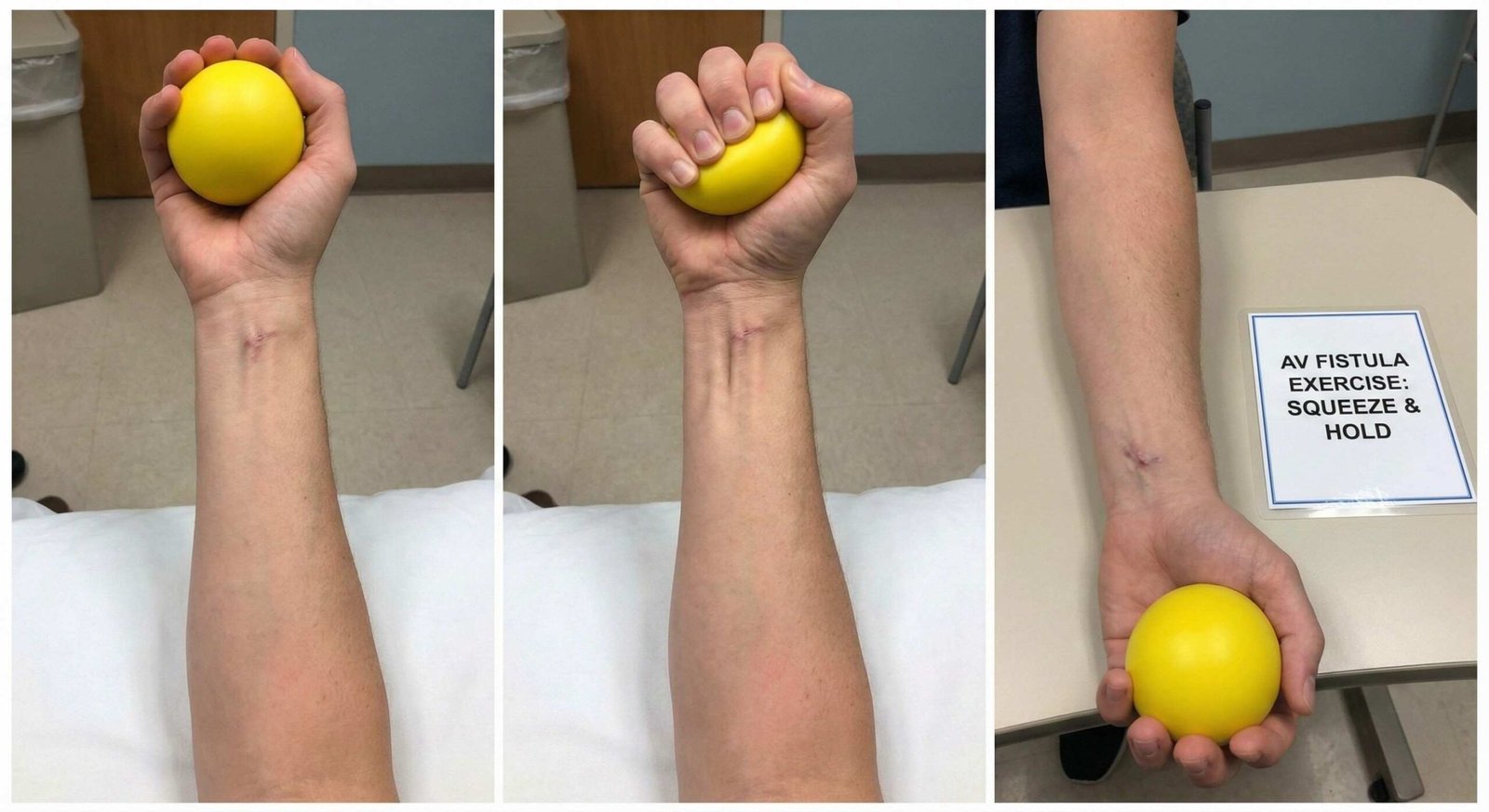
Specific hand and arm exercises help strengthen the fistula vein, promoting faster and better maturation. Begin these only after your surgeon gives approval, typically after stitches are removed.
🏋️ Ball Squeeze Exercise (Most Recommended)
Hold a soft rubber ball or stress ball in the fistula hand. Squeeze firmly for 5 seconds, then release completely. Repeat 10–15 times, 3–4 times per day. This exercise increases blood flow through the fistula and helps the vein grow stronger and larger.
Risks & Potential Complications of AV Fistula Surgery
While dialysis fistula surgery is considered safe with a high success rate, it is important to be aware of potential complications. Early detection and prompt treatment can prevent most issues from becoming serious.
Common Complications
| Complication | Symptoms | What to Do |
|---|---|---|
| Failure to Mature | Fistula does not enlarge adequately after 6–8 weeks | May require balloon angioplasty or creation of a new fistula |
| Thrombosis (Blood Clot) | Loss of thrill/buzzing, pain, or arm swelling | Contact doctor immediately — may need thrombolysis or surgery |
| Infection | Redness, warmth, swelling, pus, or fever at the site | Seek medical attention — antibiotics or drainage may be needed |
| Steal Syndrome | Cold fingers, numbness, pain, or weakness in the hand | Report to surgeon — may need intervention to restore hand blood flow |
| Aneurysm Formation | Visible bulging or enlargement at a specific point | Monitor with your doctor — may need surgical repair if expanding |
| Bleeding | Excessive bleeding from the incision site post-surgery | Apply gentle pressure and seek immediate medical help |
"Dialysis fistula surgery can be done with laser treatment."
Laser treatment is used for anal fistulas, not dialysis AV fistulas. Dialysis fistula surgery requires vascular surgery to connect an artery to a vein — laser technology is not applicable for this procedure.
"You can start dialysis immediately after fistula surgery."
An AV fistula needs 6–8 weeks to mature before it can be used for dialysis. This is why doctors recommend getting the fistula created well in advance of needing dialysis.
"AV fistula surgery is very painful and requires long hospital stays."
It is an outpatient procedure done under local anaesthesia. Most patients go home the same day with only mild discomfort managed by oral pain medication.
Cost of Dialysis Fistula Surgery in Bangalore (2026)
Understanding the fistula treatment cost helps you plan financially and choose the right hospital. The cost of dialysis fistula surgery in Bangalore varies based on hospital type, surgeon experience, and any additional procedures required.
| Hospital Type | Estimated Cost (₹) | Includes |
|---|---|---|
| Government / Subsidised Hospital | ₹15,000 – ₹35,000 | Basic surgery, ward bed, standard supplies |
| Mid-Range Private Hospital | ₹40,000 – ₹60,000 | Experienced surgeon, semi-private room, pre/post-op care |
| Premium Corporate Hospital | ₹70,000 – ₹1,50,000 | Senior vascular surgeon, private room, comprehensive monitoring |
Factors That Influence the Cost
Several factors can affect the total cost of your dialysis fistula surgery: the type of fistula created (wrist vs. upper arm vs. basilic vein transposition), choice of anaesthesia, hospital stay duration if overnight admission is needed, pre-operative tests (Doppler ultrasound, blood work), surgeon's expertise, and whether any additional interventions like balloon angioplasty are required.
Insurance & Government Schemes for Fistula Surgery
Most health insurance policies in India cover AV fistula surgery as a medically necessary procedure. Additionally, several government programmes provide financial assistance for kidney disease patients.
Private Health Insurance
Most cashless and reimbursement policies cover AV fistula creation. Check with your insurer for pre-authorisation requirements.
Ayushman Bharat (AB-ArK)
Arogya Karnataka scheme provides coverage for eligible BPL and APL families in Karnataka for dialysis access procedures.
Jyothi Sanjeevini Scheme
Offers cashless treatment benefits for Karnataka State Government employees and their dependents.
PM National Dialysis Programme
Provides free dialysis services at district hospitals across India under the Pradhan Mantri National Dialysis Programme.
Need Expert Advice on Dialysis Fistula Surgery?
Our experienced team at Arka Anugraha Hospital, JP Nagar, Bangalore is here to guide you through every step — from pre-surgical evaluation to post-operative recovery.