
Comprehensive Guide to Umbilical Hernia Surgery: Options, Costs, and Recovery
If you've noticed a bulge near your belly button, you might be dealing with an umbilical hernia. This guide will help you understand what an umbilical hernia is, the treatment options available, what to expect from surgery, and how to recover. We aim to answer your questions in simple, easy-to-understand language.
Understanding Umbilical Hernias and Differential Diagnoses
An umbilical hernia happens when a part of your intestine or fatty tissue pushes through a weak spot in the muscles of your belly, right near your navel (belly button). This creates a noticeable bulge. Think of it like a tire with a weak spot where the inner tube bulges out. This weakness can be present from birth or develop later in life. Common reasons it might happen in adults include pregnancy, being overweight, or doing activities that put a lot of strain on your belly, like heavy lifting.
Common Confusions and Diagnoses
It is common to confuse an umbilical hernia with other conditions. Click below to understand the differences:
Paraumbilical Hernia vs. Umbilical Hernia
While often used interchangeably, there's a slight difference. An umbilical hernia forms directly at the belly button, right where the umbilical cord once attached. A paraumbilical hernia occurs very close to the belly button, usually just above or below it, but not directly through the navel scar itself. For most patients, this difference doesn't change the treatment much; the surgical approach is usually quite similar.
Omphalocele vs. Umbilical Hernia
An omphalocele is a serious birth defect diagnosed right after birth where a baby's organs are outside the body covered by a thin sac. An umbilical hernia, on the other hand, is covered by skin and can develop at any age, even in adults, and is not usually an emergency at birth.
Evaluating Medical Advice and Conservative Management
If you suspect you have an umbilical hernia, the first and most important step is to see an umbilical hernia doctor. This specialist is typically a general surgeon or a surgeon with a focus on hernia repairs.

A professional medical assessment is crucial to properly diagnose your condition and rule out other issues.
Treatment Without Surgery?
For adults, non-surgical treatment is usually considered only in specific cases. If the hernia is very small and symptom-free, your doctor might suggest "watchful waiting." However, trusses and belts do not fix the hernia and are generally not recommended long-term. Non-surgical options are not safe for hernias that are causing pain or growing.
Risks of Delaying Treatment
While not all hernias need immediate surgery, delaying treatment can lead to serious complications:
- Incarceration: Tissue gets stuck in the hernia opening and cannot be pushed back inside, causing pain and bowel blockage.
- Strangulation: A medical emergency where blood supply to the trapped tissue is cut off, potentially leading to tissue death.
Don't Wait for Complications
Schedule an evaluation with our hernia specialists to determine the safest time for your repair.
Book Your EvaluationSurgical Approaches: Determining the Optimal Procedure
When it comes to which surgery is best for umbilical hernia, there isn't a single answer that fits everyone. The "best" approach depends on the size of your hernia, your overall health, and previous surgeries.
| Feature | Open Hernia Repair | Laparoscopic (Keyhole) Repair |
|---|---|---|
| Procedure | A single incision near the belly button to push tissue back and stitch the wall. | Several small cuts away from the navel using a camera and special tools. |
| Best For | Very large hernias, emergency strangulation, or patients with multiple prior surgeries. | Smaller hernias, patients wanting less scarring, and quicker recovery. |
| Mesh Use | Commonly used to reinforce the wall. | Almost always used, placed from the inside. |
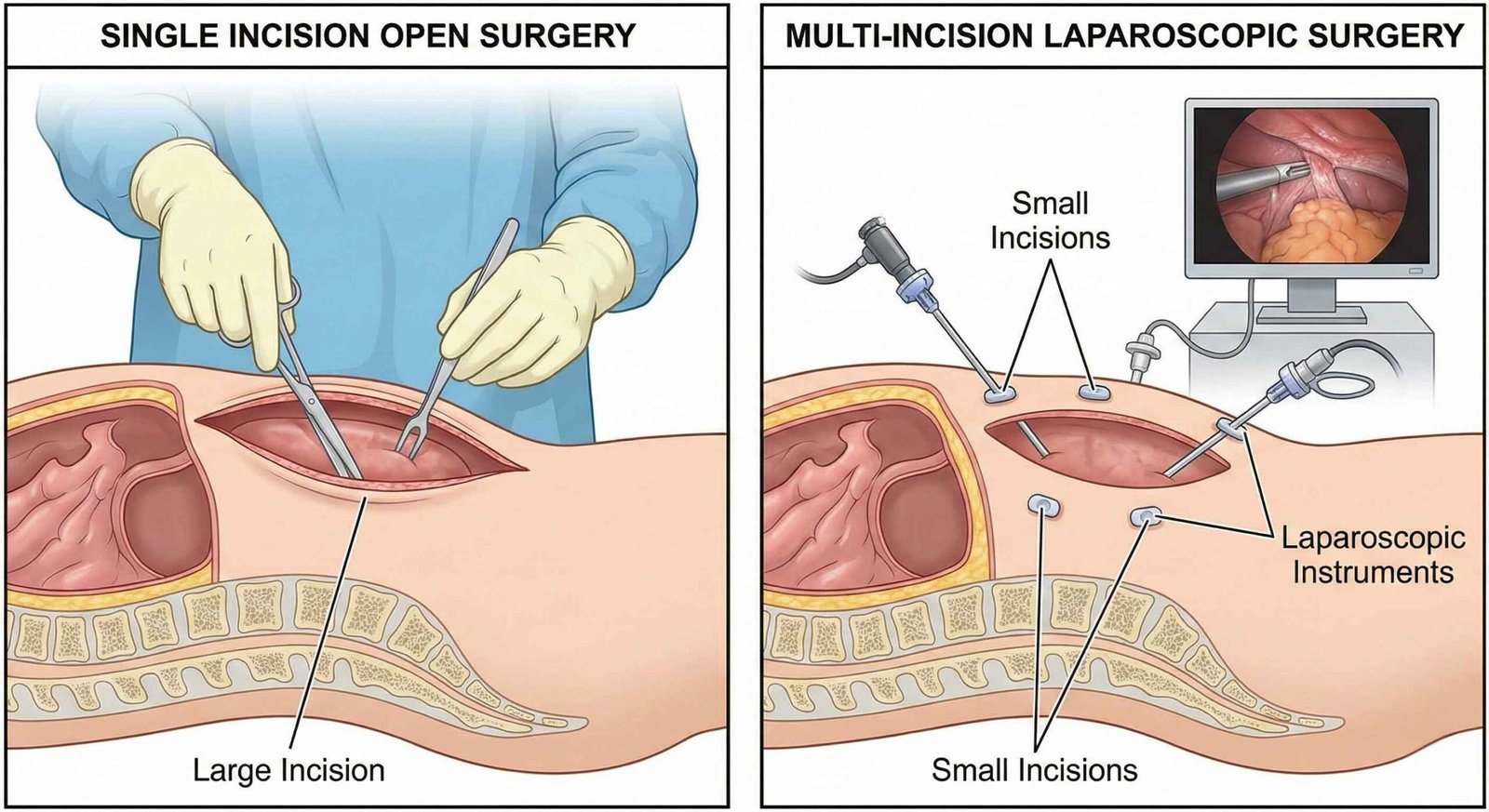
Laparoscopic surgery uses smaller incisions, often resulting in less post-operative pain.
The Role of Mesh
For most adult umbilical hernia repairs, surgical mesh is commonly used. This mesh is a strong, flexible material that acts like a patch, reinforcing the weakened abdominal wall. Its main purpose is to prevent the hernia from returning, significantly lowering the chance of recurrence compared to repairs done with stitches alone.
Financial Considerations and Costs
The total cost of umbilical hernia surgery includes more than just the surgical materials. Most repairs are considered medically necessary and are typically covered by health insurance.
Umbilical Hernia Mesh Price Factors:
The cost of the mesh itself varies based on:
- Material: Synthetic vs. Biological.
- Brand: Different manufacturers have varying price points.
- Size: Larger hernias require larger, more expensive mesh.
Note: The mesh is just one part of the total bill, which also includes surgeon fees, anesthesia, and facility charges.

We offer transparent pricing and can assist you in understanding your insurance coverage.
Self-Pay Options: For patients without insurance, many hospitals offer self-pay packages that provide a discounted, all-inclusive price. Medical financing options are also available to help pay for surgery in installments.
Recovery, Results, and Expectations
After surgery, your recovery timeline will vary depending on the technique used. Laparoscopic surgery typically allows a return to light activities within a few days and normal routines in 1-2 weeks. Open surgery generally requires 2-4 weeks for a full return to normal activity.
Umbilical Hernia Surgery Scars
While results vary, here is what you can generally expect regarding scarring:
- Open Surgery: A single scar near the belly button, a few inches long. It fades over time but remains visible.
- Laparoscopic Surgery: 3-4 very small scars (less than an inch) located away from the belly button. These are much less noticeable.
Preventing Recurrence
To ensure your hernia does not return, your doctor may suggest long-term lifestyle changes:
"Maintain a healthy weight to reduce abdominal strain, avoid heavy lifting without proper technique, and strengthen your core muscles once fully recovered."

Adopting safe lifting habits is essential for protecting your repair long-term.
Ready for a Consultation?
Our experienced team is ready to help you choose the best treatment plan for your specific needs.
Contact Us Today