
Comprehensive Guide to GERD: Understanding the Condition and Finding a Specialist in Bangalore
Do you frequently experience a burning sensation in your chest after meals or notice a sour taste rising into your throat? While occasional heartburn is common, persistent symptoms could indicate Gastroesophageal Reflux Disease (GERD) — a long-term digestive disorder affecting millions worldwide. Understanding this condition is the first step toward effective management and finding the right expert GERD doctor in Bangalore for lasting relief.
Understanding Gastroesophageal Reflux Disease (GERD)
What Is GERD?
GERD occurs when stomach acid repeatedly flows back into the esophagus due to a weakened lower esophageal sphincter (LES). This backflow irritates and damages the esophageal lining, leading to characteristic symptoms such as:
- Frequent heartburn (more than twice a week)
- Acid regurgitation
- Difficulty swallowing
- Chronic cough or hoarseness
- Chest pain unrelated to heart conditions
The key distinction between occasional acid reflux and GERD is frequency, severity, and impact on daily life.
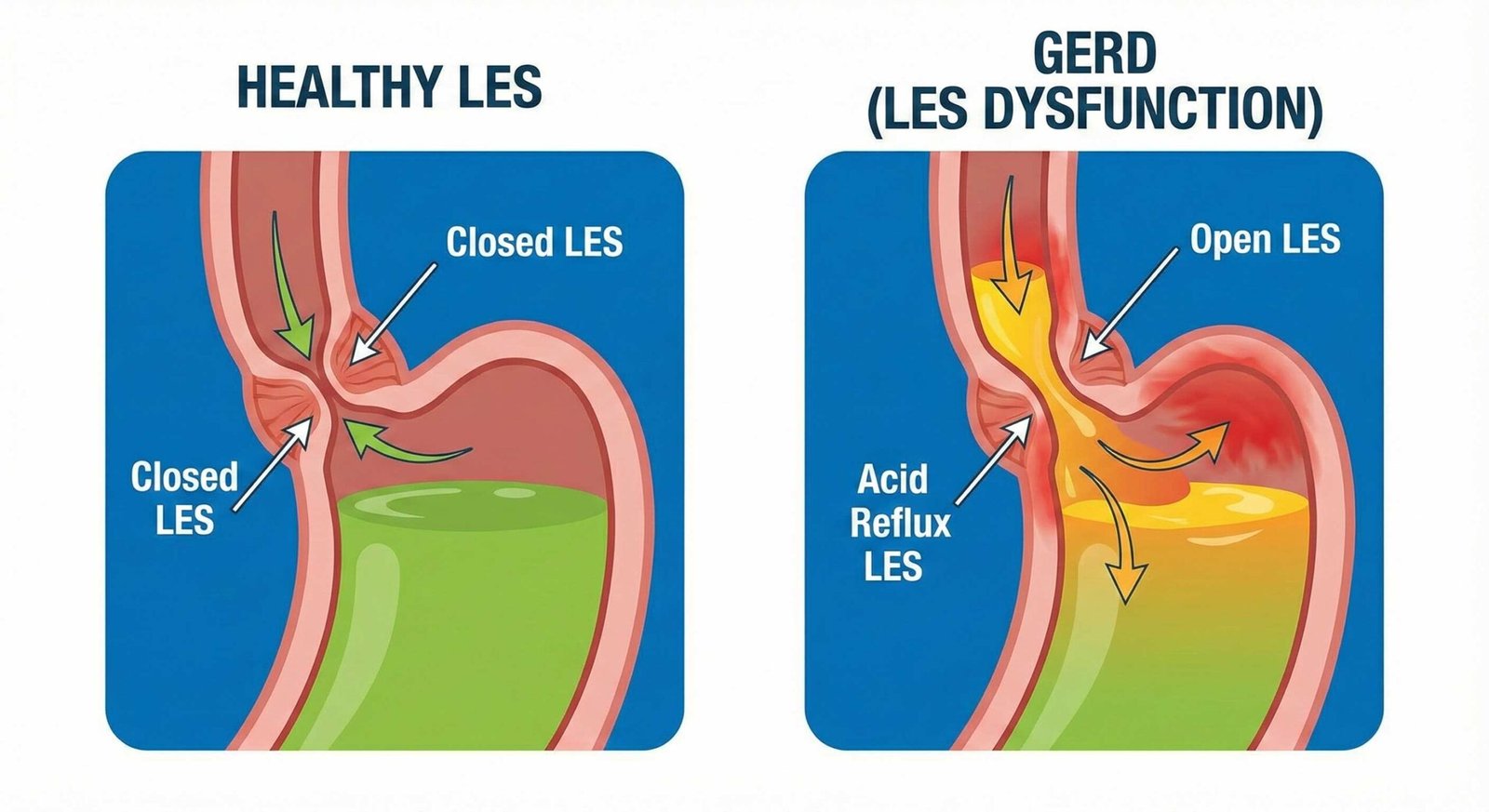
Visualizing the difference: A healthy, closed LES prevents backflow, while a dysfunctional, open LES allows stomach acid to irritate the esophagus.
The Progression: From Acid Reflux to GERD
Occasional reflux after a heavy or spicy meal is normal. GERD, however, is a chronic, recurrent problem caused by persistent LES dysfunction. Understanding the root causes of acid reflux helps prevent progression to long-term GERD and associated complications.
Why Early Detection Matters
Untreated GERD can lead to serious complications:
- Esophagitis: Inflammation and damage to the esophageal lining.
- Esophageal strictures: Narrowing of the esophagus causing difficulty swallowing.
- Barrett’s Esophagus: A precancerous change in the esophageal cells.
- Esophageal cancer: A rare but serious outcome of chronic inflammation.
Over-the-counter medication may temporarily mask symptoms, but only an expert GERD doctor can accurately diagnose and treat GERD to avoid long-term complications.
Distinguishing GERD from Other Digestive Conditions
GERD vs. Peptic Ulcer
Understanding the difference between GERD and peptic ulcer is crucial for proper treatment.
GERD Symptoms:
- Burning sensation in the chest (heartburn)
- Worse when lying down or bending over
- Regurgitation of sour fluid or food
Peptic Ulcer Symptoms:
- Gnawing pain in the upper abdomen
- Worse on an empty stomach
- Sometimes relieved by eating (especially duodenal ulcers)
- May cause bloating, nausea, or vomiting
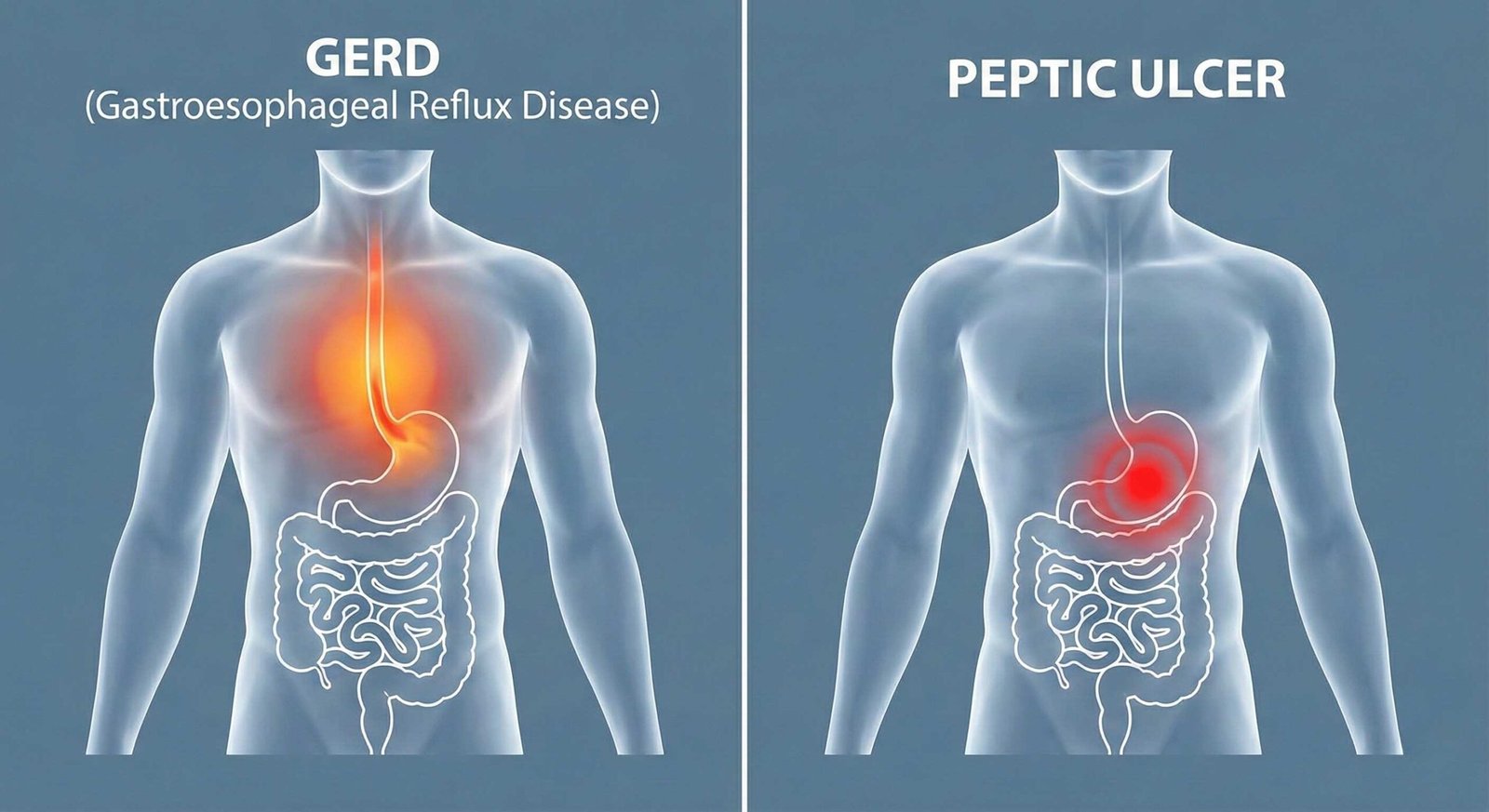
Symptom location is a key differentiator: GERD pain is typically centered in the chest/esophagus, while ulcer pain is often in the upper abdomen.
Gastritis vs. GERD
Gastritis affects the stomach lining, often due to H. pylori infection, alcohol use, or certain medications. Its primary symptoms include abdominal pain, nausea, vomiting, and a quick sense of fullness. GERD, in contrast, affects the esophagus, leading primarily to heartburn and regurgitation. While symptoms may overlap, they originate from different digestive organs.
Reflux Esophagitis vs. GERD
GERD is the chronic condition itself. Reflux esophagitis is a complication of GERD, where repeated acid exposure damages the esophageal tissue, leading to inflammation.
Unsure About Your Symptoms?
Get an accurate diagnosis from an expert GERD doctor to prevent future complications.
Schedule Your ConsultationSymptoms and Diagnostic Evaluation
Common and Atypical GERD Symptoms
Common Symptoms:
- Heartburn
- Regurgitation
- Dysphagia (difficulty swallowing)
Atypical Symptoms:
- Chronic cough
- Hoarseness
- Worsening asthma
- Sleep disturbances
- Dental erosion
- Non-cardiac chest pain
How Specialists Diagnose GERD
An expert GERD doctor may use several diagnostic tests to confirm GERD, evaluate its severity, and identify any complications:
- Upper Endoscopy (EGD): A visual examination of the esophagus and stomach using a thin, flexible tube with a camera.
- Esophageal pH Monitoring: Tests to measure the amount of acid in the esophagus over a period of time.
- Esophageal Manometry: Measures the rhythmic muscle contractions of the esophagus when you swallow.
When to Visit a Hospital Immediately
Seek urgent medical care if you experience any of the following:
- Severe or radiating chest pain
- Sudden difficulty swallowing
- Vomiting blood or material that looks like coffee grounds
- Black, tarry, or bloody stools
- Unexplained, significant weight loss
- Persistent or severe vomiting
Treatment Pathways and Management
Lifestyle & Dietary Modifications
Patients often find significant improvement in symptoms by making lifestyle changes:
- Maintaining a healthy weight
- Elevating the head of the bed while sleeping
- Avoiding trigger foods (e.g., fatty or spicy foods, chocolate, caffeine, citrus fruits)
- Eating smaller, more frequent meals
- Avoiding lying down for at least 2-3 hours after meals
- Quitting smoking
- Wearing loose-fitting clothing to reduce abdominal pressure
Medical & Surgical Treatment Options
Medications:
- Antacids: Provide short-term relief by neutralizing stomach acid.
- H2 blockers: Reduce acid production for longer-lasting relief.
- Proton Pump Inhibitors (PPIs): Such as omeprazole, are highly effective for healing the esophagus and providing long-term symptom relief.
Surgical Options:
For severe or medication-resistant GERD, surgical procedures may be considered. The Nissen fundoplication is the most common surgery to strengthen the LES. You can discuss advanced GERD treatment options with your specialist to see if surgery is right for you.
Long-Term Management
GERD is typically a chronic condition requiring ongoing care. Long-term management includes periodic follow-up appointments, adjustment of therapy as needed, and monitoring for potential complications like Barrett’s Esophagus.
Finding the Best GERD Care in Bangalore
Why You Need an Expert GERD Doctor
A gastroenterologist with specific expertise in GERD can ensure comprehensive and effective care by accurately diagnosing the condition, performing necessary advanced diagnostic tests, providing tailored medical or surgical treatments, and managing long-term monitoring.
Choosing a GERD Specialist Near Me in Bangalore
When searching for a "GERD doctor near me in Bangalore" or "GERD specialist near me in Bangalore," consider factors such as:
- Experience specifically with treating GERD cases
- Hospital affiliation and access to advanced technology
- Patient reviews and testimonials
- Your comfort level with their communication style

A specialist consultation is key to understanding your condition and developing a personalized treatment plan.
Advanced Gastroenterology Care at Arka Hospital
Arka Hospital’s Gastroenterology Department offers world-class care for digestive disorders. Our services include:
- Expert GERD doctor specialists with extensive experience
- State-of-the-art diagnostic facilities for accurate evaluation
- Personalized GERD treatment plans and lifestyle guidance
- A compassionate, patient-first approach to care
If you're seeking advanced care, the Gastroenterology department at Arka Hospital provides comprehensive support for GERD diagnosis, treatment, and long-term management.

Arka Hospital provides state-of-the-art facilities for comprehensive GERD care in Bangalore.
Take the Next Step Toward Relief
Don't let GERD control your life. Book a consultation with an expert gastroenterologist at Arka Hospital today.
📞 Book Your Appointment NowFrequently Asked Questions (FAQ)
Can GERD be cured permanently?
GERD can be effectively managed, and for some patients, surgery like Nissen fundoplication offers long-term or near-permanent relief from symptoms. However, most patients benefit from lifelong lifestyle adjustments and occasional medication to keep symptoms under control.
What happens if GERD is left untreated?
Chronic untreated GERD can lead to serious complications over time, including esophagitis (inflammation of the esophagus), esophageal strictures (narrowing), Barrett’s Esophagus (precancerous changes), or in rare cases, esophageal cancer. Early diagnosis and consistent treatment are essential to prevent these outcomes.
How do I book an appointment with a GERD doctor in Bangalore at Arka Hospital?
To meet a GERD doctor near me in Bangalore at Arka Hospital, you have several convenient options:
- Call our appointment line directly at: +91 901 970 4252
- Visit our website to book online: https://arkaanugrahahospital.com/contact/
- Walk into the hospital reception during operating hours for assistance.