
PCOS Diet & Lifestyle Guide: Weight Loss, Food List, Exercise & Daily Routine
Living with PCOS can feel overwhelming, especially when you're struggling with weight gain, irregular periods, acne, or hair fall. The good news? Research shows that lifestyle modifications—particularly diet and exercise—can be as powerful as medication in managing PCOS symptoms.
At Arka Anugraha Hospital in JP Nagar, Bangalore, we've helped hundreds of women transform their PCOS management through evidence-based lifestyle interventions.
Why Diet Matters So Much in PCOS Management
Unlike many medical conditions where diet plays a supporting role, with PCOS, nutrition is primary treatment.
1. The Insulin Resistance Connection
Approximately 70% of women with PCOS have insulin resistance. High insulin triggers ovaries to produce excess male hormones (androgens), leading to symptoms like irregular periods and weight gain. A PCOS diet improves insulin sensitivity significantly.
2. Inflammation and Hormonal Balance
PCOS involves chronic low-grade inflammation. Anti-inflammatory foods can reduce inflammatory markers by up to 40%, supporting balanced hormone production and improving egg quality.
3. Weight Management and Symptom Reversal
Losing just 5-10% of body weight can restore regular menstrual cycles in 50% of women and improve fertility naturally.
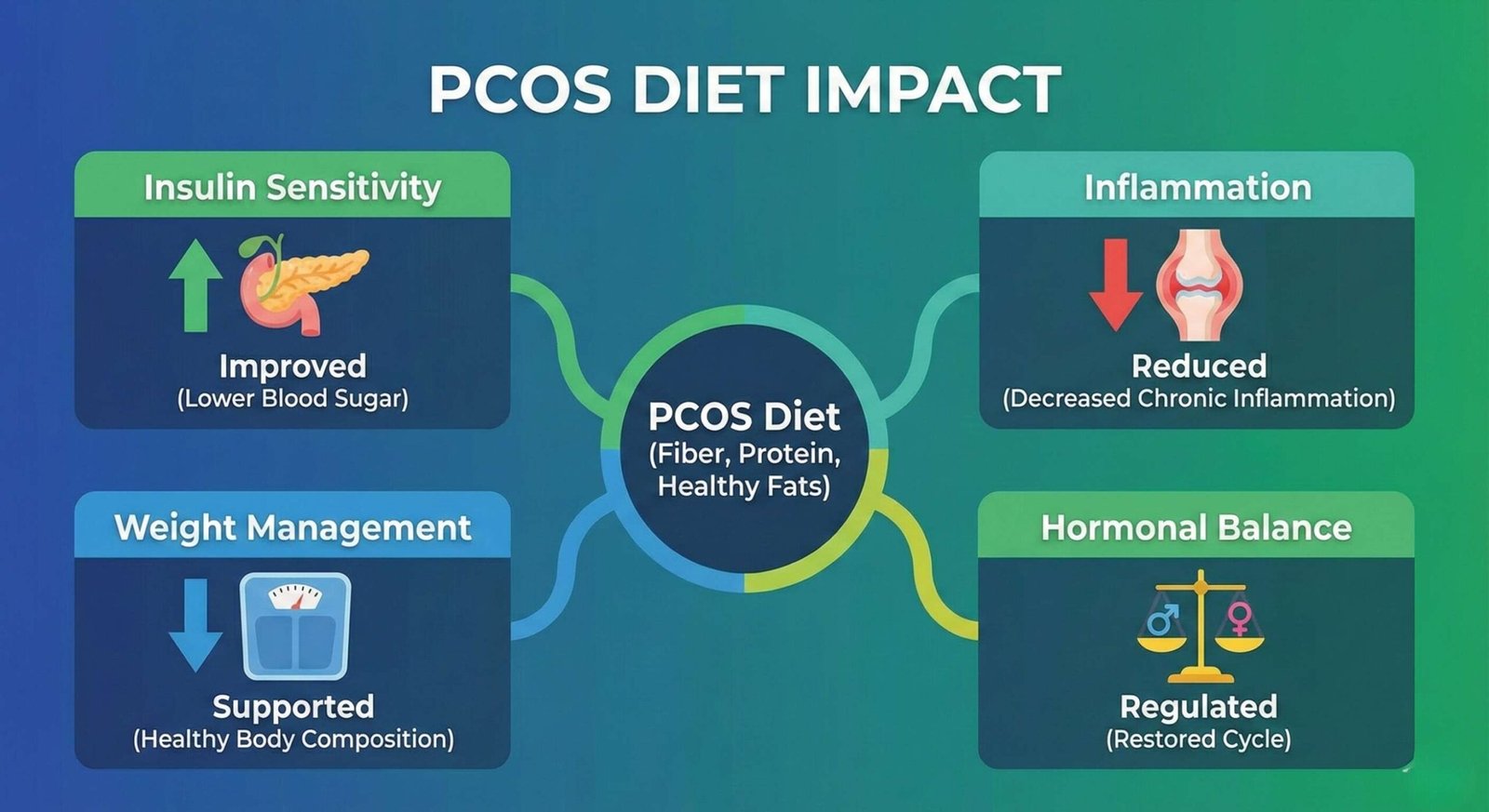
A targeted diet addresses the root causes of PCOS: Insulin Resistance and Inflammation
Best Foods for PCOS: Your Complete Food List
Building your PCOS diet around these foods provides the nutrients, fiber, and balanced macronutrients your body needs.
1. Low Glycemic Index Whole Grains
Why: Release glucose slowly, preventing insulin spikes.
Choices: Oats, Quinoa, Brown rice, Buckwheat, Millets (Ragi, Bajra).
2. High-Quality Protein Sources
Why: Stabilize blood sugar and increase satiety.
Choices: Chicken breast, Eggs, Fish (fatty fish like Salmon), Lentils (Dal), Chickpeas, Tofu.
3. Non-Starchy Vegetables (Unlimited!)
Why: High fiber, anti-inflammatory.
Choices: Spinach, Broccoli, Bell peppers, Tomatoes, Cucumber, Green beans.
4. Healthy Fats
Why: Essential for hormone production.
Choices: Fatty fish, Walnuts, Flaxseeds, Chia seeds, Olive oil, Avocado.
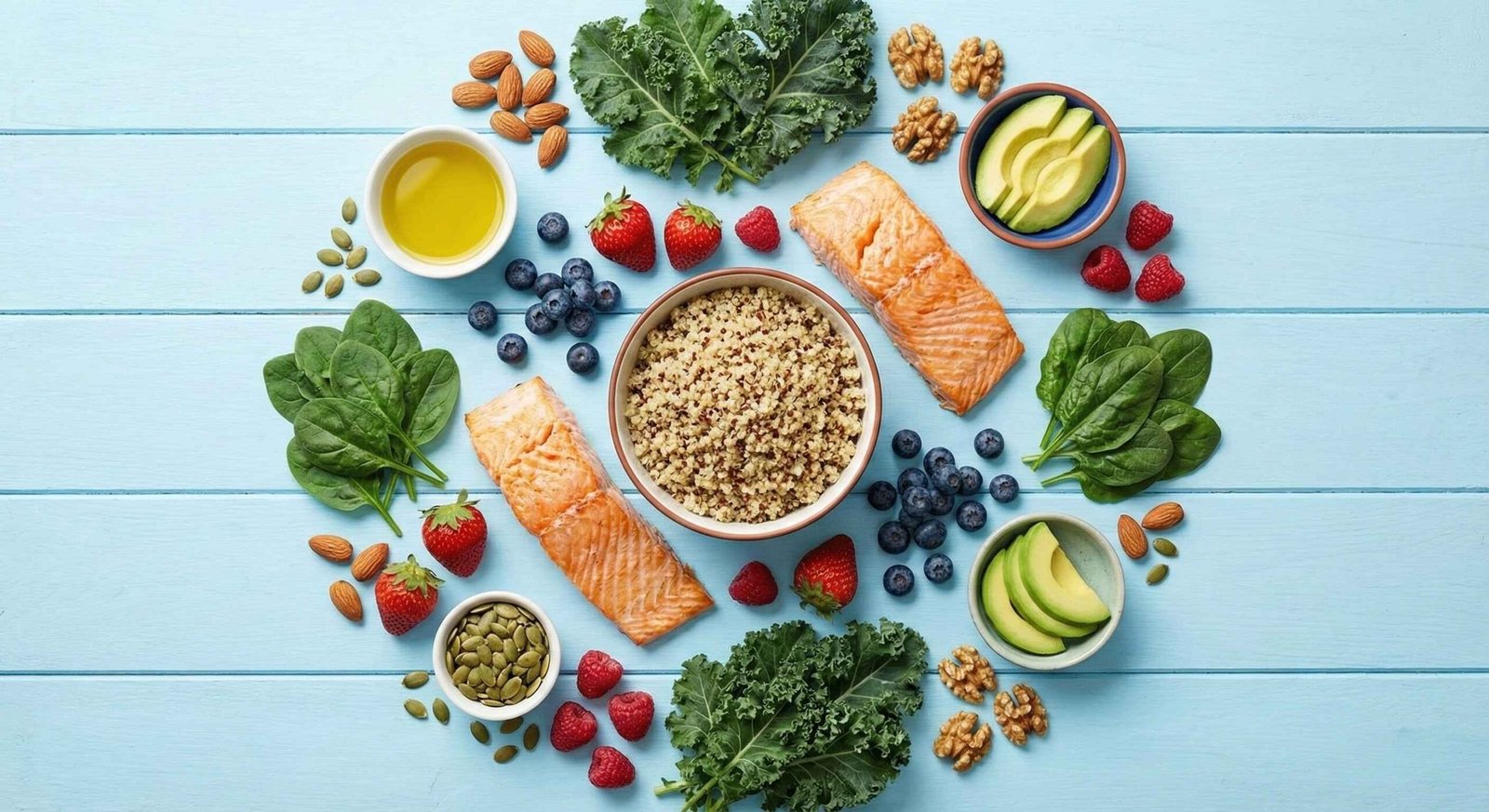
A colorful plate is key: Focus on whole, unprocessed foods rich in fiber and healthy fats
Foods to Avoid with PCOS
Minimize or eliminate these foods to reduce inflammation and insulin resistance.
| Category | Foods to Avoid | Better Alternatives |
|---|---|---|
| Refined Carbs | White bread, white rice, pasta, pastries. | Whole grains, brown rice, almond flour treats. |
| Sugary Foods | Soda, candy, sweetened yogurt, juice. | Fresh fruit, dark chocolate (70%+). |
| Processed Foods | Chips, processed meats (sausages), fast food. | Homemade meals, nuts, roasted chickpeas. |
| Inflammatory Oils | Soybean oil, corn oil, trans fats. | Olive oil, ghee, coconut oil. |
A Note on Dairy and Gluten
Some women with PCOS are sensitive to dairy or gluten, which can worsen inflammation. Try eliminating them for 4-6 weeks to see if symptoms improve. If tolerated, choose full-fat, organic dairy.
PCOS Weight Loss Plan: Evidence-Based Strategies
Weight loss with PCOS requires a different approach due to insulin resistance. Focus on moderate carbs, high protein, and healthy fats.
Sample PCOS Weight Loss Meal Plan (1600 Calories)
- Early Morning: Warm water with lemon + 5-6 soaked almonds.
- Breakfast: 2 Eggs (scrambled with veggies) + 1 small bowl oats porridge.
- Mid-Morning: 1 small Apple + 10-12 raw almonds.
- Lunch: 1 cup Brown Rice/2 small Rotis + 1 cup Dal + Veggie Curry + Salad.
- Evening Snack: Roasted Chickpeas OR Greek Yogurt + Green Tea.
- Dinner: Grilled Chicken/Fish OR Paneer/Tofu + Sautéed Vegetables + Salad.
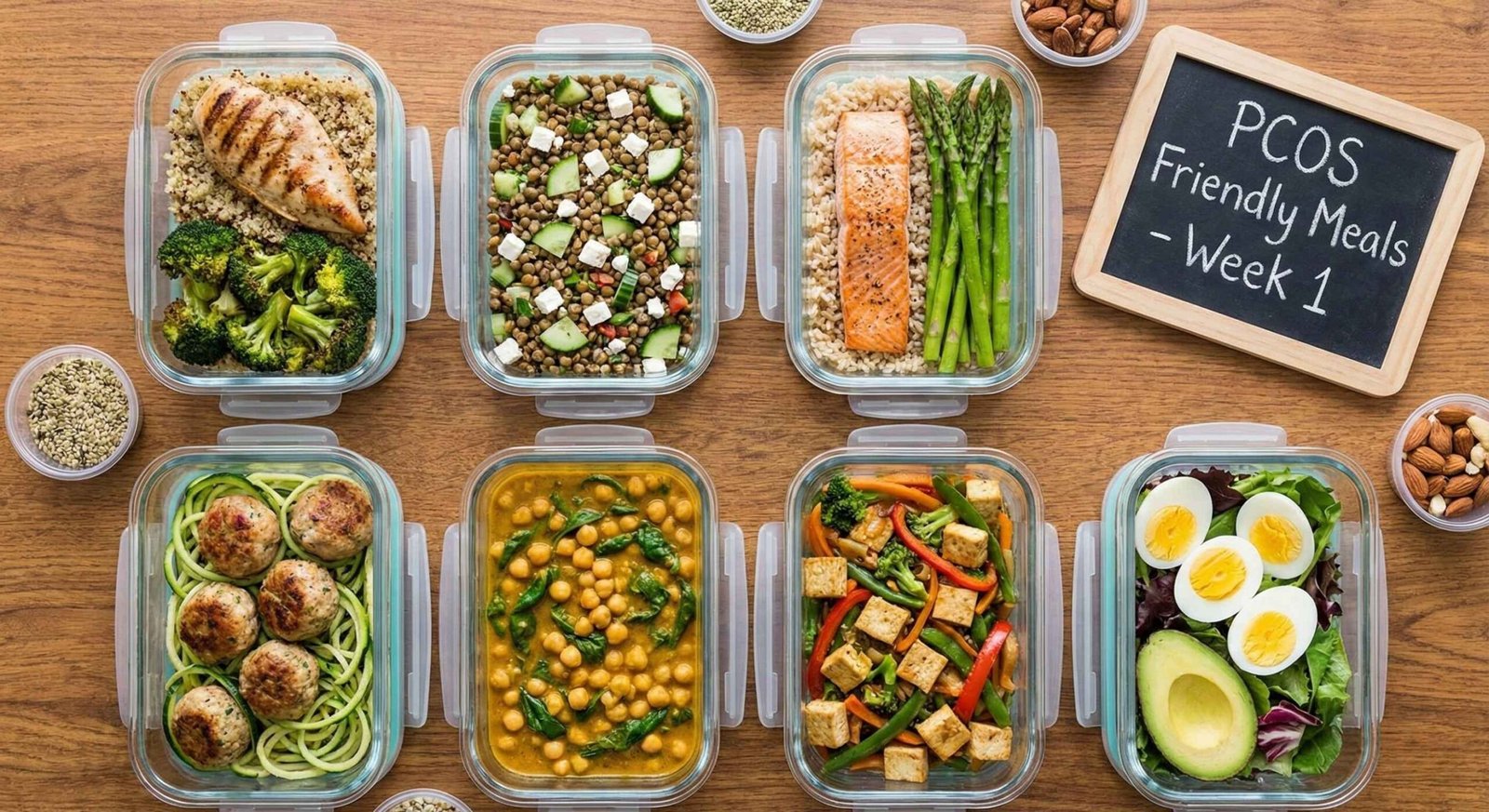
Meal prepping ensures you stick to your balanced diet throughout the busy week
Exercise for PCOS: The Right Workout Routine
Exercise improves insulin sensitivity and reduces androgens. The best routine combines strength training and moderate cardio.
1. Strength Training (Resistance Exercise)
Why: Builds muscle, which burns glucose efficiently. Best for insulin resistance.
Routine: 3-4 days/week, 30-45 mins. Squats, lunges, push-ups, weights.
2. Moderate-Intensity Cardio
Why: Burns calories without spiking cortisol (stress hormone).
Routine: 4-5 days/week. Brisk walking, swimming, cycling.
3. Yoga for Stress Management
Why: Reduces cortisol, which can drive PCOS symptoms.
Poses: Butterfly pose, Cobra pose, Bridge pose.
4. HIIT (Use with Caution)
Warning: Excessive HIIT can spike cortisol and worsen symptoms. Limit to 1-2 sessions per week max, with plenty of recovery.
Exercise Red Flags with PCOS
Reduce intensity if you experience:
- Extreme fatigue after workouts (instead of energy).
- Irregular periods returning or worsening.
- Sleep disturbances.
- Increased sugar cravings.
Ready to Take Control?
Lifestyle changes are powerful, but personalized guidance ensures success. Let our experts create a plan tailored to you.
Address: 6th phase, 2, 15th Cross Rd, 6th Phase, KR Layout, JP Nagar Phase 6, J. P. Nagar, Bengaluru, Karnataka 560078
Schedule Lifestyle Consultation: +91 9019704252