
Understanding Hernia Mesh: Prices, Best Brands & Surgical Options
Experiencing a hernia can be concerning, and finding the right treatment is crucial for your health and peace of mind. For many patients, hernia repair involves the use of surgical mesh—a medical device designed to strengthen weakened tissue and reduce the risk of hernia recurrence.
This comprehensive guide provides clear, evidence-based information to help you understand the role of mesh in hernia repair, factors influencing the hernia kit price, and how surgeons select the best options for your unique needs.
Schedule Your Hernia Consultation Today
Our expert surgical team is ready to evaluate your condition and recommend the best treatment plan tailored to your needs.
Book Appointment NowWhat is Hernia Mesh and Why is it Used?
A hernia develops when an internal organ or fatty tissue protrudes through a weakened area in the surrounding muscle or connective tissue. Hernia repair surgery is designed to reposition the bulging tissue and reinforce the weakened abdominal wall.
The Role of Mesh in Hernia Repair
Hernia mesh, sometimes called a "hernia net," is a specialized medical device that provides a durable scaffold for tissue regeneration. This reinforcement material strengthens the compromised abdominal wall, functioning similarly to patching a damaged structure with strong, flexible reinforcement.
Clinical benefits of using mesh include:
- Significantly Reduced Recurrence Rates: Studies show mesh repair lowers recurrence risk from 20-30% to less than 5%.
- Enhanced Structural Strength: Provides long-term support to the repaired area.
- Accelerated Recovery: Mesh distributes tension evenly, reducing strain on surrounding tissues.
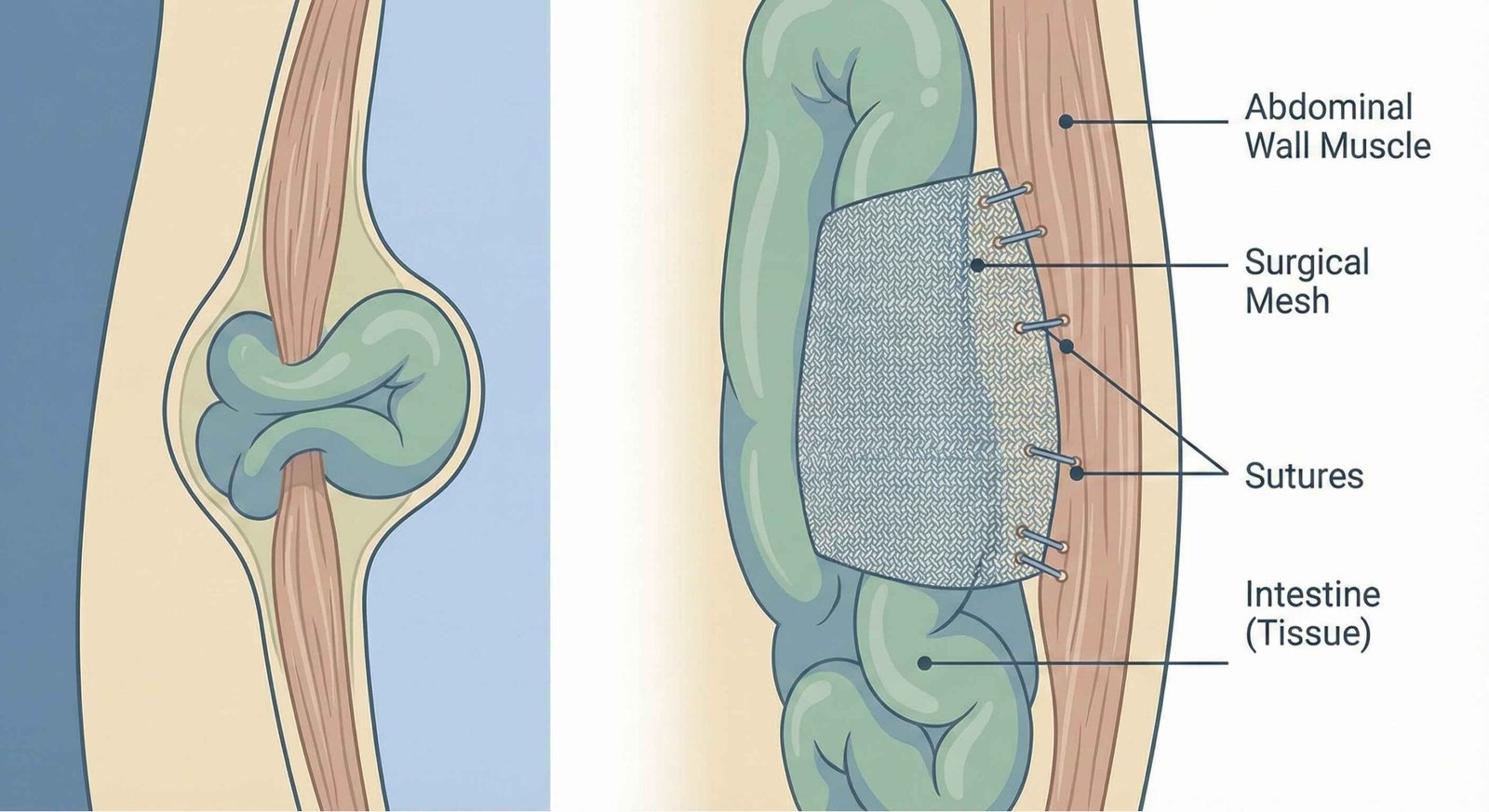
Mesh reinforcement provides a durable scaffold, significantly lowering the chance of hernia recurrence
Different Materials: Synthetic vs. Biologic Mesh Options
The composition of hernia mesh influences its performance and the hernia mesh price.
- Synthetic Mesh: Made from biocompatible polymers (polypropylene or polyester). Most common option, engineered for permanent integration and lasting support.
- Biologic Mesh: Derived from processed animal or human tissue. Gradually absorbed by the body while promoting new tissue growth. Typically reserved for complex or infected cases.
The "Hernia Kit" Concept Explained
A "hernia kit" is a pre-sterilized package containing the mesh implant, fixation devices (tacks, sutures, or adhesives), and procedure-specific instruments. This ensures surgeons have all compatible components ready for a safe procedure.
Questions About Your Hernia Treatment?
Our experienced surgical team can explain all aspects of mesh repair and help you understand what to expect.
Request ConsultationHernia Mesh Price and Cost Factors
Understanding the financial aspects is a priority. The hernia mesh price is just one component of the total surgical cost.
Breakdown of Hernia Mesh Price and Net Costs
The product cost typically ranges from ₹15,000 to ₹1,50,000 ($200 to $2,000 USD), depending on material, size, and brand. However, total surgical costs also include:
- Surgeon's professional fees
- Anesthesiologist fees and medications
- Operating room facility charges
- Pre-operative diagnostic tests
- Post-operative care

It is important to consider the full surgical package, not just the cost of the mesh device itself
What Affects the Hernia Kit Price?
- Brand Reputation: Established manufacturers invest heavily in R&D and quality control.
- Size and Design: Larger or anatomically contoured meshes cost more to manufacture.
- Advanced Features: Specialized coatings (to prevent adhesions) or antimicrobial properties increase the price.
- Regulatory Approval: Products with extensive clinical data and FDA clearance may command higher prices.
Get Transparent Pricing Information
Contact our billing specialists for detailed cost estimates and information about insurance coverage or flexible payment options.
Get Cost EstimateSelecting the Best Hernia Mesh Brand
The "best" brand is the one most clinically appropriate for your specific anatomy and hernia type. Leading FDA-approved manufacturers include:
- BD (Bard): Known for comprehensive hernia repair solutions.
- Ethicon (Johnson & Johnson): Offers an extensive portfolio for various repair techniques.
- Medtronic (Covidien): Provides diverse mesh solutions for different anatomical locations.

High-quality, FDA-approved mesh products ensure safety and optimal surgical outcomes
Safety Considerations
Modern mesh technology has evolved significantly. Current products undergo rigorous testing and regulatory approval. While complications can occur, advancements in materials and surgical techniques work together to minimize risks. Our team prioritizes patient safety by using only proven, FDA-approved products.
Meet Our Expert Surgical Team
Schedule a consultation to discuss mesh options, safety considerations, and which approach is right for your hernia repair.
Meet Our SurgeonsSurgical Approaches: Mesh Placement and Techniques
The surgical approach influences recovery and outcomes. For inguinal hernias, the choice is typically between Open and Laparoscopic repair.
Open Mesh vs Laparoscopic Mesh Repair of Inguinal Hernia
| Feature | Open Repair | Laparoscopic Repair |
|---|---|---|
| Incision | Single longer incision (7-12 cm) in groin. | Three or four small "keyhole" incisions (0.5-1 cm). |
| Anesthesia | Local with sedation, regional, or general. | Typically general anesthesia. |
| Mesh Placement | Usually anterior (on top/between muscle layers). | Posterior (behind abdominal wall defect). |
| Recovery | 2-4 weeks for normal activities. | 1-2 weeks; faster return to comfort. |
| Complexity | Straightforward for primary hernias. | Requires specialized laparoscopic skills. |
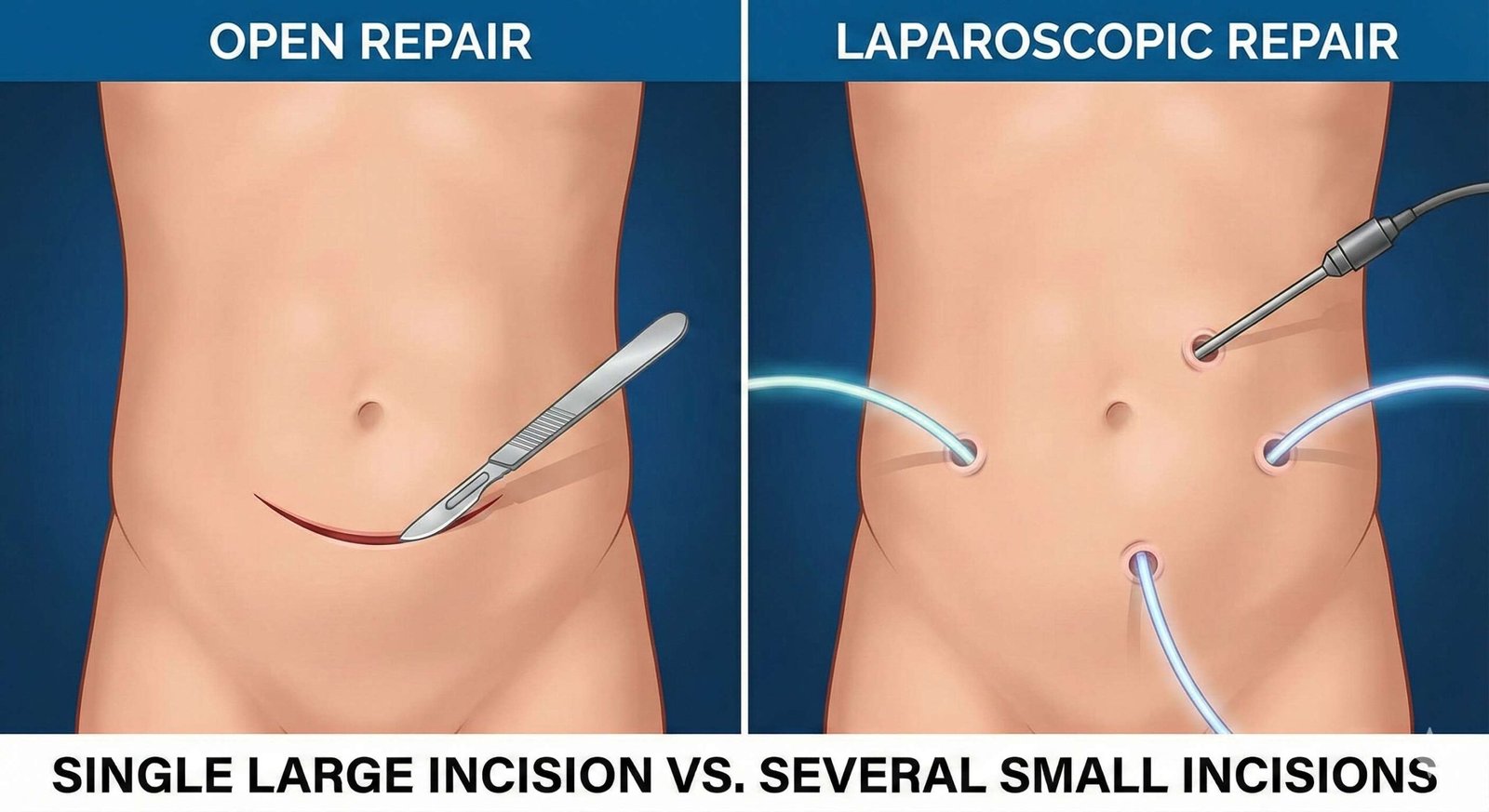
Laparoscopic repair minimizes external scarring and often leads to a quicker recovery
Mesh Usage in Other Hernias
Umbilical Hernia: Mesh reinforcement reduces recurrence for hernias larger than 2 cm near the belly button.
Hiatal Hernia: Mesh can reinforce the diaphragm opening to prevent the stomach from pushing into the chest.