
Hiatal Hernia Surgery: Expert Treatment & Repair Options
Experiencing persistent heartburn, chest discomfort, or difficulty swallowing? These could be signs of a hiatal hernia—a condition where a portion of your stomach pushes upward through an opening in your diaphragm. While lifestyle changes and medication help many people manage symptoms, some eventually require surgical treatment. This comprehensive guide explains hiatal hernias, surgical options, and how choosing the right hiatal hernia doctor specialist can ensure the best outcome for your health.
Understanding Hiatal Hernias and When Surgery Is Necessary
A hiatal hernia occurs when the upper part of your stomach bulges into your chest through the diaphragm’s opening (hiatus). Normally, the esophagus passes through this opening—but in a hernia, part of the stomach also pushes upward.
Types of Hiatal Hernia
Understanding the hernia type is essential to determine the best treatment:
| Type | Description | Severity |
|---|---|---|
| Type I (Sliding) | The junction where the esophagus meets the stomach slides up into the chest. Symptoms are often related to GERD. | Most Common |
| Type II–IV (Paraesophageal) | The stomach stays in place, but another portion squeezes up next to the esophagus. Can lead to strangulation. | Less Common / More Serious |
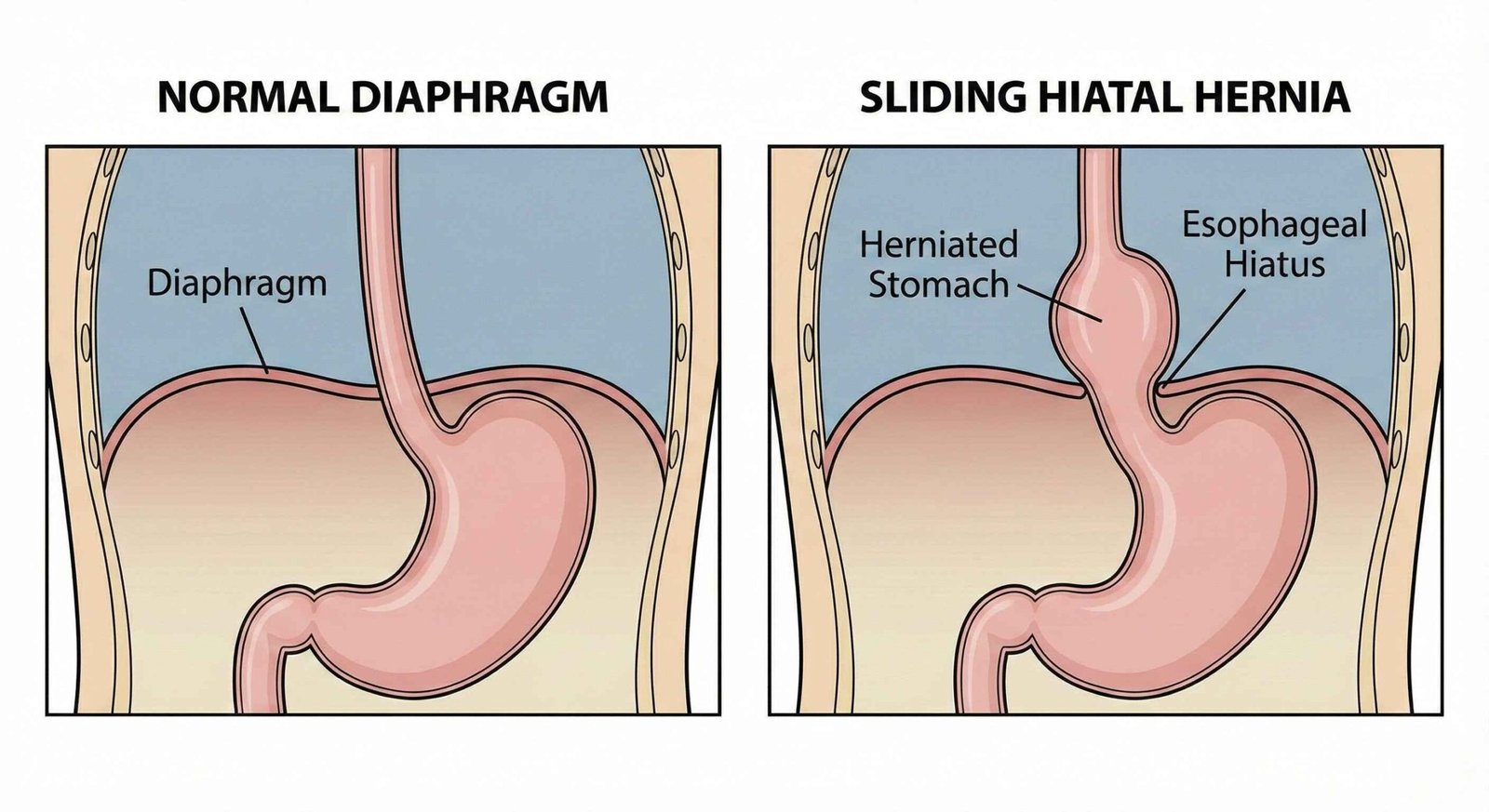
Diagram showing stomach protrusion through the diaphragm.
Common Symptoms
- Frequent heartburn and Acid reflux (GERD)
- Chest pain or discomfort
- Difficulty swallowing
- Excessive belching
- Fatigue from chronic blood loss (in severe cases)
Role of Radiology and Diagnosis
Accurate imaging is essential. Common tools include Barium swallow X-ray (to see the stomach outline), Endoscopy (for direct visualization), and Esophageal manometry (to measure muscle contractions).
Surgical Techniques for Hiatal Hernia Repair
Since a hiatal hernia is a structural issue, it cannot heal on its own. When medication fails or complications arise, modern surgical methods offer safe, minimally invasive solutions.
Laparoscopic Nissen Fundoplication
This is the gold-standard procedure for hiatal hernia with GERD. It involves:
- Repositioning the stomach into the abdomen.
- Repairing the hiatus by tightening the diaphragm opening.
- Fundoplication: Wrapping the stomach’s upper part around the esophagus to strengthen the anti-reflux barrier.
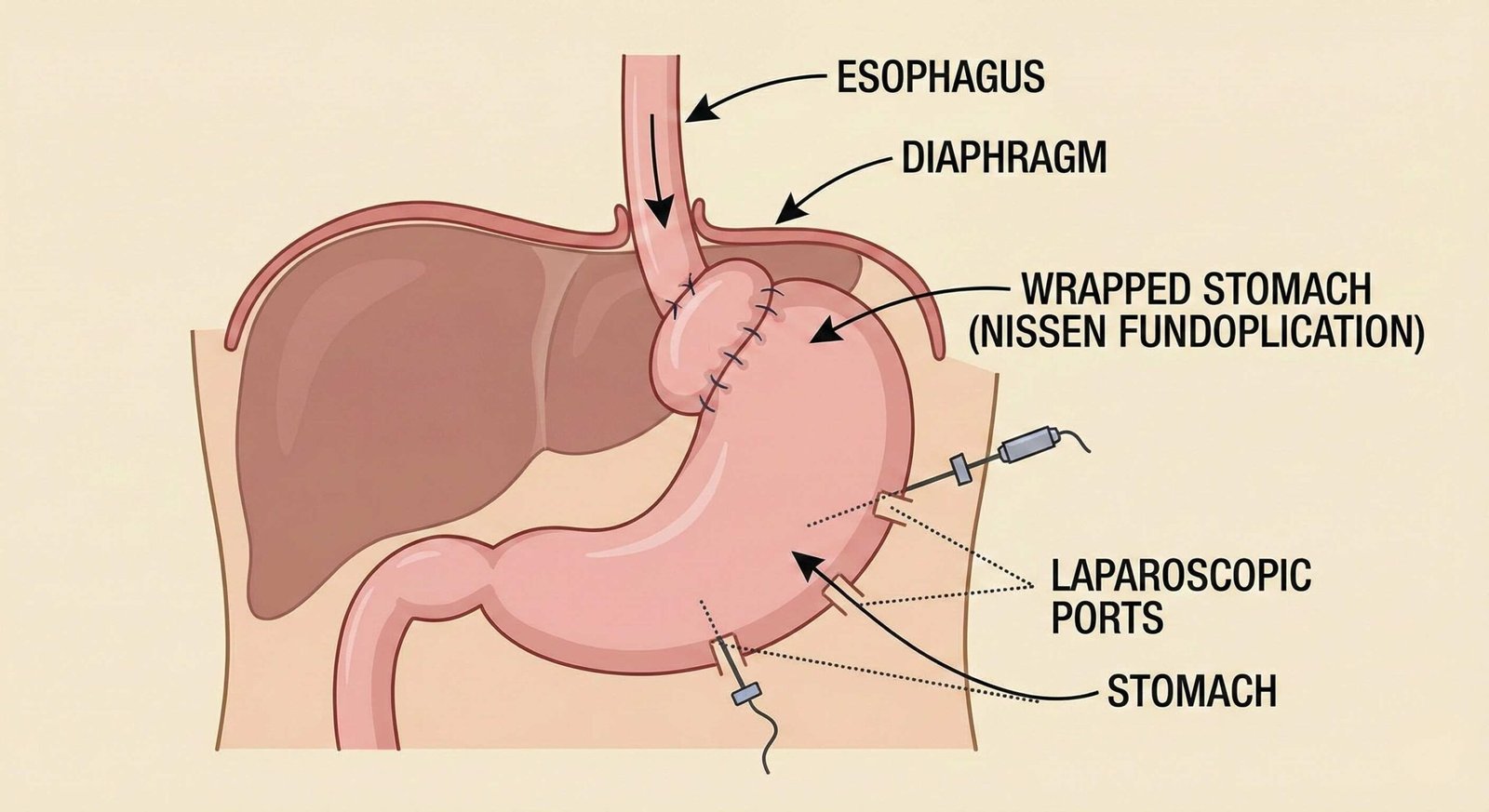
Laparoscopic repair uses small incisions, resulting in less pain and a shorter hospital stay.
Alternative Options
- Robotic-assisted surgery: Offers enhanced precision and 3D visualization, useful for complex hernias.
- LINX Device: A ring of magnetic titanium beads placed around the lower esophageal sphincter to prevent acid reflux while allowing normal swallowing.
- Open surgery: Used for very large or recurrent hernias where laparoscopic access is difficult.
Choosing the Right Hiatal Hernia Doctor Specialist
The specialist you choose greatly affects your surgical outcome. Look for a surgeon who is board-certified, experienced in anti-reflux surgeries, and skilled in minimally invasive techniques.
Questions to Ask Your Surgeon
- How many hiatal hernia surgeries do you perform yearly?
- What is your success rate with GERD resolution?
- What risks should I be aware of?
- What is your laparoscopic-to-open conversion rate?
- Will mesh be used in my repair?
Recovery, Outlook & Life After Surgery
Immediate Recovery Timeline
- Hospital stay: Usually 1 day.
- First few days: Fatigue, mild pain, and shoulder discomfort are normal.
- Activity restrictions: No lifting 10–15 kg for 4–6 weeks. Return to desk work in 1–2 weeks.
- Full recovery: Generally 2–4 weeks.

Rest is crucial during the first few days after your procedure.
Dietary Changes
A careful diet progression is essential. You will move from clear liquids to full liquids, then soft/pureed foods, and finally a gradual return to a normal diet. Temporary difficulty swallowing (dysphagia) is common as swelling reduces.
Costs, Insurance & Planning
Most insurance plans cover hiatal hernia repair because it is medically necessary. Ensure you verify your benefits, check deductibles, and obtain pre-authorization. Surgical costs typically cover the surgeon, anesthesiologist, and hospital fees.
Ready to Relieve Your Symptoms?
If medication is no longer working, our experienced hiatal hernia specialists are here to help.
Schedule Your ConsultationFrequently Asked Questions
Is hiatal hernia surgery dangerous?
Risks exist but are generally low when performed laparoscopically by an experienced specialist. Potential risks include infection, bleeding, anesthesia reactions, or injury to surrounding organs.
Can a hiatal hernia heal without surgery?
No. Medication can manage symptoms like heartburn, but surgery is the only way to physically repair the anatomical defect where the stomach has moved into the chest.
How long does the surgery take?
Most laparoscopic hiatal hernia surgeries, including Nissen fundoplication, take approximately 2–3 hours.