
Comprehensive Guide to Inguinal Hernia Surgery: Procedure, Types, and Costs
Finding a lump or bulge in your groin area can be worrying. Often, this is a sign of an inguinal hernia. This guide will help you understand what an inguinal hernia is, how doctors tell it apart from other conditions, the different ways it can be treated with surgery, and importantly, the typical inguinal hernia surgery cost.
Understanding the Condition: Symptoms and Visual Identification
An inguinal hernia happens when soft tissue, usually part of your intestine or fatty tissue, pushes through a weak spot in the muscle wall of your lower belly, specifically in the groin area. This weakness creates a bulge.
Identifying the Bulge: What to Look For
The most common sign of an inguinal hernia is a bulge on either side of your pubic bone. This bulge might become more noticeable when you stand up, cough, or strain. It might disappear when you lie down. Besides the visible bulge, you might also feel:
- Pain or discomfort in the groin, especially when bending over, coughing, or lifting heavy objects.
- A burning or aching feeling at the site of the bulge.
- A heavy or dragging sensation in your groin.
- Sometimes, pain and swelling around the testicles if the hernia extends into the scrotum.
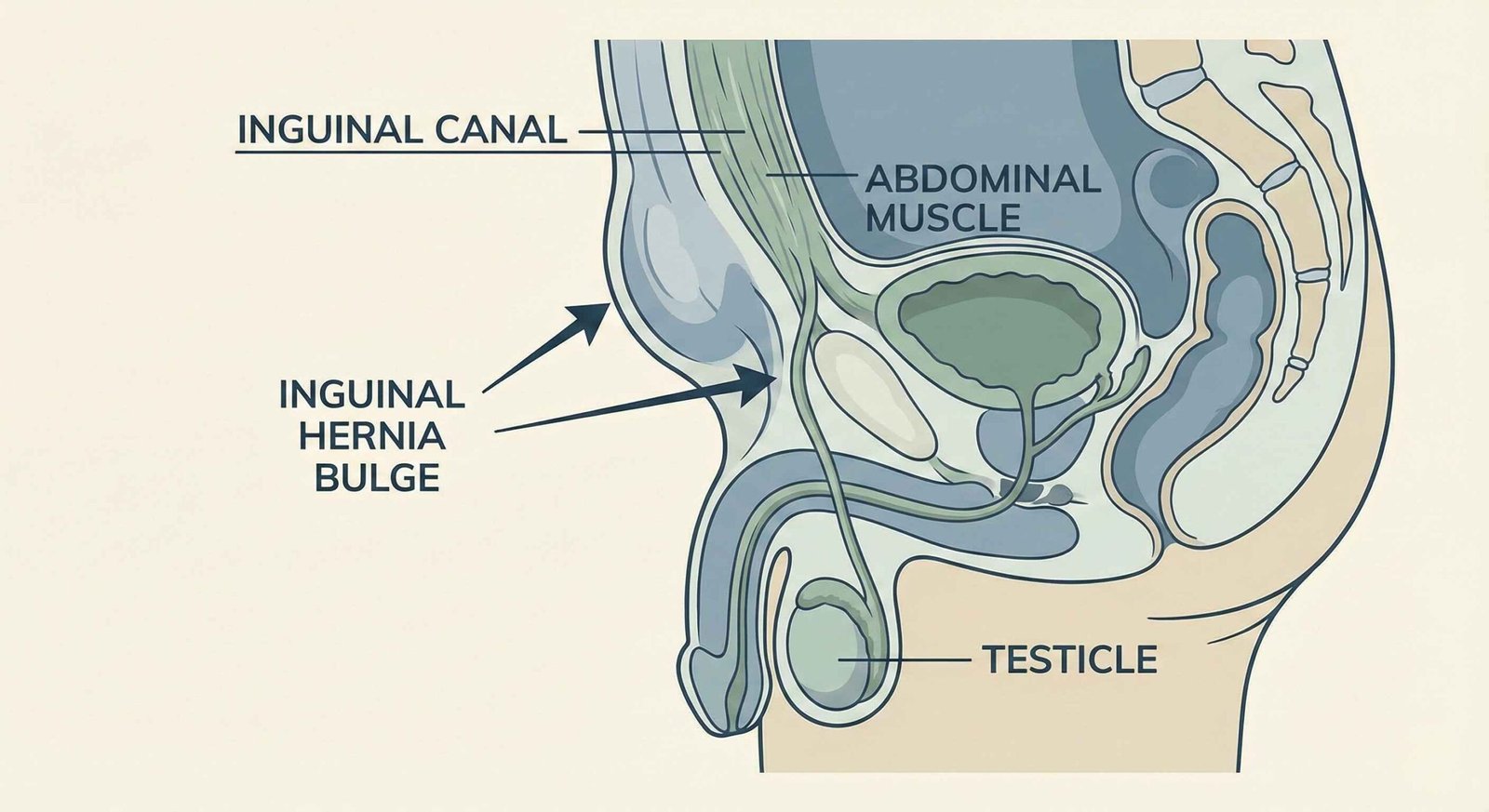
Visualizing the Diagnosis: The bulge is typically located in the crease between the thigh and lower abdomen.
While a doctor is the only person who can truly diagnose a hernia, knowing what to look for is crucial. The bulge can vary in size—it might be small and only noticeable with effort, or it could be quite large and easy to see.
Suspect You Might Have a Hernia?
Early diagnosis prevents complications. Schedule a quick screening with our specialists today.
Book Your ScreeningDistinguishing Inguinal Hernias: A Differential Diagnosis
The groin area can be home to several conditions that look similar to an inguinal hernia. Doctors use different tests and their knowledge to tell them apart.
There are two main types of inguinal hernias: Direct and Indirect. Knowing the difference helps doctors plan the best surgery. We have broken down the key differences below:
| Feature | Indirect Inguinal Hernia | Direct Inguinal Hernia |
|---|---|---|
| Cause | Congenital (Present from birth) due to an opening not closing properly. | Acquired later in life due to muscle weakening over time. |
| Common Age | Common in babies and children, but can appear in adulthood. | Typically seen in middle-aged or older men. |
| Pathology | Pushes through the deep inguinal ring (natural passage). | Pushes through a weak spot in the abdominal wall fascia. |
Other Common Confusions
Below are common conditions that are often mistaken for inguinal hernias. Click to learn how to distinguish them:
Femoral vs. Inguinal Hernia
Inguinal Hernias appear in the groin area or may extend into the scrotum and are much more common in men. Femoral Hernias appear lower in the groin, near the upper thigh. They are less common than inguinal hernias and are seen more often in women. Femoral hernias can be more dangerous because they have a higher risk of becoming "strangulated," meaning the blood supply to the trapped tissue is cut off.
Hydrocele vs. Inguinal Hernia
A Hydrocele is a fluid-filled sac around a testicle. It's usually harmless, feels smooth, and often goes away on its own in babies. Doctors use transillumination (shining a light) to diagnose it—light passes through fluid but not through the solid tissue of a hernia.
Pediatric Considerations (Baby Boys)
Inguinal hernias are common in baby boys due to development before birth. Parents might notice a bulge in their baby's groin or scrotum, often clearer when the baby is crying or coughing. If you suspect your baby has a hernia, seek medical advice immediately.
Surgical Approaches and Treatment Options
Surgery is the main way to fix an inguinal hernia. The goal is to push the bulging tissue back into place and strengthen the weak spot in the muscle wall. Modern surgery offers advanced ways to fix hernias, specifically minimally invasive techniques.
Laparoscopic Surgery
This involves making several very small cuts (incisions) in the belly. The surgeon inserts a thin tube with a tiny camera (laparoscope) and special tools to see inside your belly on a video screen. There are two main types:
- TAPP (Transabdominal Preperitoneal): The surgeon works through the abdominal cavity.
- TEP (Totally Extraperitoneal): The surgeon works outside the abdominal cavity, between the muscles and the lining of the belly.
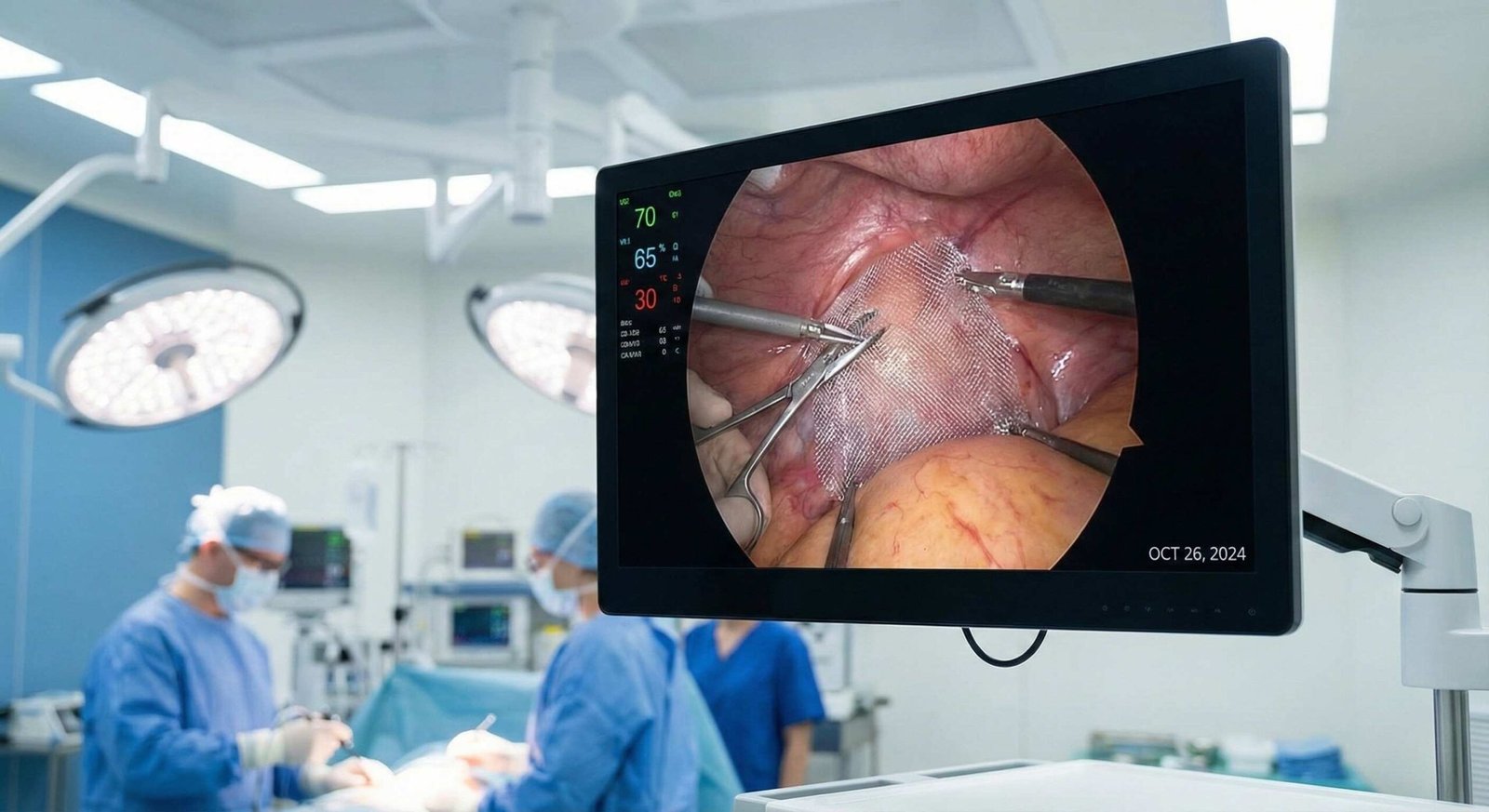
Laparoscopic surgery utilizes high-definition cameras for precise, minimally invasive repair.
Mesh Implementation vs. Open Surgery
Most inguinal hernia repairs today, whether open or laparoscopic, use a special surgical mesh. This mesh is made from synthetic material and acts like a patch to reinforce the weakened area. It helps prevent the hernia from coming back. The mesh is stitched in place and eventually, your body's tissues grow into it, making the repair stronger.
When Surgery Isn't Immediately Necessary
In some cases, if an inguinal hernia is small and isn't causing any pain or symptoms, a "watchful waiting" approach might be recommended. This is usually only an option for patients who are at high risk for surgery or have very mild, non-problematic hernias.
Financial Breakdown: Inguinal Hernia Surgery Cost
Understanding the inguinal hernia surgery cost can be a big concern for many patients. The total price can vary widely depending on several factors.
Factors Influencing the Total Price:
- Facility Fees: A hospital might charge more than a standalone surgery center.
- Surgeon's Fees: Based on experience and location.
- Anesthesia Fees: Medications and anesthesiologist expertise.
- Pre-Operative Tests: Blood tests, EKGs, or imaging (ultrasounds).
- Post-Operative Care: Follow-up appointments and medications.
- Geographic Location: Costs differ significantly by city.

Discussing financial options and insurance coverage is a key step in treatment planning.
Price Comparison: Laparoscopic vs. Open
The inguinal hernia laparoscopic surgery cost can sometimes be higher initially than open surgery because it requires specialized equipment. However, the overall cost difference might not be as significant as you think. Laparoscopic surgery often leads to shorter hospital stays, less need for strong pain medications, and a faster return to work.
Insurance Coverage: Most health insurance plans consider inguinal hernia repair to be a medically necessary procedure. However, you will likely be responsible for deductibles and co-pays. Always ask for a "good faith estimate" before your procedure.
Get a Transparent Cost Estimate
Our financial counselors can help you understand your insurance benefits and out-of-pocket costs.
Request Pricing DetailsRecovery and Post-Operative Care
After surgery, proper care is essential for a smooth recovery and to prevent any issues.
Timeline for Healing
- First 24 Hours: Expect some pain and discomfort. You'll be encouraged to walk a little to prevent blood clots.
- First Week: Pain lessens. Return to light daily activities, but avoid heavy lifting.
- 2-4 Weeks: Most return to non-strenuous work.
- 4-6 Weeks: Cleared to resume most physical activities, including heavy lifting, after doctor approval.

Rest combined with gentle movement is key to a successful recovery.
Long-Term Lifestyle Adjustments
To help prevent another hernia from developing, consider these adjustments:
"Maintain a healthy weight to reduce strain, eat fiber-rich foods to prevent constipation, and always lift with your knees—not your back."
Remember, an inguinal hernia is a common condition that can be effectively treated with surgery. Discussing your symptoms and concerns with a healthcare professional is the first step towards feeling better.
Ready to Address Your Symptoms?
Our expert surgical team is here to guide you from diagnosis to full recovery.
Schedule Your Consultation