
Comprehensive Nursing Care Plans for Pain Management: Abdominal & Chest Protocols
Pain, often called the "fifth vital sign," is a deeply personal and critical indicator of a patient's health status. At Arka Hospital, we understand that effective pain management is not just a medical duty but a fundamental aspect of compassionate care. Nurses play a crucial role in assessing, managing, and alleviating pain, directly impacting patient comfort, recovery, and overall outcomes.
This article delves into the detailed strategies our nursing team employs to address two common yet distinct types of pain: acute abdominal pain and cardiac chest pain. While both require immediate attention, their assessment, treatment, and underlying causes demand unique approaches within our Emergency Care Overview & Services.
Assessment and Triage of Abdominal Pain
Abdominal pain can signal a wide range of conditions, from benign indigestion to life-threatening emergencies. A thorough and systematic assessment is the cornerstone of effective management.
The PQRST Assessment Method
Before any medicine for abdominal pain is considered, nurses employ the PQRST method to gather detailed information about a patient's pain experience. This structured approach helps paint a clear picture:
| Indicator | Question/Observation |
|---|---|
| P – Provocation | What makes the pain better (rest, positioning) or worse (movement, eating)? |
| Q – Quality | Is it sharp, dull, burning, or cramping? |
| R – Region | Where is the pain located? Does it radiate? |
| S – Severity | Rate on a scale of 0-10. |
| T – Timing | When did it start? Is it constant or intermittent? |
This systematic questioning helps nurses quickly gather vital clues for diagnosis and treatment.
Identifying Etiology and Physical Examination
Understanding the origin of abdominal pain is critical. Nurses distinguish between:
- Visceral pain: Dull, aching pain from internal organs (e.g., appendicitis).
- Somatic pain: Sharp, localized pain from irritation of the abdominal lining.
- Referred pain: Pain felt in a different location (e.g., shoulder pain from gallbladder issues).
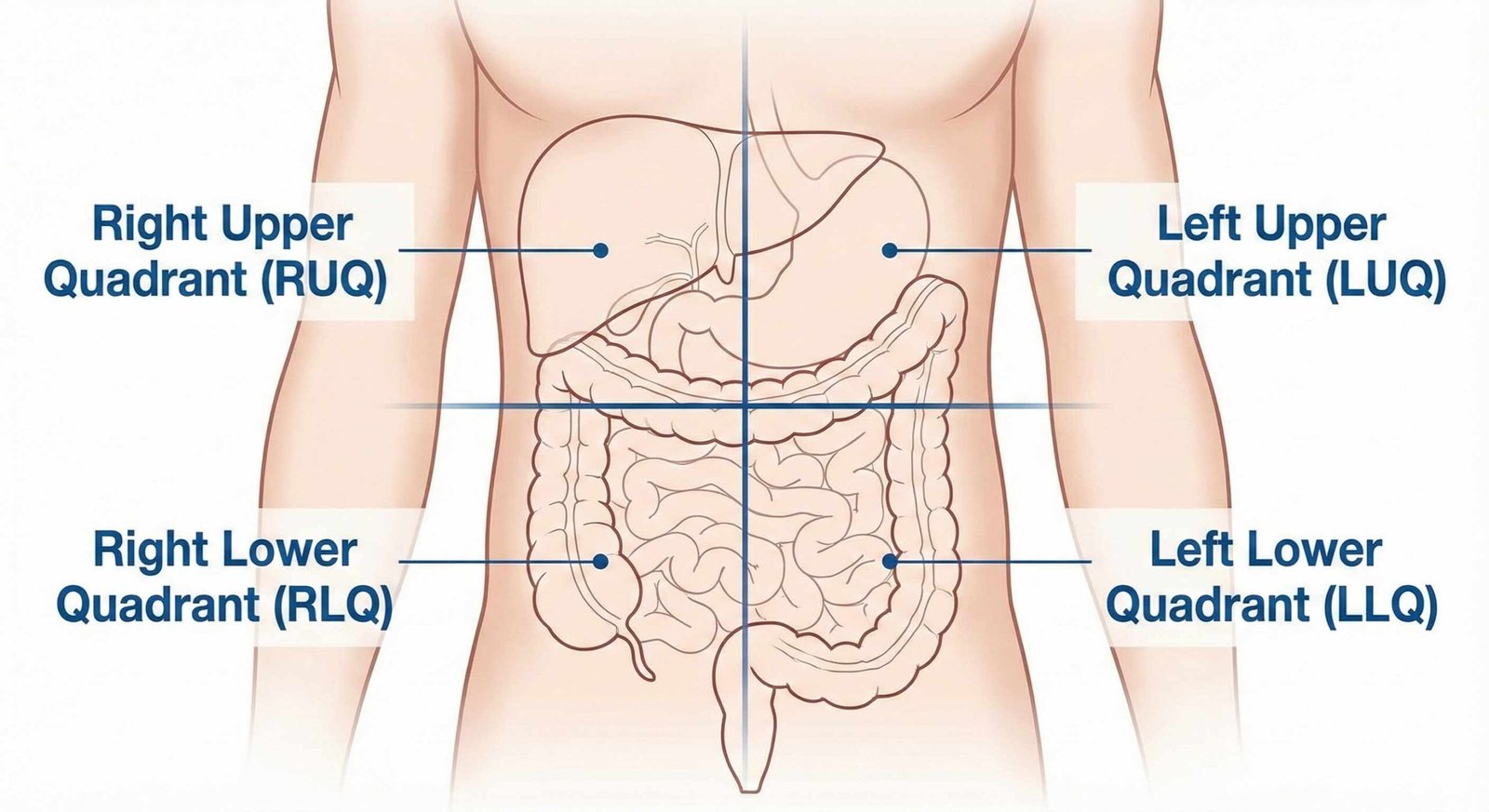
Physical examination techniques include Inspection, Auscultation, Percussion, and Palpation to identify tenderness or distention. For more on specific conditions, see Specific Abdominal Pain Conditions & Causes.
Developing a Nursing Care Plan (NCP) on Abdominal Pain
Once the assessment is complete, the nursing team develops a tailored nursing care plan for abdominal pain.
Priority Nursing Diagnoses
- Acute Pain: Related to inflammation or organ injury.
- Risk for Deficient Fluid Volume: Related to vomiting or diarrhea.
- Imbalanced Nutrition: Related to nausea or NPO (nothing by mouth) status.
Setting Goals & Non-Pharmacological Interventions
Effective care plans include SMART goals (e.g., "Patient will report pain level of <3/10 within 1 hour"). Before administering medication, nurses use strategies like:
- Positioning: Semi-Fowler’s position to reduce abdominal tension.
- NPO Status: Resting the digestive system.
- Heat/Cold Application: Warm compresses for muscle relaxation (if appropriate).
Pharmacological Management: Medicine for Abdominal Pain
Administering the correct medicine for abdominal pain is a critical component of treatment, often requiring careful consideration to balance pain relief with diagnostic clarity.
Analgesics and Pain Protocols
- NSAIDs: For mild inflammatory pain.
- Opioids: For severe pain, often administered intravenously.
- Antispasmodics: To reduce cramping.
- Antiemetics: Given to control nausea, which frequently accompanies abdominal pain.
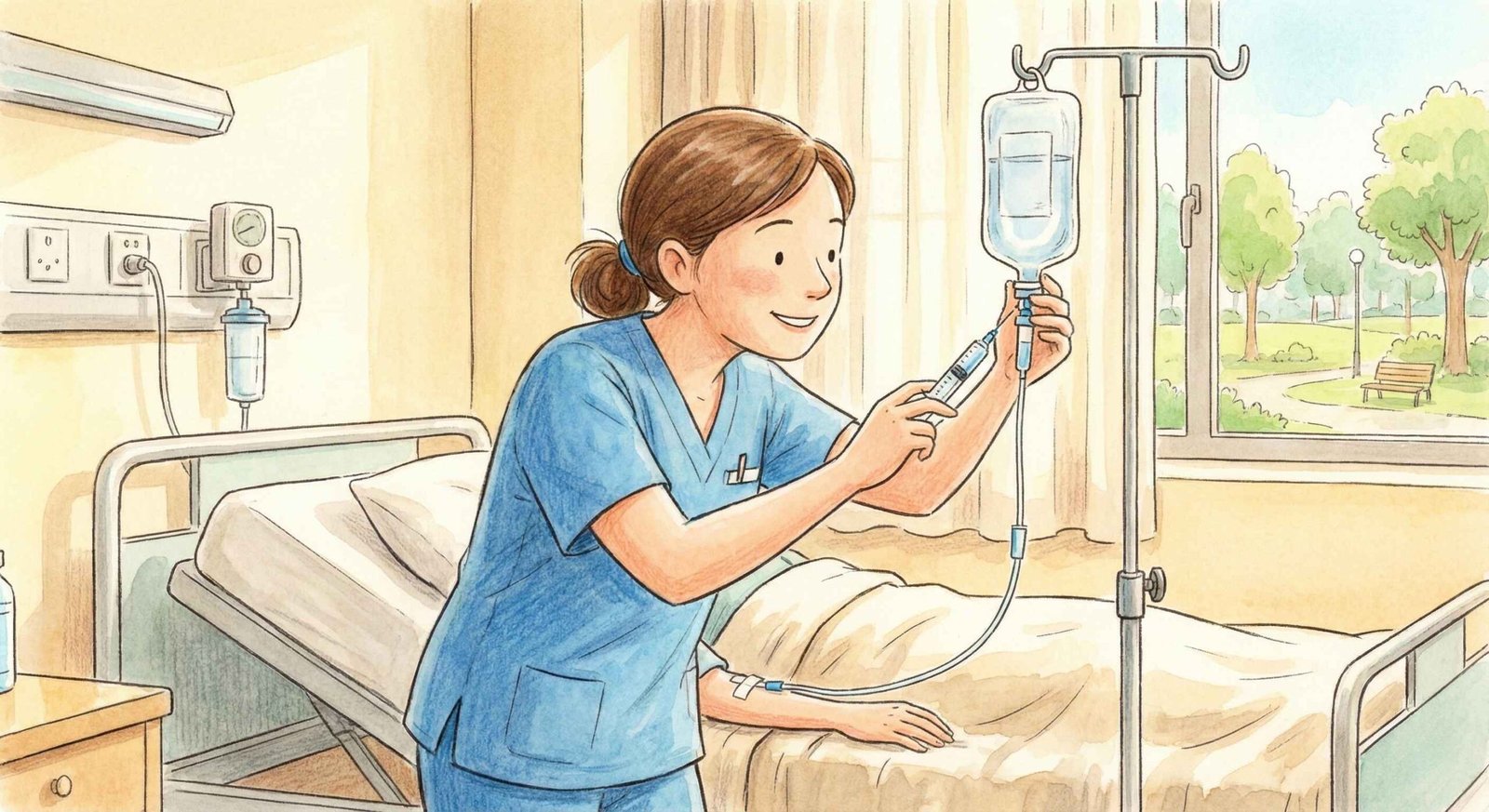
Nursing Management of Chest Pain and Cardiac Care
Chest pain is another urgent symptom that requires swift action. Distinguishing between cardiac and non-cardiac causes is paramount.
Differentiating Cardiac vs. Non-Cardiac Pain
Not all chest pain originates from the heart. Nurses use this guide to differentiate:
| Feature | Cardiac Pain | Non-Cardiac Pain |
|---|---|---|
| Sensation | Pressure, squeezing, heavy weight | Sharp, stabbing, burning |
| Radiation | To left arm, jaw, neck, or back | Localized or moves with gas |
| Triggers | Exertion, stress | Movement, deep breathing, eating |
For a detailed comparison, refer to our Comprehensive Guide to Chest Pain: Causes, Symptoms & When to Worry.
Immediate Nursing Interventions (MONA Protocol)
The MONA Protocol for Cardiac Pain
When cardiac chest pain is suspected, nurses initiate this standard protocol (not necessarily in this order):
- M - Morphine: For severe pain relief.
- O - Oxygen: To improve oxygen supply to the heart.
- N - Nitroglycerin: To dilate blood vessels and improve blood flow.
- A - Aspirin: To prevent clot formation.
Nursing Care Plan for Chest Pain (Cardiac Focus)
A specialized nursing care plan for chest pain focuses on stabilizing the patient.
- Diagnostic Monitoring: Obtaining a 12-lead ECG within 10 minutes and checking Troponin levels.
- Interventions: Enforcing strict bed rest to reduce oxygen demand and continuous rhythm monitoring.
- Patient Education: Instructing on lifestyle changes and Nitroglycerin use. Understanding triggers is key; read about Chest Pain After Specific Activities.
When to Escalate: Emergency Response at Arka Hospital
Nurses are constantly vigilant. Knowing when to escalate care is a critical skill. Red flags include hypotension (low blood pressure), rigid abdomen (indicating infection), or ST-segment elevation on an ECG.
Arka Hospital fosters collaboration. When deterioration occurs, the nursing team works with Trauma Care Services and cardiology to ensure rapid intervention.
Your Health is Our Priority
If you experience chronic pain, seeking specialist help is vital. Don't wait.
Call Arka Hospital: +91 9019704252