
Acid Reflux Overview: Expert Care & Acidity Doctor Near Me in Bangalore
Do you often feel a burning sensation in your chest after meals, especially when lying down or bending forward? This discomfort, commonly called heartburn, is often a sign of acid reflux and can disrupt sleep, productivity, and quality of life when it becomes frequent. If you are repeatedly searching for an "acidity doctor near me in Bangalore" or an "acid reflux doctor in Bangalore, J.P Nagar," understanding your condition and knowing when to seek specialist care is the first step toward lasting relief.

Persistent heartburn requires professional evaluation to prevent long-term complications.
Understanding Acid Reflux and Heartburn
Acid reflux happens when stomach acid travels backward into the esophagus, the tube that carries food from your mouth to your stomach. This acid backflow irritates the delicate lining of the esophagus, leading to burning pain, a sour taste, and other uncomfortable symptoms.
What is Acid Reflux?
At the entry point of your stomach, the lower esophageal sphincter (LES) acts as a valve that opens to let food in and closes to keep stomach contents from coming back up. When this valve becomes weak, relaxes too often, or pressure in the abdomen increases, stomach acid can escape into the esophagus and cause symptoms.
This backflow commonly leads to:
- Burning sensation in the chest (heartburn) that may move up toward the throat.
- Sour or bitter taste in the mouth because of regurgitated food or liquid.
Occasional reflux is common, but if it occurs more than twice a week or interferes with daily life, it could indicate GERD (Gastroesophageal Reflux Disease) and warrants consultation with an acidity doctor near me in Bangalore to understand the link between Acid Reflux and GERD and prevent long-term complications.
For more information on prevalence and risks, you can refer to authoritative sources like the American College of Gastroenterology.
Acid Reflux vs. GERD: Knowing the Difference
Many people use “acid reflux,” “heartburn,” and “GERD” interchangeably, but they describe different things.
- Acid reflux is the event where acid moves from the stomach into the esophagus and causes symptoms like burning and regurgitation.
- GERD is the chronic disease where this reflux happens frequently or causes complications such as inflammation, narrowing, or changes in the esophageal lining.
Occasional heartburn may improve with simple lifestyle changes or short-term medication, but persistent, severe, or night-time symptoms often indicate GERD and should not be ignored. For detailed causes of acid reflux and its progression to GERD, consulting a gastroenterology specialist helps you understand your specific risk factors and treatment options. Resources like the Mayo Clinic provide excellent overviews to support this distinction.

A weakened LES allows stomach acid to flow back into the esophagus, causing reflux.
Common Triggers and Symptoms
Recognizing your symptoms and everyday triggers makes it easier to discuss your condition with an acidity doctor near me in Bangalore and to start preventive strategies early.
Recognizing the Signs
While burning chest pain is the most recognized symptom, acid reflux and GERD can show up in many ways. Be alert to:
- Heartburn: Burning pain in the chest after meals, worse when lying down or bending forward.
- Regurgitation: Sensation of acid, food, or sour fluid coming up into the throat or mouth.
- Sour or bitter taste: Persistent acidic taste despite brushing or mouthwash.
- Dysphagia: Difficulty or pain while swallowing, or feeling like food is stuck.
- Nausea or vomiting: Particularly when recurrent and not linked to infections.
- Chronic cough: Dry, persistent cough, especially at night or when lying flat.
- Hoarseness or laryngitis: Voice changes due to acid irritating the throat and vocal cords.
- Asthma-like symptoms: Worsening asthma or new-onset wheezing in adults due to acid reaching the airways.
- Bad breath: Persistent halitosis related to refluxed acid and food.
If you notice these symptoms regularly, especially swallowing difficulties, weight loss, or chest pain, you should consider diagnosing chronic reflux symptoms with a gastroenterology expert promptly.
Dietary and Lifestyle Triggers
Several common foods and habits can relax the LES or increase acid production, raising the likelihood of reflux episodes.
Typical triggers include:
- Spicy and fatty foods that slow stomach emptying and encourage reflux.
- Caffeine in coffee, tea, and colas, which can relax the LES.
- Chocolate and peppermint, both known to reduce LES pressure.
- Citrus fruits and tomatoes, which can irritate the esophageal lining in sensitive individuals.
- Alcohol, which both relaxes the LES and irritates the esophagus.
- Large or late-night meals that increase pressure on the LES when you lie down soon after eating.
- Smoking, which impairs saliva (a natural acid buffer) and weakens the LES.
- Obesity, which raises intra-abdominal pressure and promotes reflux.
- Stress, which may amplify perception of symptoms and contribute to unhealthy coping habits like overeating or smoking.
Adjusting these factors can significantly reduce symptom frequency and intensity, especially when combined with medical treatment. For personalized guidance and to consult our gastroenterology specialists, consider booking an appointment at Arka Hospital for a structured diet, lifestyle, and medication plan.
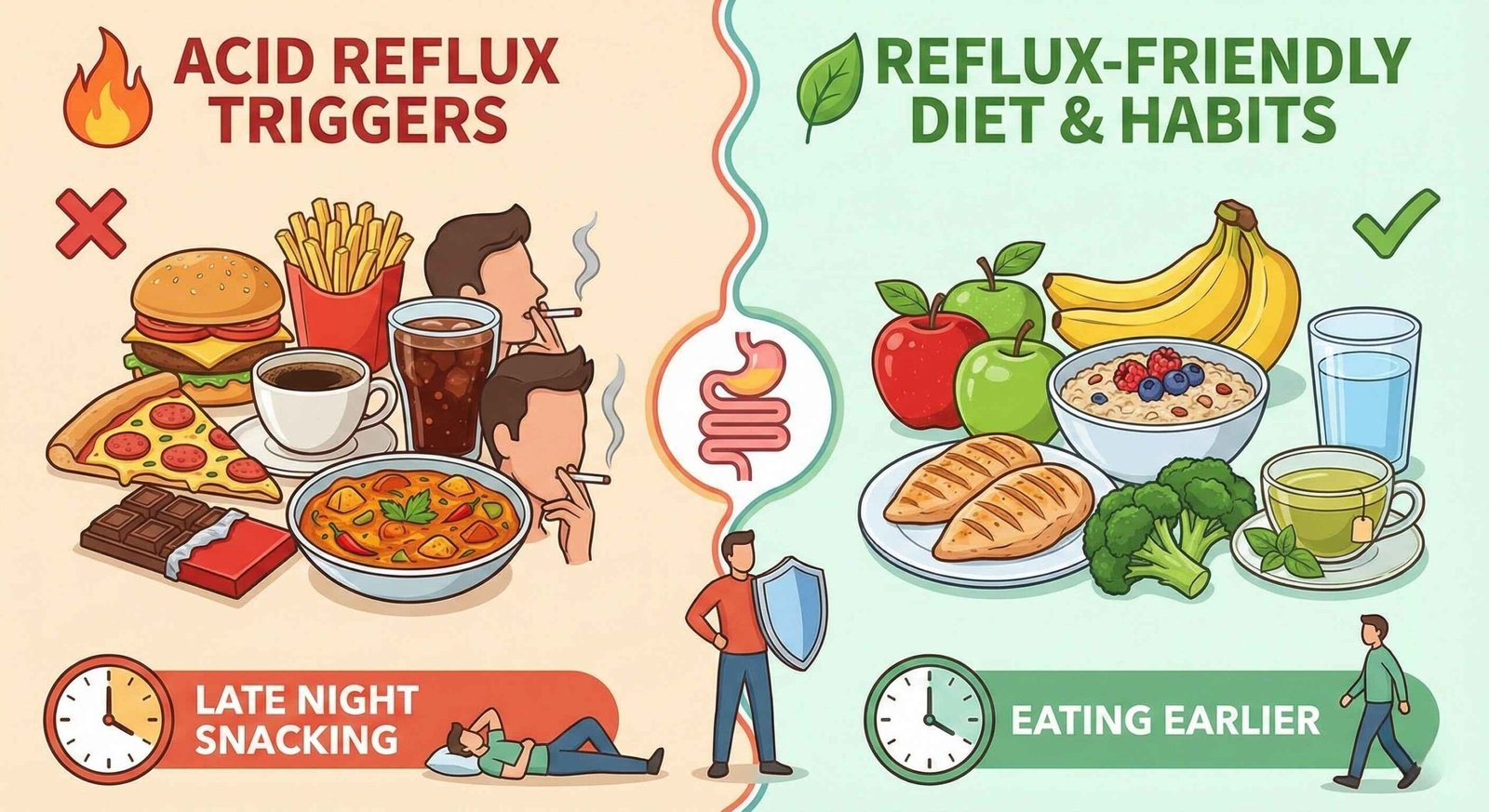
Identifying and avoiding personal triggers is a key component of managing acid reflux.
Managing the Burn: Medicines and Treatments
When lifestyle changes alone do not adequately control your symptoms, medications and, in selected cases, procedures can provide effective relief and protect the esophagus from damage.
Best Antacids and Immediate Relief
For occasional heartburn, over-the-counter antacids can neutralize existing stomach acid and provide fast but short-lived relief. Good medicine for acid reflux used for short-term comfort includes antacids containing calcium carbonate, magnesium hydroxide, or aluminum hydroxide, available as chewable tablets or liquids. The best antacid for acid reflux for quick relief is usually one that works rapidly, fits your medical profile, and is taken exactly as directed on the label or by your doctor. However, these medicines only treat symptoms and do not prevent acid production or address underlying disease. If you need antacids more than twice a week or notice night-time symptoms or swallowing issues, it is safer to discuss long-term treatment options for reflux with a qualified doctor.
Prescription Medications (PPIs and H2 Blockers)
For frequent or moderate-to-severe GERD, an acidity doctor near me in Bangalore may recommend stronger medicines that decrease acid production.
- Proton Pump Inhibitors (PPIs): Often regarded as among the best tablets for acid reflux, these medicines (such as omeprazole, esomeprazole, and pantoprazole) block acid pumps in the stomach lining, offering powerful and sustained acid suppression. They are usually taken once daily before meals for several weeks or months, depending on your condition.
- H2 Blockers: Medications like famotidine and cimetidine reduce acid by blocking histamine receptors in the stomach, providing moderate acid control for several hours and sometimes used at night along with PPIs.
Because long-term or unsupervised use of these medicines can carry risks such as nutrient deficiencies or masking more serious conditions, they should always be taken under medical supervision. Always consult an acidity doctor near me in Bangalore for the ideal type, dose, and duration of therapy based on your age, symptoms, and medical history. You can find peer-reviewed information comparing PPI and H2 blocker effectiveness in trusted clinical journals.
Home Remedies vs. Medical Intervention
Some home measures can ease mild or infrequent heartburn, such as eating smaller meals, avoiding late-night eating, remaining upright after meals, elevating the head of the bed, and trying soothing options like herbal teas. Even though these strategies can help, they often are not enough for chronic GERD or complications like esophagitis or Barrett’s esophagus. When looking for the best medicine for acid reflux, a comprehensive, medically supervised plan provides the safest route to long-term control.
When to Consult a Specialist
Understanding when acid reflux becomes a medical concern is critical to prevent serious complications and protect your long-term digestive health. An acidity doctor near me in Bangalore who focuses on gastroenterology can accurately assess your risk and guide you toward evidence-based treatment.
Warning Signs You Should Not Ignore
Seek prompt medical attention from a gastroenterologist if you notice any of the following red-flag symptoms:
- Difficulty swallowing (dysphagia) or the feeling of food sticking in the chest.
- Painful swallowing (odynophagia).
- Unexplained weight loss without intentional dieting.
- Persistent or recurrent vomiting.
- Black or blood-streaked stools, indicating possible bleeding in the digestive tract.
- Vomiting blood or coffee-ground-like material.
- Choking sensations during or after meals.
- New or worsening asthma-like symptoms or chronic cough that you cannot explain.
- Symptoms that do not improve with properly used OTC medicines.
If you experience any of these symptoms, do not delay evaluation; early consultation for comprehensive gastroenterology services can prevent progression to ulcers, strictures, or precancerous changes in the esophagus.
Finding the Right Specialist
For ongoing or severe acid reflux, a gastroenterologist is the most appropriate specialist to manage your care. Compared with a general physician, a gastroenterologist can:
- Accurately stage the severity of your disease and detect complications.
- Exclude other serious conditions such as cardiac problems or peptic ulcers that may mimic reflux symptoms.
- Perform diagnostic tests such as upper GI endoscopy, esophageal manometry, and 24‑hour pH monitoring to correlate symptoms with reflux events.
- Design an individualized plan combining acid suppression, lifestyle guidance, and, where needed, surgical referral.
For expert management of GERD and its related conditions, connecting with a skilled gastroenterologist in your area is the most reliable pathway to long-term comfort and safety.
Take Control of Your Acid Reflux Today
Don't let heartburn rule your life. Schedule a consultation with our expert gastroenterologists at Arka Hospital for a personalized treatment plan.
Book Your Appointment NowWhy Choose Arka Hospital for Acid Reflux Treatment?
When you search for an acidity doctor near me in Bangalore, choosing a center with strong clinical expertise, advanced diagnostics, and a holistic care model can significantly improve outcomes. Arka Hospital in J.P Nagar focuses on evidence-based digestive care designed around your symptoms, lifestyle, and treatment goals.
Expert Acid Reflux Doctor in Bangalore, J.P Nagar
At Arka Hospital, our gastroenterologists specialize in diagnosing and managing both straightforward and complex acid reflux and GERD cases. They keep up with the latest global guidelines on reflux management and use a patient-first approach to create personalized treatment plans.
Our acid reflux doctor in Bangalore, J.P Nagar offers:
- Experienced gastroenterologists with extensive experience treating GERD and reflux-related complications such as esophagitis and Barrett’s esophagus.
- Advanced diagnostic technology, including:
- Upper endoscopy to directly examine the esophagus, stomach, and duodenum for inflammation, ulcers, or structural problems.
- Esophageal manometry to measure esophageal muscle function and LES strength.
- 24‑hour pH or impedance-pH monitoring to track how often and how long acid reaches the esophagus and relate this to your symptoms.
- Patient-centric communication, ensuring you understand your diagnosis, medication plan, and lifestyle recommendations clearly at every step.
For a dedicated Gastroenterologist in J.P. Nagar who focuses on digestive wellness, Arka Hospital aims to be your trusted choice for diagnosis, treatment, and ongoing follow-up.

Our expert team provides comprehensive and personalized care for all acid reflux conditions.
Comprehensive Care Approach
Effective management of acid reflux goes beyond tablets alone, which is why Arka Hospital follows a structured, multi-step protocol:
- Thorough Diagnosis: Your journey starts with a detailed symptom assessment, medical history, and physical examination, followed by targeted tests when required (such as endoscopy or pH monitoring).
- Personalized Medication Management: Based on your diagnosis, the team prescribes and fine-tunes best tablets for acid reflux, such as PPIs or H2 blockers, while monitoring response, side effects, and interactions with other medicines you may be taking.
- Lifestyle and Dietary Counseling: You receive practical, customized advice on food choices, meal timings, weight management, smoking cessation, and sleep positioning to minimize triggers and improve symptom control.
- Minimally Invasive Surgical Options: For severe or refractory GERD that does not respond adequately to optimal medical therapy, surgeons at centers following best practice standards may recommend advanced surgical options for reflux, such as laparoscopic Nissen fundoplication, to reinforce the LES and reduce reflux.
Through multidisciplinary collaboration between gastroenterologists, dietitians, anesthetists, and surgeons, Arka Hospital strives to offer seamless care that focuses on long-term relief and improved quality of life.
Frequently Asked Questions (FAQ)
What is the best medicine for acid reflux available over the counter?
For short-term symptom relief, antacids containing calcium carbonate or magnesium compounds and OTC H2 blockers like famotidine are commonly recommended good medicine for acid reflux, as they either neutralize existing acid or temporarily reduce its production. These medicines should be used following package directions, and you should consult a doctor if you need them more than a couple of times per week or if symptoms persist.
When should I search for an acidity doctor near me?
Start searching for an acidity doctor near me in Bangalore if you experience reflux symptoms more than twice a week, if they disturb sleep or daily activities, if OTC remedies are not effective, or if you develop warning signs like difficulty swallowing, weight loss, or black stools. Early specialist review can detect GERD, rule out more serious causes of chest pain or swallowing problems, and help you avoid long-term complications.
Can acid reflux be cured permanently?
For many people, especially those with milder forms, acid reflux can be brought under excellent control and may even resolve with sustained lifestyle changes, weight management, and appropriate medical therapy. In more severe or structural cases of GERD, long-term treatment or procedures like fundoplication may be recommended, with the goal of durable symptom relief and protection against esophageal damage rather than a one-time “cure.”