
Types of Diabetes Explained: Understanding the Key Differences
Living with diabetes or knowing someone who has it can feel overwhelming. You might have heard terms like Type 1, Type 2, or gestational diabetes and wondered what makes them different. At Arka Anugraha Hospital in Bangalore, we believe that understanding your health condition is the first step toward managing it effectively.
This guide will help you understand the different types of diabetes in simple, clear language that anyone can understand.

What Is Diabetes?
Diabetes affects how your body uses sugar (glucose). Insulin is the key that lets sugar into your cells for energy. In diabetes, this process fails, causing sugar to build up in the blood, which can damage organs over time.
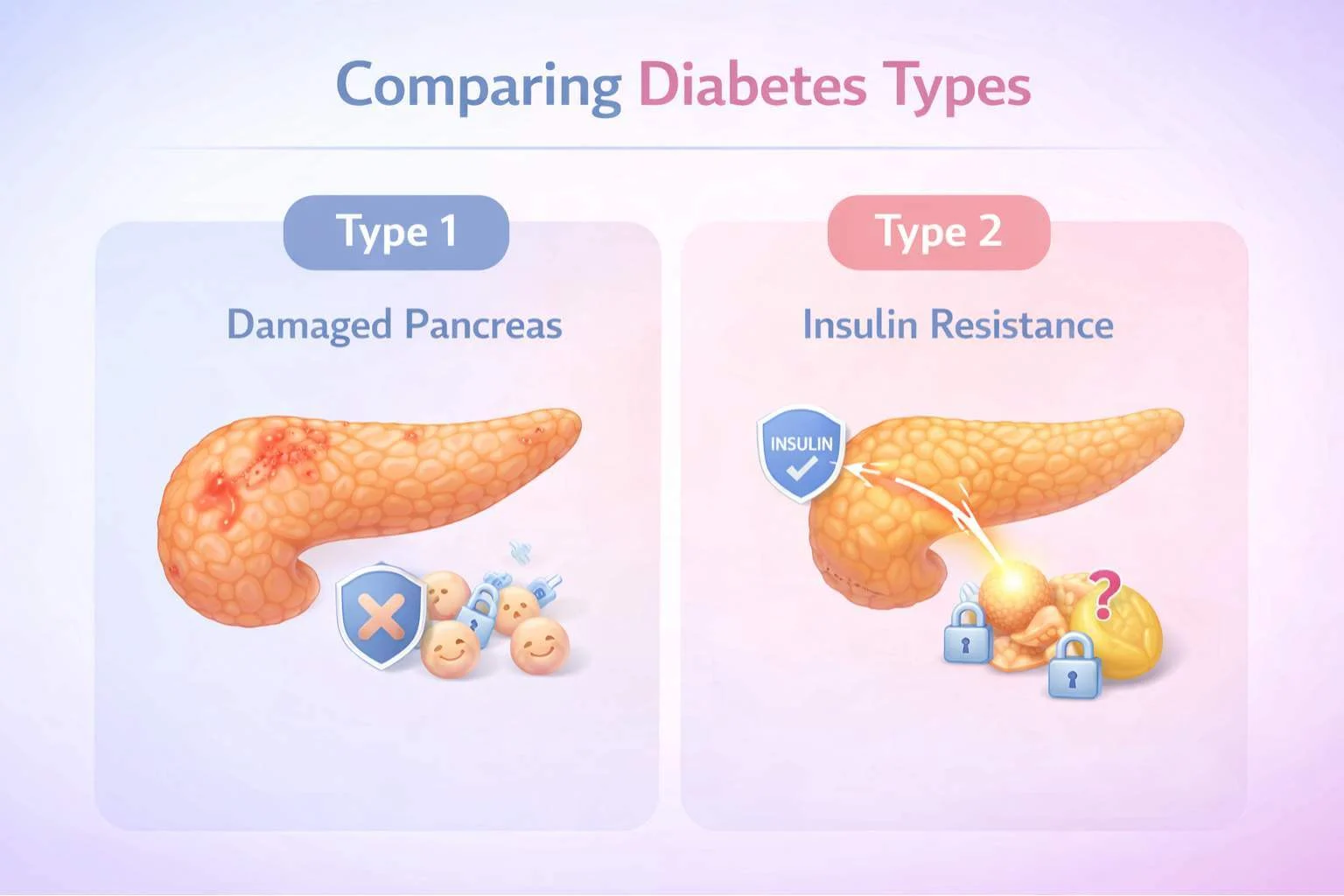
Difference Between Type 1 and Type 2
Type 1 Diabetes
The Cause: Autoimmune reaction. The body attacks insulin-producing cells in the pancreas.
Who: Usually children/young adults, but can be anyone.
Prevention: None currently.
Treatment: Lifelong insulin injections/pump.
Type 2 Diabetes
The Cause: Insulin resistance. The body makes insulin but doesn't use it well.
Who: Usually adults over 45, but increasingly younger people due to lifestyle.
Prevention: Lifestyle changes can prevent or delay it.
Treatment: Diet, exercise, oral meds, sometimes insulin.
What Is Gestational Diabetes?
This type develops during pregnancy in women who didn't have diabetes before. Hormones from the placenta block insulin action (resistance).
- Risks: Overweight, age >25, family history, certain ethnicities.
- Impact: Can cause high birth weight in babies and increase Type 2 risk for mom later.
- Management: Monitoring, diet, sometimes insulin. Usually resolves after birth.

How Is It Diagnosed?
We use standard blood tests to confirm diagnosis:
Fasting Blood Sugar
≥ 126 mg/dL indicates diabetes.
A1C Test
≥ 6.5% indicates diabetes (avg over 3 months).
Oral Glucose Tolerance
≥ 200 mg/dL after 2 hours indicates diabetes.
Can Diabetes Be Prevented?
Prevention Tips (Type 2 & Gestational)
- Weight Management: Healthy weight reduces risk significantly.
- Healthy Eating: Focus on veggies, whole grains, lean proteins. Limit sugar.
- Exercise: At least 150 mins/week of moderate activity (like brisk walking).
- Medication: In prediabetes, metformin may help prevent progression.
When Should You See a Doctor?
Visit Arka Anugraha Hospital if you notice:
- Extreme thirst or frequent urination.
- Unexplained weight loss or constant fatigue.
- Blurry vision or slow-healing wounds.
- Tingling/numbness in hands or feet.
Expert Diabetes Care at Arka Anugraha
Whether you're newly diagnosed or have managed diabetes for years, our team provides comprehensive, compassionate care.
Contact Arka Anugraha Hospital in Bangalore today.
Book Your Consultation Now