
PCOS Hair Loss Treatment: Understanding Hair, Skin, and Mental Health Issues
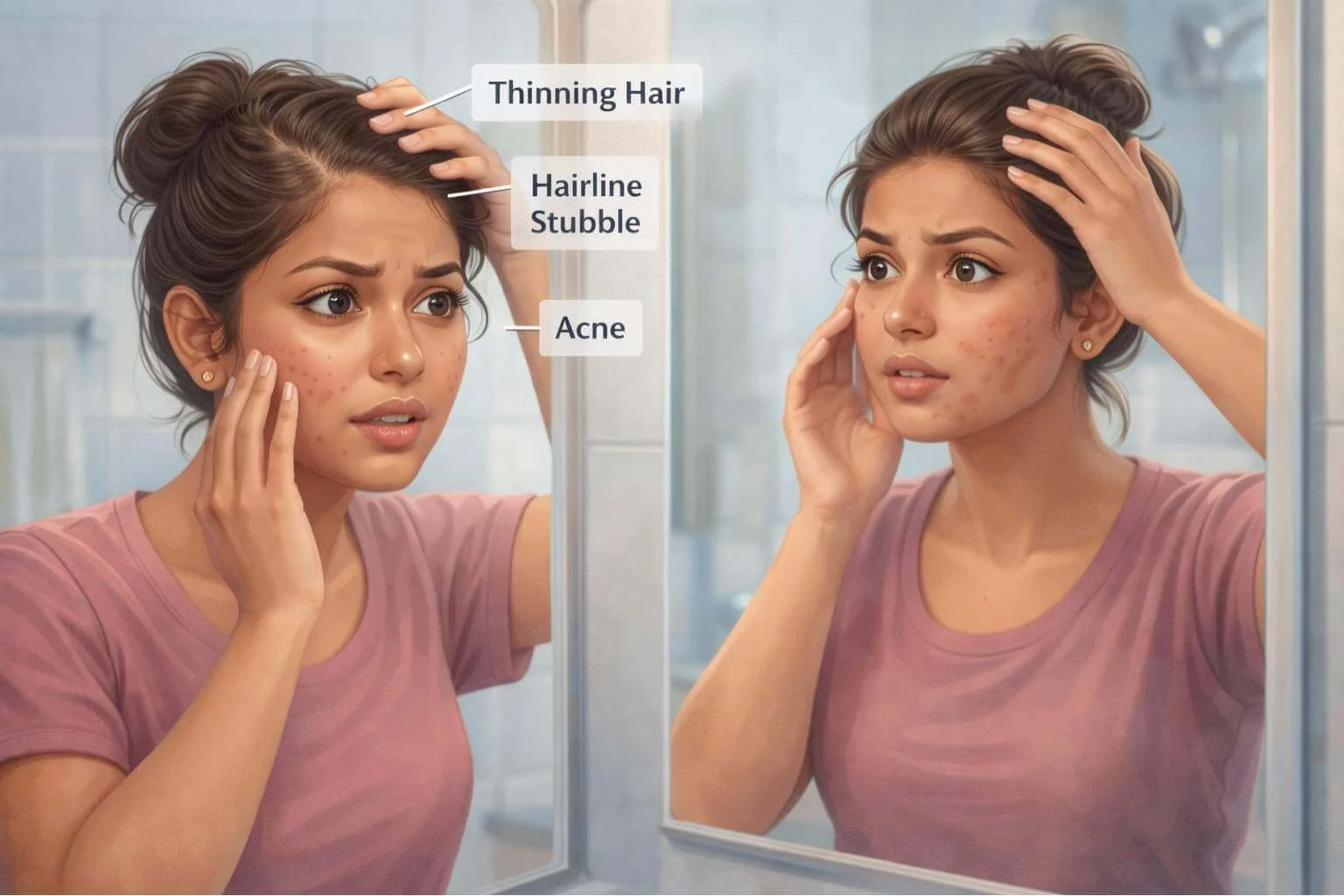
Living with Polycystic Ovary Syndrome (PCOS) affects millions of women worldwide, bringing challenges that go far beyond irregular periods. If you've noticed more hair on your pillow, sudden breakouts on your face, or unexpected mood swings, you're not alone.
At Arka Anugraha Hospital in Bangalore, we understand that PCOS hair loss treatment and managing skin and mental health concerns are crucial parts of your overall wellness journey. This comprehensive guide will help you understand these challenges and find effective solutions that actually work.
What Causes These Changes?
PCOS is a hormonal condition that creates an imbalance. Think of your hormones as messengers. When you have PCOS, these messengers get mixed up, particularly regarding androgens (male hormones). This affects:
- Hair Cycles: Causing scalp loss but facial growth.
- Skin Oil: Leading to acne.
- Brain Chemistry: Impacting mood.
How Does PCOS Cause Hair Loss?
The Mechanism: Miniaturization
Excess androgens shrink hair follicles on your scalp. Hairs become finer and shorter until the follicle stops producing hair. This typically affects the top and front of the head.
Signs to Watch For: Thinner ponytail, visible scalp, receding hairline near temples, and increased shedding in the shower.
Best PCOS Hair Loss Treatment Options
Medical Treatments
- Anti-androgens: Block male hormone effects.
- Birth Control Pills: Reduce androgen production.
- Minoxidil: Increases blood flow to follicles for regrowth.
Natural & Lifestyle
- Diet: Iron, zinc, Vitamins B & D.
- Exercise: Reduces insulin and androgen levels.
- Stress Management: Balances hormones.

How to Stop Facial Hair Growth (Hirsutism)
Excess androgens stimulate hair growth on the face/body while causing loss on the scalp.
- Natural: Spearmint tea (reduces androgens), Weight management (5-10% loss helps significantly).
- Professional: Laser hair removal, Electrolysis, or prescription creams like Eflornithine.
PCOS Acne: Pattern & Treatment
Recognizing PCOS Acne
Unlike teenage acne, PCOS acne usually appears on the jawline, chin, and lower cheeks. It is often deep, cystic, and painful.
Treatment: Hormonal regulation (birth control) combined with topical retinoids or benzoyl peroxide. A gentle skincare routine is essential.
Mood Swings and Mental Health
The Connection
Hormonal imbalances affect neurotransmitters in the brain. Insulin fluctuations also cause irritability. Dealing with physical symptoms creates emotional stress.
Management Strategies
- Medical: Treating the underlying PCOS often stabilizes mood.
- Therapy: Cognitive Behavioral Therapy (CBT) helps develop coping strategies.
- Lifestyle: Exercise releases endorphins. Sleep quality is crucial (7-9 hours).

Why Choose Arka Anugraha Hospital?
We address the physical, emotional, and social aspects of PCOS. Our team includes gynecologists, endocrinologists, dermatologists, and mental health professionals working together.
When to Seek Professional Help
- Excessive hair loss or new facial hair
- Persistent, painful acne
- Depression or severe anxiety
- Irregular periods affecting daily life
Frequently Asked Questions
Can PCOS hair loss be reversed?
Many women experience regrowth with proper treatment. Early intervention offers the best chance for reversal.
How long to see results?
Hair cycles are slow. Expect reduced shedding in 3-6 months and regrowth in 6-12 months.
Will losing weight stop facial hair?
It reduces androgen levels which slows growth, but existing hair may need removal treatments like laser.
Are mood swings permanent?
No. Balancing hormones, sugar levels, and managing stress significantly improves mood stability.
Take Control of Your PCOS Journey
You don't have to face hair loss, acne, or mood swings alone. Effective treatments exist.
Contact Arka Anugraha Hospital in Bangalore today to begin your personalized treatment plan.
Book Your Consultation Today