
Acid Reflux vs Gastric Problems: Key Differences You Need to Know
Do you often experience burning sensations in your chest or stomach discomfort after meals? You're not alone. Many people struggle to understand whether they're dealing with acid reflux vs gastric problem. While these conditions share some similar symptoms, they are distinct digestive issues that require different approaches to treatment.
At Arka Anugraha Hospital in Bangalore, our gastroenterology experts help hundreds of patients every month identify and manage these common digestive concerns. Understanding the difference between acidity and gastric problem is crucial for getting the right treatment and finding lasting relief.
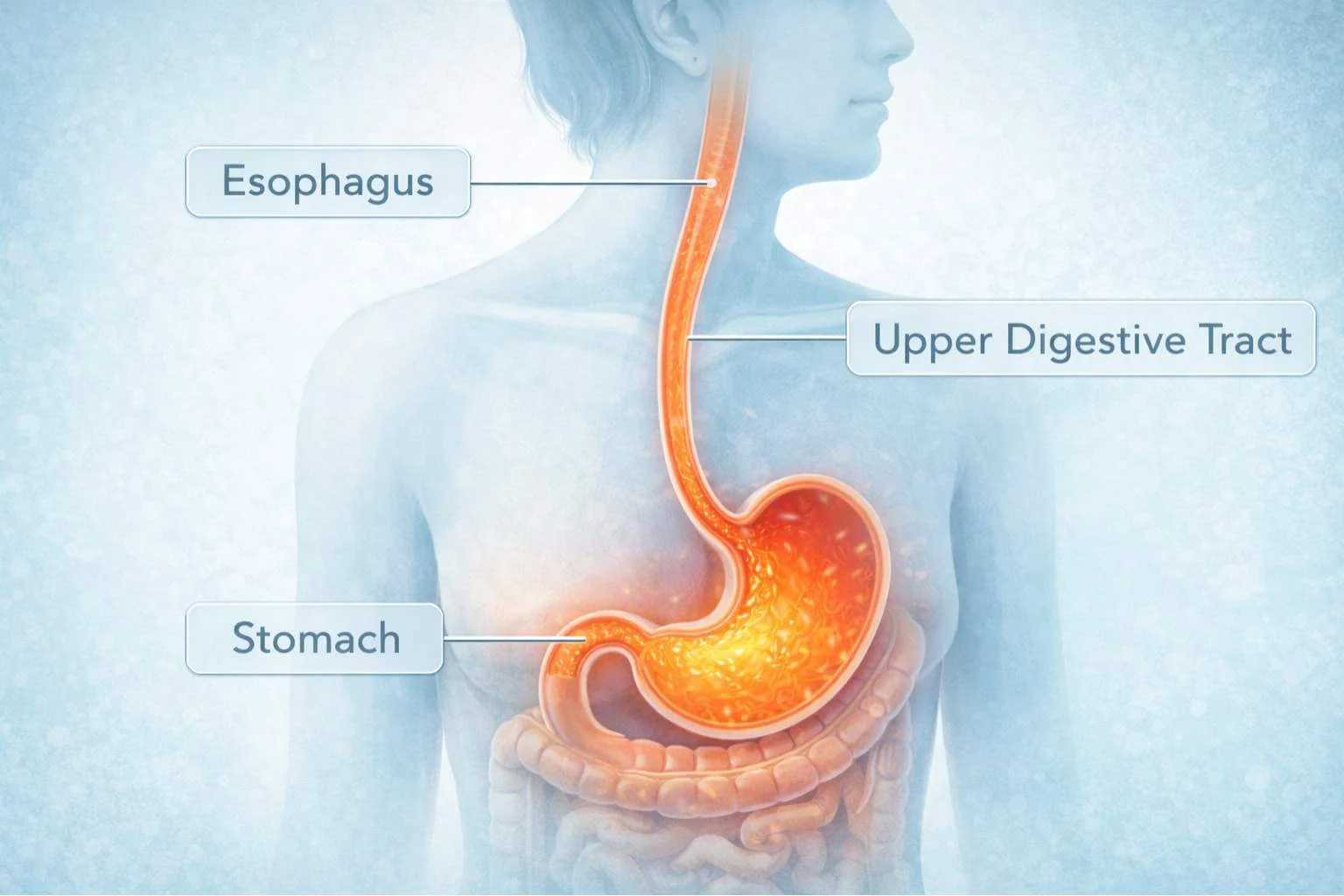
What Is Acid Reflux and How Does It Happen?
Acid reflux, also known as heartburn, occurs when stomach acid flows backward into your esophagus. Think of your stomach as a sealed container with a one-way valve at the top. When this valve (lower esophageal sphincter) doesn't close properly, acid escapes upward.
Your esophagus isn't designed to handle stomach acid, which is why you feel that characteristic burning sensation in your chest.
Common Symptoms of Acid Reflux
- Burning sensation in the chest
- Sour or bitter taste in mouth
- Difficulty swallowing
- Persistent cough/hoarseness
- Chest pain (mimicking heart pain)
What Causes Acid Reflux?
- Large meals or lying down after eating
- Spicy/fatty foods, coffee, alcohol
- Overweight or pregnancy
- Stress and smoking
What Are Gastric Problems?
Gastric problems refer to a broader range of issues that affect your stomach itself. Unlike acid reflux (acid escaping), gastric problems occur within the stomach walls and lining. These include gastritis, ulcers, and indigestion.
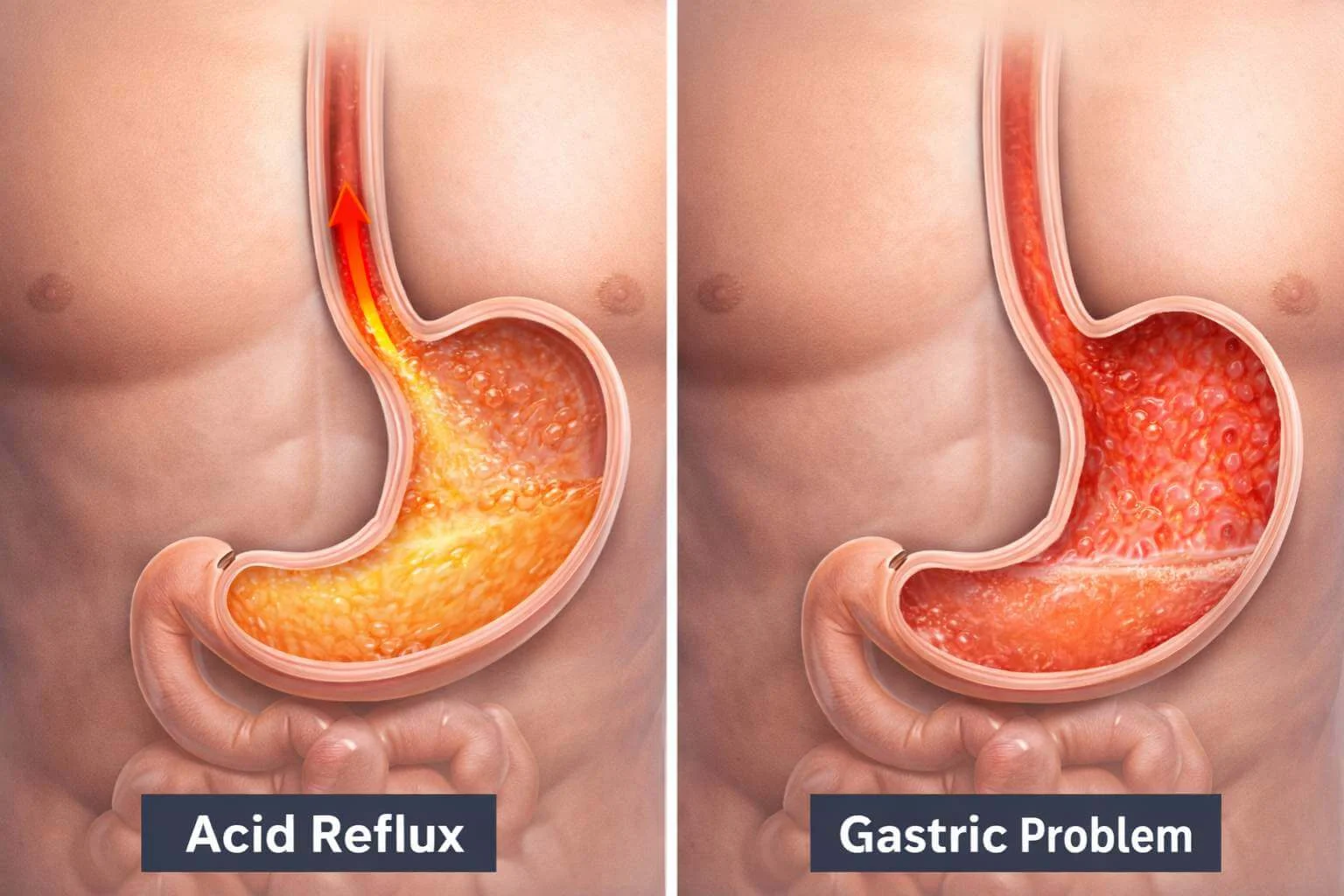
Common Types & Symptoms
Gastritis: Inflammation of stomach lining.
Peptic Ulcers: Painful sores in stomach wall.
Indigestion: General discomfort/fullness.
- Pain in upper abdomen/stomach
- Nausea and vomiting
- Feeling unusually full quickly
- Bloating and gas
- Black or bloody stools
What Is the Difference Between Acidity and Gastric Problem?
Let's examine the crucial differences that will help you identify what you're experiencing.
Gastric: Upper abdomen/belly (localized pain).
Gastric: Gnawing, aching, or cramping pain.
Gastric: Varies; ulcers may hurt on empty stomach, gastritis often worse after eating.
Can You Have Both?
Yes, overlapping symptoms are common. Gastric problems can increase reflux risk, and chronic reflux can damage the stomach lining.
When Should You Visit Arka Anugraha Hospital?
Seek professional help if you experience:
- Symptoms more than twice a week
- Severe pain or difficulty swallowing
- Persistent nausea/vomiting
- Unintended weight loss
- Black/bloody stools or blood in vomit
- Chest pain (seek immediate emergency care)

How Are These Conditions Treated?
Treating Acid Reflux
Lifestyle changes (smaller meals, elevating head), Antacids, H2 blockers, and Proton Pump Inhibitors.
Treating Gastric Problems
Depends on condition. Antibiotics for H. pylori, medications to reduce acid/protect lining, avoiding irritants.
How Can You Prevent These Problems?
- Maintain a healthy weight.
- Eat smaller, frequent meals (avoid large portions).
- Avoid eating 3 hours before bedtime.
- Limit alcohol and quit smoking.
- Manage stress (yoga/meditation).
- Identify and avoid trigger foods (citrus, spicy, caffeine).
Diagnosis & Diagnosis at Arka Anugraha Hospital
Our gastroenterologists use endoscopy, pH monitoring, and blood tests to accurately diagnose your condition. We create a personalized plan based on whether it's reflux, gastric issues, or both.
Final Thoughts: Getting Help
Understanding the distinction empowers you to seek appropriate care. Both conditions are treatable, and early intervention prevents complications.
If you're experiencing persistent digestive symptoms, don't ignore them. Contact Arka Anugraha Hospital today to schedule a consultation.
Book Your Consultation Today