
Diet & Lifestyle Changes to Control Acidity
Have you ever felt a burning feeling in your chest after eating? Or maybe you experienced a sour taste in your mouth that made you feel uncomfortable? These are common signs of acidity, a problem that affects millions of people every day. But here's the good news: you can control acidity through simple changes in your acidity diet and daily habits.
At Arka Anugraha Hospital in Bangalore, we help patients understand how the right food choices and lifestyle adjustments can bring lasting relief from this uncomfortable condition.

What Is Acidity and Why Does It Happen?
Acidity happens when your stomach makes too much acid. Your stomach naturally creates acid to break down food and help with digestion. However, when this acid flows back into your food pipe (the tube connecting your mouth to your stomach), it causes a burning feeling. This backward flow is also called acid reflux or heartburn.
Many people think acidity is just a small problem, but if it happens often, it can affect your daily life. You might find it hard to eat your favorite foods, sleep well at night, or even focus on your work. That's why understanding the right gastric problem diet becomes so important for long-term health and comfort.
What Are the Common Signs of Acidity?
- Burning feeling in your chest: Usually after meals or lying down.
- Sour or bitter taste: A bad taste in your mouth.
- Stomach pain or discomfort: Upper belly heaviness or bloating.
- Burping or belching: Frequent gas due to excess acid.
- Feeling nauseous: Urge to vomit after heavy meals.
- Difficulty swallowing: Feeling like food is stuck in your throat.
Which Foods Should You Avoid in Acidity?
Knowing which foods to avoid is the first step toward feeling better. Here are the main culprits:
Spicy & Fried Foods
Hot peppers, chili powder, and fried dishes irritate the stomach lining and take longer to digest, increasing acid production.
Citrus & Tomatoes
Oranges, lemons, grapefruits, and tomato-based sauces contain high acid levels that can trigger symptoms.
Caffeine & Carbonation
Coffee, tea, and soft drinks relax the stomach valve, allowing acid to flow back up. Carbonation adds pressure.
Chocolate, Mint & Alcohol
Chocolate, peppermint, and alcohol relax the stomach valve and increase acid production. Eat in moderation.
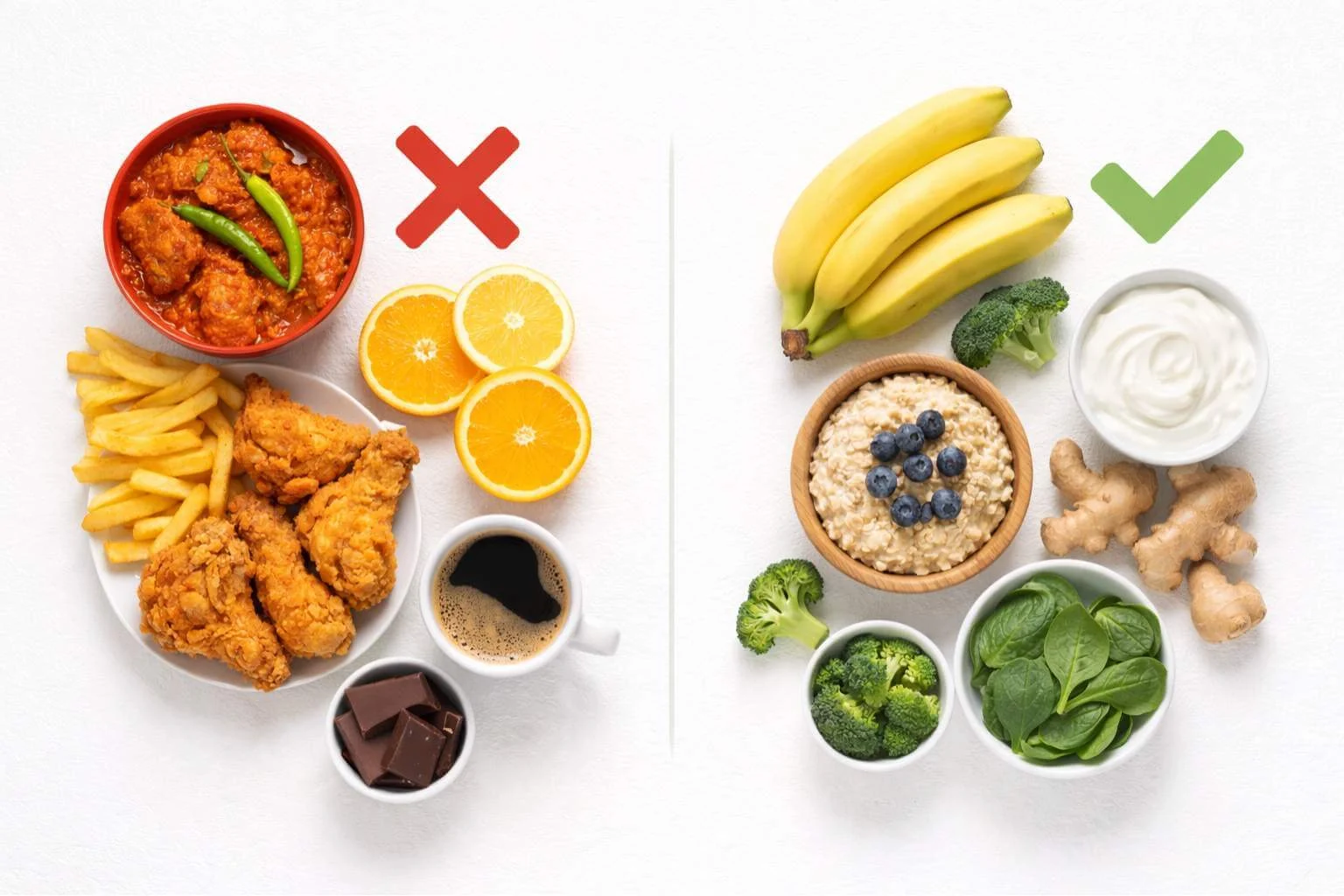
What Are the Best Foods to Eat for Acidity?
These foods are gentle on your stomach and can help neutralize excess acid.
Bananas & Melons
Bananas have a natural protective coating. Melons like watermelon are hydrating and low in acid.
Oatmeal & Whole Grains
Oatmeal absorbs stomach acid. Brown rice and whole wheat keep you full without triggering acid.
Green Vegetables
Broccoli, cauliflower, cucumber, and leafy greens are low in fat/sugar and reduce acid reflux.
Ginger
Natural anti-inflammatory properties help reduce stomach inflammation. Add fresh ginger to tea or meals.
Yogurt & Low-Fat Dairy
Probiotics in yogurt maintain healthy gut bacteria. Buttermilk is also soothing.
Coconut Water
Naturally cooling and helps neutralize stomach acid. A great alternative to coffee/tea.
What Lifestyle Changes Help Control Acidity?
Food choices are important, but your daily habits also play a huge role in managing acidity.
How Should You Eat?
Eat 5-6 smaller meals instead of 3 large ones. Chew food slowly (20-30 times). Don't lie down immediately after eating (wait 2-3 hours). Avoid late-night snacking.
Weight & Clothing
Extra weight puts pressure on the stomach, pushing acid up. Lose weight through diet and activity. Avoid tight belts or waistbands that squeeze the stomach.
Sleep & Stress
Elevate the head of your bed 6-8 inches. Sleep on your left side. Manage stress with deep breathing or yoga, as stress increases acid production.

Simple Home Remedies
- Cold Milk: Neutralizes stomach acid for immediate relief.
- Aloe Vera Juice: Reduces inflammation (drink small amounts before meals).
- Jeera Water: Boiled cumin seeds improve digestion.
- Tulsi Leaves: Chewing leaves stimulates protective mucus production.
- Fennel Seeds: Chewing saunf after meals aids digestion.
When Should You See a Doctor?
See a doctor if symptoms occur more than twice a week, OTC meds don't help, you have difficulty swallowing, persistent vomiting, unexplained weight loss, or chest pain.
At Arka Anugraha Hospital in Bangalore, our experienced doctors can diagnose the cause and create a personalized treatment plan.
Creating Your Plan & Common Mistakes
Start by keeping a food diary to identify triggers. Plan meals ahead to avoid grabbing unhealthy snacks. Common mistakes to avoid:
- Skipping meals (increases acid in empty stomach).
- Drinking too much water during meals (dilutes enzymes).
- Relying only on antacids without lifestyle changes.
- Exercising immediately after eating.
Take Control of Your Digestive Health
Managing acidity is possible. Start with small changes, be patient, and listen to your body.
Need personalized guidance? Visit Arka Anugraha Hospital in Bangalore today. Our expert gastroenterologists are ready to help you create a customized treatment plan.
Book Your Appointment Now