
Your Complete Guide to Managing PCOS Through Diet, Nutrition & Lifestyle
If you have been diagnosed with PCOS, you might feel overwhelmed about what to eat. The good news is that choosing the best diet for PCOS can make a real difference in how you feel every day.
At Arka Anugraha Hospital in Bangalore, we understand that PCOS affects more than just your physical health. The right food choices can help balance your hormones, manage your weight, and improve your overall health. This guide will walk you through everything you need to know about eating well with PCOS.

Why Does Diet Matter So Much?
PCOS is hormonal and affects how your body processes sugar (insulin resistance). Eating sugary/refined foods spikes blood sugar, causing insulin surges. This triggers ovaries to produce more male hormones, worsening symptoms like acne and irregular periods.
Good nutrition helps manage insulin better, reducing hormone imbalance.
What Foods Should You Include?
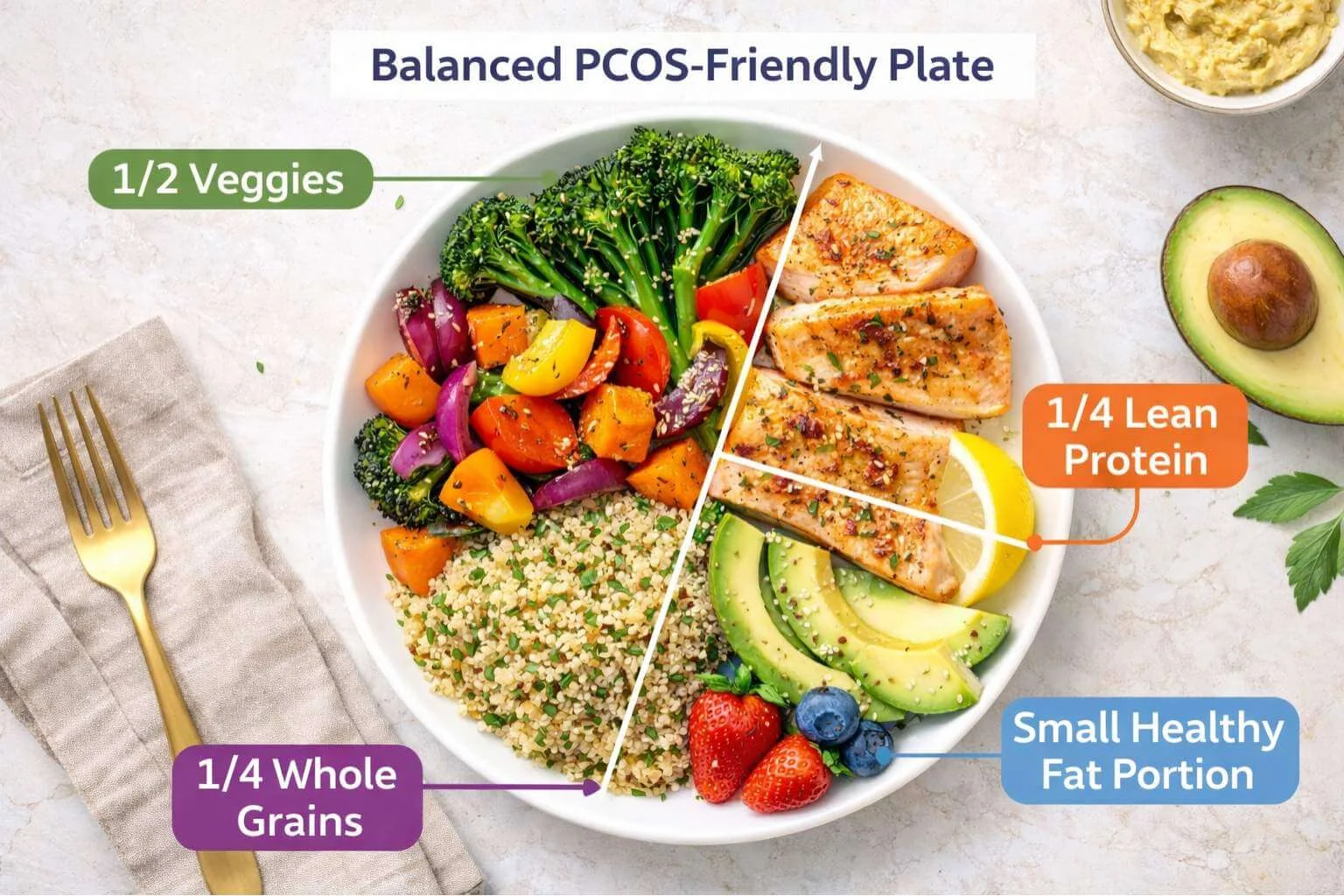
Building a healthy PCOS diet means choosing foods that work with your body, not against it.
Complex Carbohydrates
Whole grains release sugar slowly. Try brown rice, quinoa, oats, whole wheat, and millets (jowar, bajra).
Lean Proteins
Protein stabilizes blood sugar. Include chicken, fish, eggs, tofu, paneer, and dals. Fatty fish (salmon) provides anti-inflammatory Omega-3s.
Vegetables & Fruits
Leafy greens (spinach, methi) are nutrient-dense. Low-GI fruits like berries, apples, and citrus are better than high-sugar tropical fruits.
Healthy Fats
Essential for hormone production. Use olive/coconut oil, ghee, nuts (almonds, walnuts), and seeds (flax, chia).
Foods to Avoid with PCOS
- Refined Carbs: White bread, white rice, maida products.
- Sugary Foods: Sweets, sodas, sugary drinks.
- Processed/Fried Foods: Packaged snacks, fast food (trans fats increase inflammation).
- High-Fat Dairy: Can increase insulin resistance in some women.
- Excess Caffeine/Alcohol: Disrupts hormones and sleep.
Exercise & Menstrual Health
Exercise improves insulin sensitivity, lowering androgen levels which helps regulate periods.
- Walking: 30 mins brisk walking daily controls blood sugar.
- Strength Training: Builds muscle to use insulin better.
- Yoga: Reduces stress and balances hormones.
Increasing Period Flow
If you have light periods, focus on:
- Iron-rich foods: Spinach, beetroot, dates.
- Vitamin C: Citrus fruits aid iron absorption.
- Omega-3s: Reduce inflammation (flax seeds, walnuts).
- Hydration: Water supports hormone production.

Creating a Sustainable Plan
- Plan Meals: Prep healthy options to avoid last-minute junk food.
- Gradual Changes: Switch one thing at a time (e.g., white rice to brown).
- Listen to Your Body: Keep a food diary to see what makes you feel good.
- Flexibility: Occasional treats are fine. Focus on overall patterns.
Supplements for PCOS
Always consult a doctor first.
- Inositol: Improves insulin sensitivity and ovulation.
- Vitamin D: Many women with PCOS are deficient.
- Omega-3s: Reduces inflammation.
- Magnesium: Helps insulin regulation and sleep.
Your Action Plan: Where to Start
This Week
Replace refined grains with whole grains in one meal daily. Take a 15-min walk after dinner. Drink 8 glasses of water.
This Month
Add more veggies to every meal. Include lean protein. Try strength training.
This Quarter
Practice stress management (yoga/meditation). Get 7 hours of sleep. Schedule a check-up.
Frequently Asked Questions
Can I reverse PCOS with diet alone?
You cannot "cure" it, but diet significantly reduces symptoms. Some may still need medication.
How long to see results?
Energy/bloating improves in weeks. Weight/period changes take 2-3 months.
Are carbs okay?
Yes! Choose complex carbs (whole grains, veggies) over refined ones.
What if I'm not losing weight?
Check portion sizes, sleep, and stress. Consult a doctor to rule out thyroid issues.
Your Journey Starts Now
Don't let PCOS control your life. Take the first step today by making one small healthy change.
At Arka Anugraha Hospital, our team (nutritionists, endocrinologists, gynecologists) is here to support you.
Book Your Consultation Today