
What Are the First Signs of Kidney Stones? Early Symptoms You Should Not Ignore
Have you ever experienced sudden, sharp pain in your back or side that made you stop everything you were doing? This could be one of the first signs of kidney stones, a common yet often misunderstood health condition. Kidney stones affect millions of people worldwide each year, and recognizing the early warning signs can make a significant difference in getting timely treatment and preventing complications.
At Arka Anugraha Hospital in Bangalore, we understand how frightening and painful kidney stone symptoms can be. That's why we've created this complete guide to help you understand what the first signs are, where the pain occurs, and when you need to see a doctor.
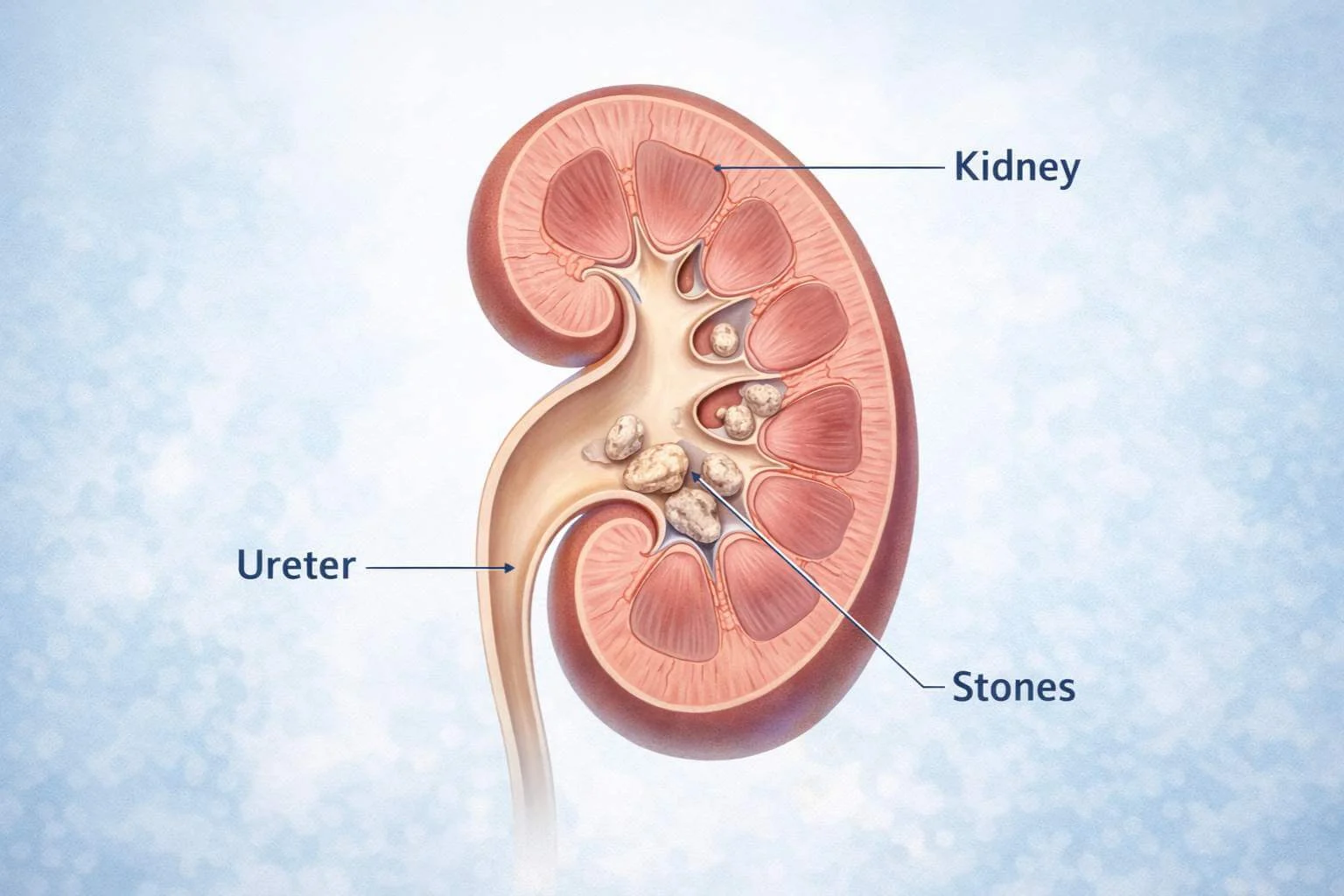
What Are Kidney Stones and Why Do They Form?
Kidney stones are hard deposits made of minerals and salts that form inside your kidneys. Think of them like small pebbles or crystals that develop when your urine contains more crystal-forming substances (like calcium, oxalate, and uric acid) than the fluid in your urine can dilute.
Common Causes
- Dehydration: Not drinking enough water causes concentrated urine.
- Diet: High salt, protein, or sugar intake.
- Medical History: Family history, obesity, or digestive diseases.
What Are the First Signs of Kidney Stones?
The first signs can be subtle. Many people don't experience symptoms until the stone moves. However, early warning signs include:
- A dull ache or discomfort in the back or side.
- Cloudy or unusual-smelling urine.
- Pink, red, or brown urine (blood).
- Frequent need to urinate, even when the bladder isn't full.
- General fatigue or mild nausea.
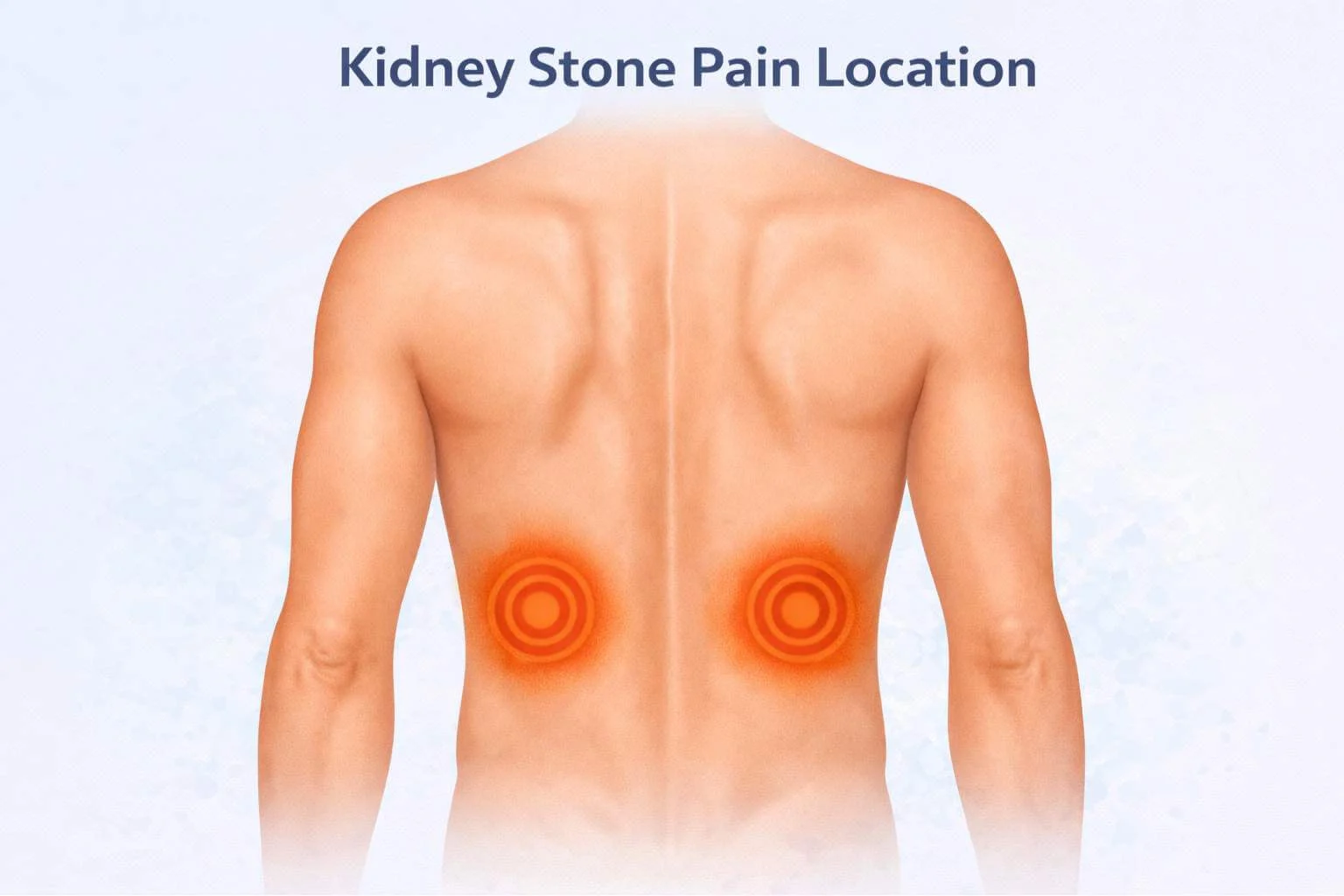
Understanding Kidney Stone Pain and Its Location
Kidney stone pain is intense and distinctive. Understanding where it occurs helps you recognize it early.
The Starting Point
Pain usually starts in your back or side, just below your ribs where the kidneys are located.
Radiating Pain
As the stone moves, pain spreads to the lower abdomen, groin, inner thigh, or genital area.
Wavelike Nature
Pain comes in intense waves (renal colic) as the ureter contracts to push the stone.
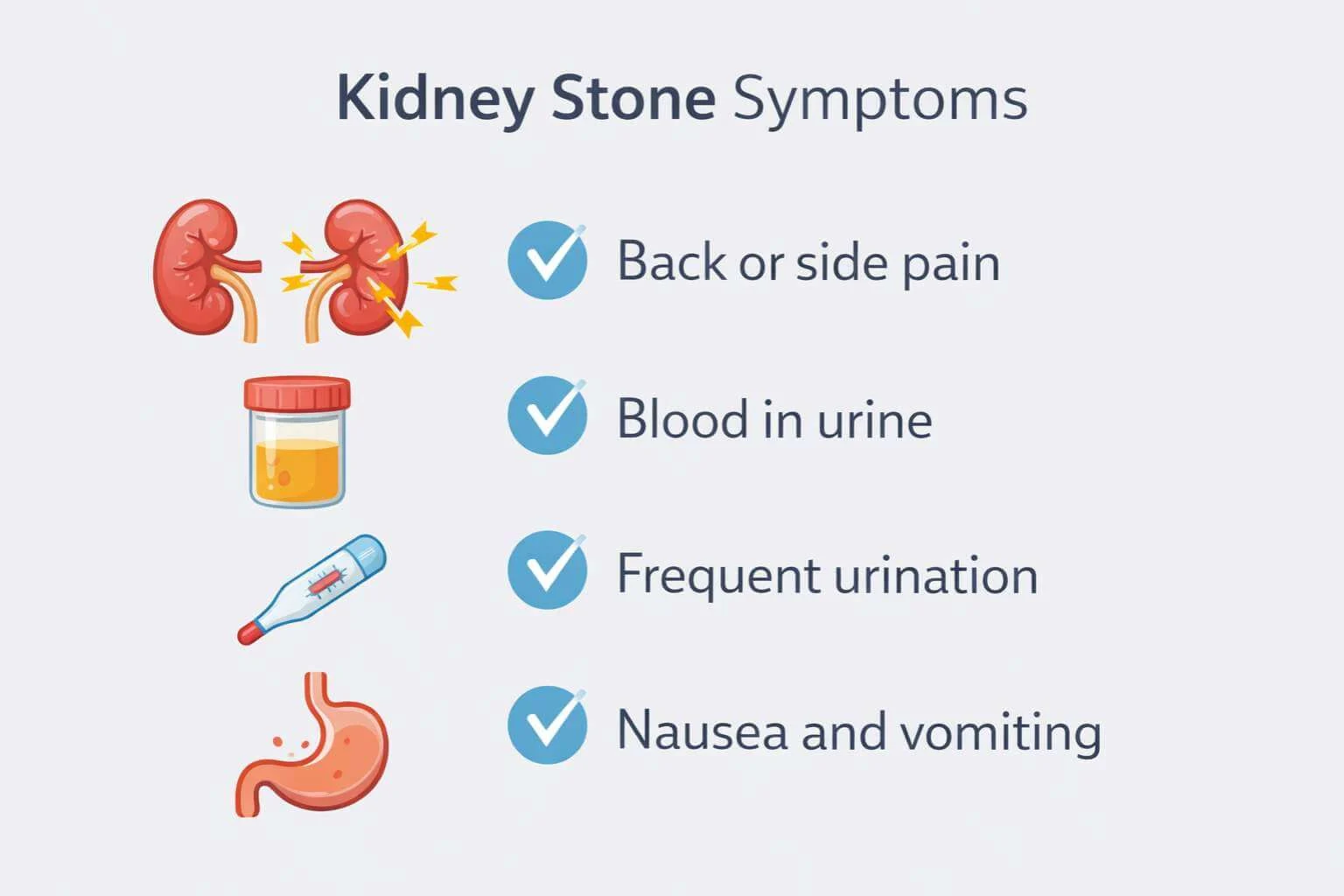
Main Kidney Stone Symptoms to Watch For
While pain is the most well-known symptom, watch for these specific signs:
- Blood in Urine (Hematuria) Urine may look pink, red, or brown because the stone scratches the urinary tract lining.
- Changes in Urination Strong urgency to go but only small amounts come out; burning sensation while urinating.
- Nausea and Vomiting Caused by shared nerve connections between the kidneys and the stomach.
- Fever and Chills A serious red flag indicating a potential infection.
When to Seek Immediate Medical Attention
Go to the emergency room or contact Arka Anugraha Hospital immediately if:
- Pain is so severe you cannot sit still or find a comfortable position.
- Pain is accompanied by fever and chills.
- You are vomiting and cannot keep fluids down.
- You see blood in your urine and have difficulty urinating.
Treatment Options
Small Stones (Conservative)
If the stone is small (<4mm), treatment often involves drinking plenty of water to flush it out, coupled with pain medication and alpha-blockers to relax the ureter.
Larger Stones (Medical)
Procedures may include Shock Wave Lithotripsy (sound waves break the stone), Ureteroscopy (scope removal), or surgery for very large stones.
How Can You Prevent Kidney Stones?
Prevention is key to stopping recurrence. Simple lifestyle changes make a big difference.
- Stay Hydrated: Aim for 8-12 glasses of water daily. Urine should be pale yellow.
- Dietary Changes: Reduce salt (sodium) and animal protein. Eat calcium-rich foods (don't avoid them!).
- Weight Management: Maintain a healthy weight through balanced diet and exercise.
Don't Ignore the Signs
If you experience back pain, nausea, or urinary changes, don't wait. Early diagnosis prevents complications.
At Arka Anugraha Hospital in Bangalore, our expert urology team is ready to provide the care and relief you need.
Book Your Consultation Today