
Is PCOS Dangerous? Understanding Risks, Complications and Common Myths
If you have been diagnosed with Polycystic Ovary Syndrome, you might be wondering: is PCOS dangerous? This is a question many women ask when they first hear about their condition. At Arka Anugraha Hospital in Bangalore, we understand your concerns and want to provide you with clear, honest information about PCOS and its potential health impacts.
This comprehensive guide will help you understand the real dangers of PCOS, separate facts from myths, and learn what you can do to protect your long-term health.

What Makes PCOS a Concern for Your Health?
PCOS is not just about irregular periods or ovarian cysts. It is a hormonal disorder that affects your entire metabolic system. The danger lies in how hormonal imbalances (excess insulin and androgens) can create a cascade of health problems over time if left unmanaged, affecting blood sugar, weight, heart health, and mental wellbeing.
Does PCOS Cause Cancer?
Understanding the Real Risks
PCOS itself does not directly cause cancer. However, hormonal imbalances can increase the risk for endometrial cancer.
Why? With irregular periods, the uterine lining builds up without shedding regularly. This can lead to abnormal cell changes (hyperplasia). While the risk is higher (about 3x), it is still relatively small and manageable with regular checkups and period regulation.
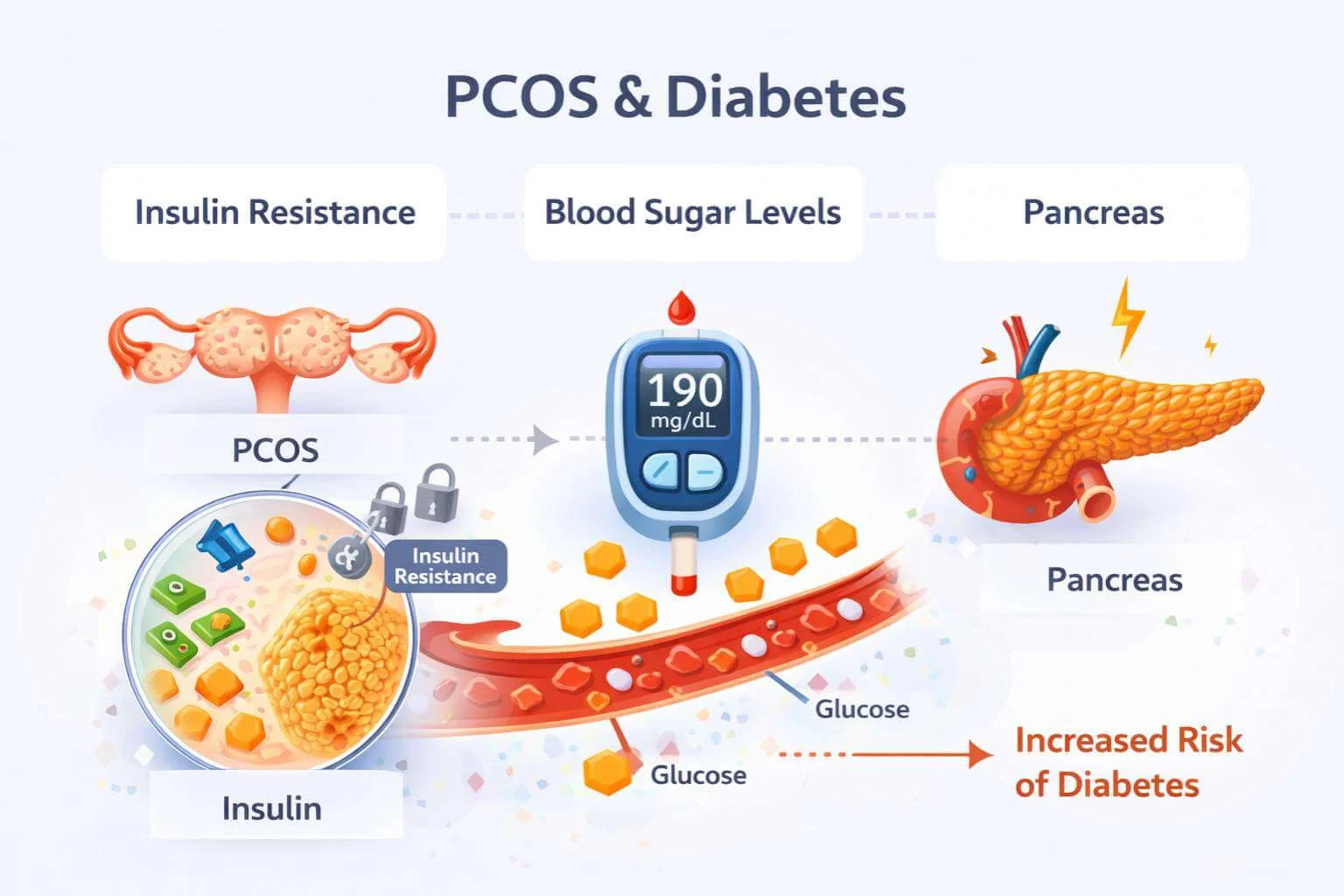
PCOS and Diabetes: A Dangerous Connection
More than half of women with PCOS develop diabetes or prediabetes before age 40. This is due to insulin resistance.
When cells resist insulin, your pancreas works harder, raising insulin levels which worsens PCOS symptoms. Eventually, blood sugar rises.
Warning Signs to Watch For
- Increased thirst and urination
- Unusual fatigue
- Blurry vision
- Dark skin patches (neck, armpits)
Regular blood sugar testing is crucial.
Can Stress Cause PCOS?
No, stress does not cause PCOS. PCOS is genetic and hormonal. However, stress can worsen symptoms by increasing cortisol, which aggravates insulin resistance and hormonal imbalance.
Other Health Complications
- Heart Disease & High BP: Increased risk due to insulin resistance affecting blood vessels.
- Sleep Apnea: Breathing stops during sleep; more common in women with PCOS.
- Mental Health: Higher rates of depression and anxiety due to hormonal imbalances and physical symptoms.
Common PCOS Myths Debunked
Fact: Thin women ("Lean PCOS") can also have it. About half of women with PCOS are not overweight.
Fact: While it makes conception harder due to irregular ovulation, most women with PCOS do get pregnant with proper treatment.
Fact: Pills manage symptoms but do not cure the condition. Symptoms return if you stop taking them.
Fact: While periods stop, the metabolic risks (diabetes, heart disease) continue and require lifelong management.

Taking Control: Reducing Health Risks
- Lifestyle Changes: Even 5-10% weight loss restores regular periods and improves insulin sensitivity. Focus on whole foods and regular exercise.
- Medical Management: Regular checkups for blood sugar and cholesterol. Medications like Metformin can help.
- Mental Health Support: Don't ignore anxiety or depression; seek professional help.
When Should You Be Concerned?
Seek medical attention if you experience:
- Extremely heavy/prolonged bleeding.
- Severe abdominal pain (possible cyst rupture).
- Sudden severe headaches or vision changes.
- Symptoms of high blood sugar (thirst, urination).
Take the First Step Toward Healthier Living
Is PCOS dangerous? It can be if unmanaged, but with proper care, you can live a full, healthy life.
The team at Arka Anugraha Hospital in Bangalore is ready to help you understand and manage your condition. Schedule your consultation today.
Book Your Appointment Now