
Understanding Kidney Stone Size: A Complete Guide to Stages and Risks
Kidney stones are hard deposits that form inside your kidneys from minerals and salts. The size of your kidney stone makes a significant difference in how you experience symptoms and what treatment you'll need. Some tiny stones pass without you even noticing, while larger ones can cause severe pain and serious health complications.
At Arka Anugraha Hospital in Bangalore, we help patients understand their condition. This guide explains different kidney stone sizes, what's considered normal, and when you should be concerned.
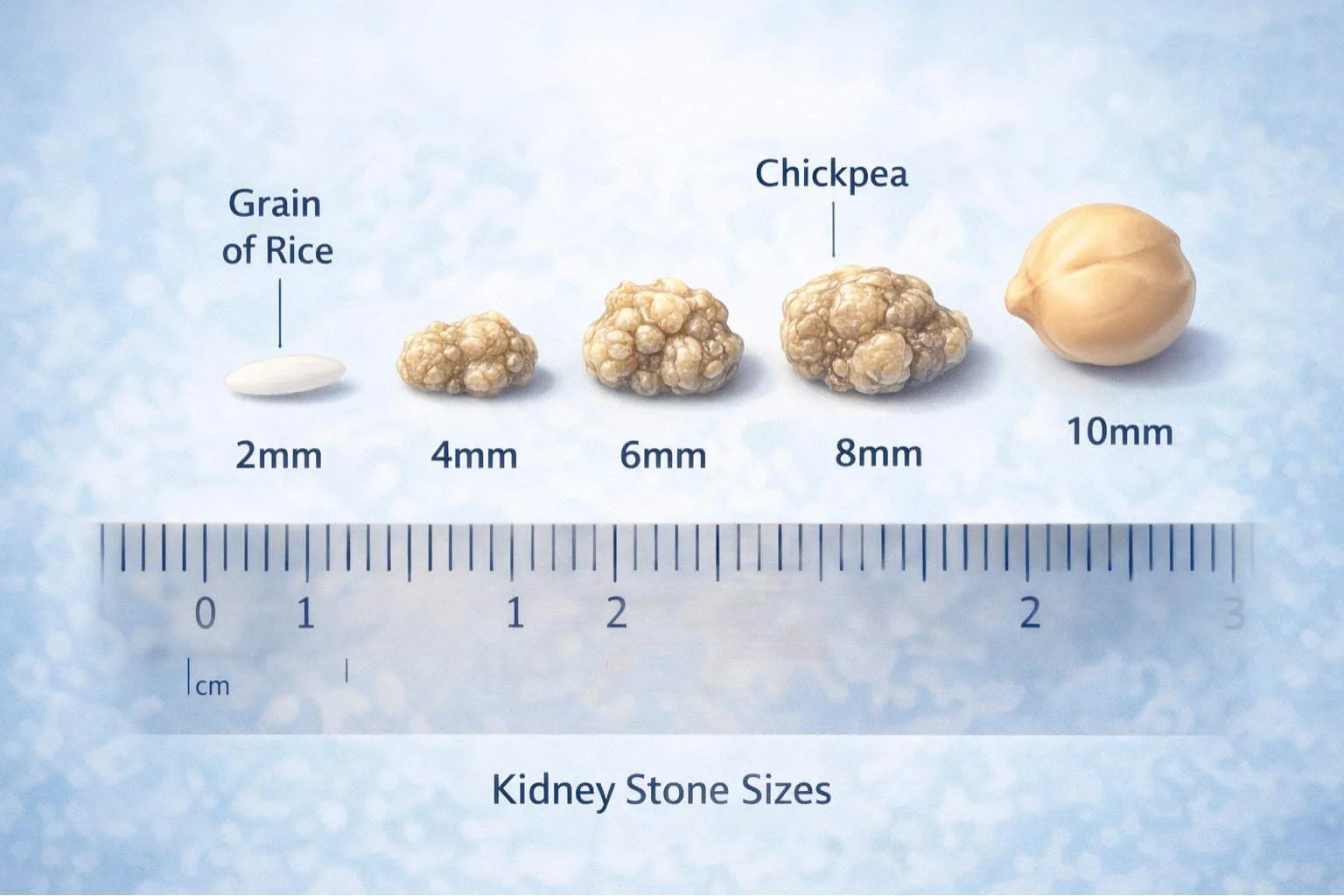
What Is Kidney Stone Size?
Doctors measure kidney stones in millimeters (mm). For context, 1mm is the thickness of a credit card, and 10mm (1cm) is the width of a pinky fingernail.
Kidney Stone Size Chart
Tiny Stones (1mm - 3mm)
Size of a grain of sand. Usually pass on their own (90% chance) with mild discomfort.
Small Stones (4mm - 6mm)
Size of a peppercorn. 50% chance of passing naturally. Likely causes noticeable pain.
Medium Stones (7mm - 9mm)
Size of a chickpea. Only 20-30% chance of passing naturally. Often requires medical procedures.
Large Stones (10mm+)
Size of a pea or larger. Unlikely to pass naturally. Requires medical intervention to prevent complications.
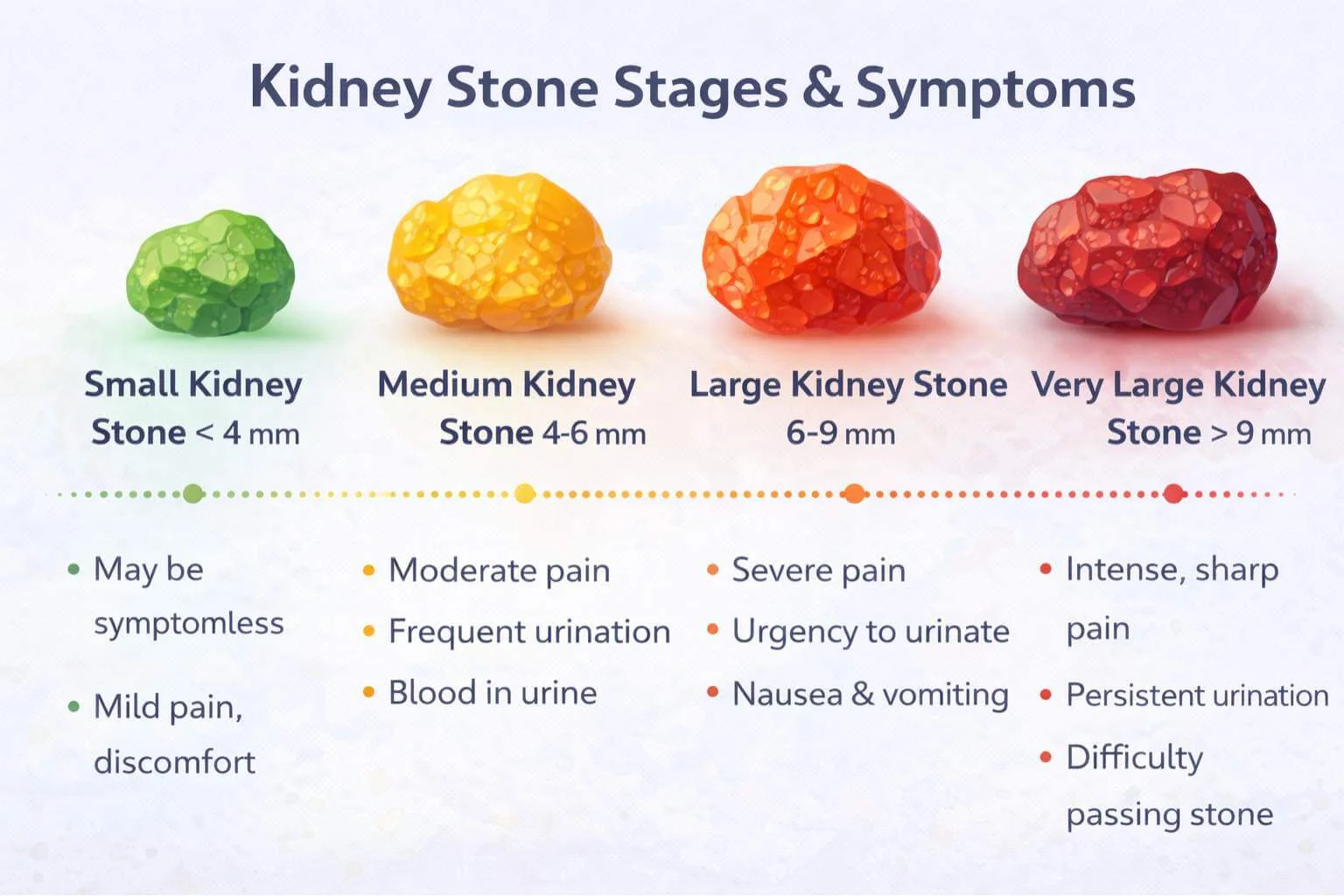
When is a Stone Dangerous?
> 6mm: Risk of getting stuck in the ureter increases, causing blockage and infection.
> 10mm: Considered dangerous as they almost never pass naturally and can block urine flow completely.
Seek Immediate Help If: You have fever with pain, blood in urine, inability to urinate, or uncontrollable vomiting.
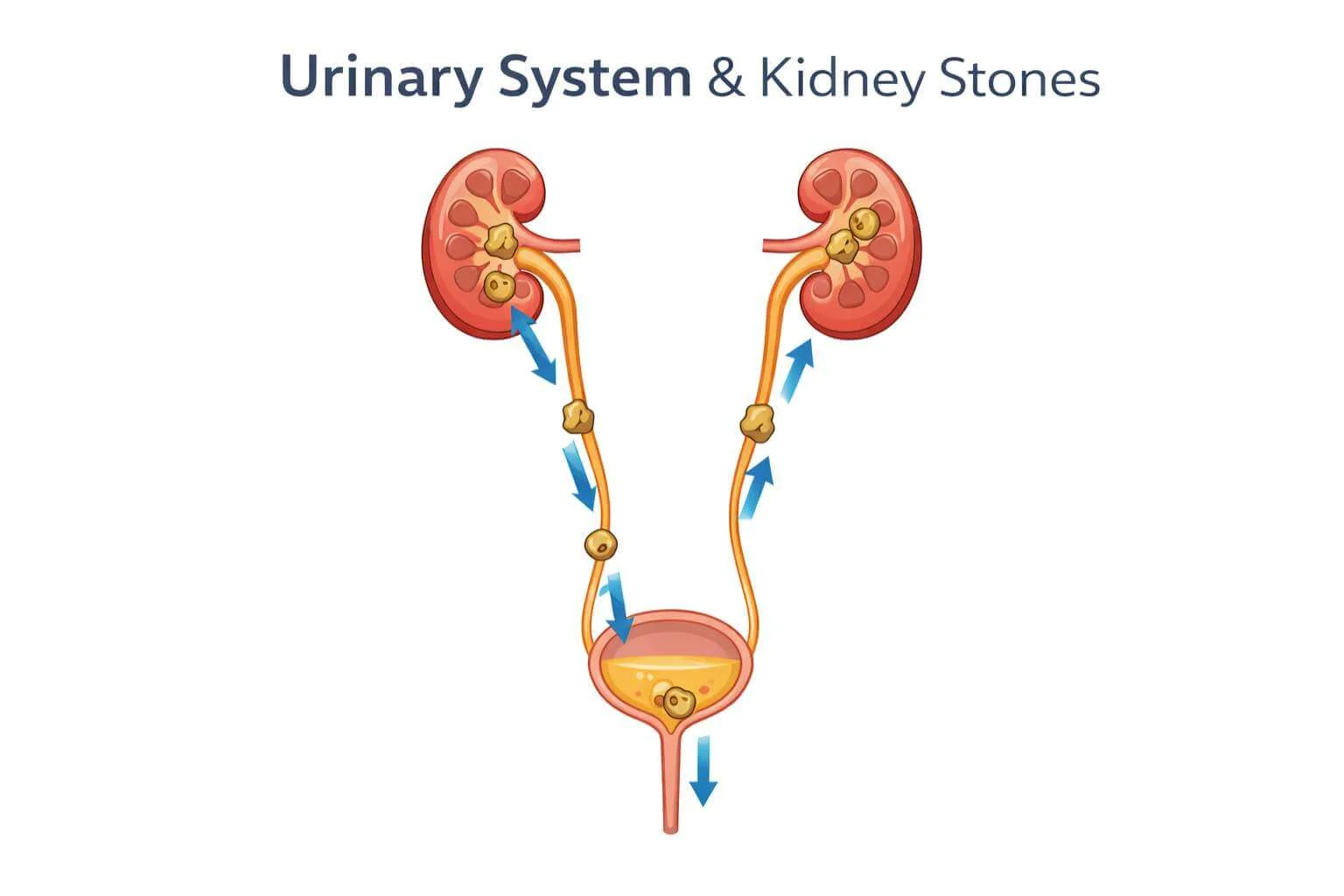
How Stones Form & Progress
Stage 1: Crystal Formation
Minerals concentrate in urine forming tiny crystals.
Stage 2: Growth
Crystals stick together over weeks/months to form measurable stones.
Stage 3: Migration
Stone moves from kidney to ureter, causing intense pain.
Stage 4: Passage/Removal
The stone exits the body naturally or is removed medically.
Treatment Options by Size
< 5mm (Conservative)
Watchful waiting. Drink 2-3L water daily. Pain meds and alpha-blockers help passage.
5mm - 10mm (Shock Wave)
ESWL: Sound waves break stones into smaller pieces. Non-invasive.
> 7mm (Ureteroscopy)
A thin scope removes or breaks the stone via the urethra. No incisions.
> 20mm (Surgery)
PCNL: Minimally invasive surgery through a small back incision for very large stones.
Prevention is Key
Once you've had a stone, recurrence is common (50% chance). Prevention steps include:
- Hydration: Drink 2-3L water daily.
- Diet: Reduce salt and animal protein. Eat calcium-rich foods but avoid oxalate-rich foods if susceptible.
Expert Care for Kidney Stones
Whether it's a tiny stone or a large one requiring surgery, understanding your condition is the first step.
At Arka Anugraha Hospital, our urology team uses the latest technology for safe, effective treatment.
Book Your Appointment Now