
Understanding the Types of Kidney Stones: A Complete Guide
Have you ever experienced a sharp, intense pain in your back or side that makes you double over? You might be dealing with kidney stones, one of the most common and painful conditions affecting millions of people worldwide.
At Arka Anugraha Hospital in Bangalore, we see many patients confused about the different types of kidney stones. This comprehensive guide will help you understand everything you need to know about kidney stones, their types, and how to manage them effectively.
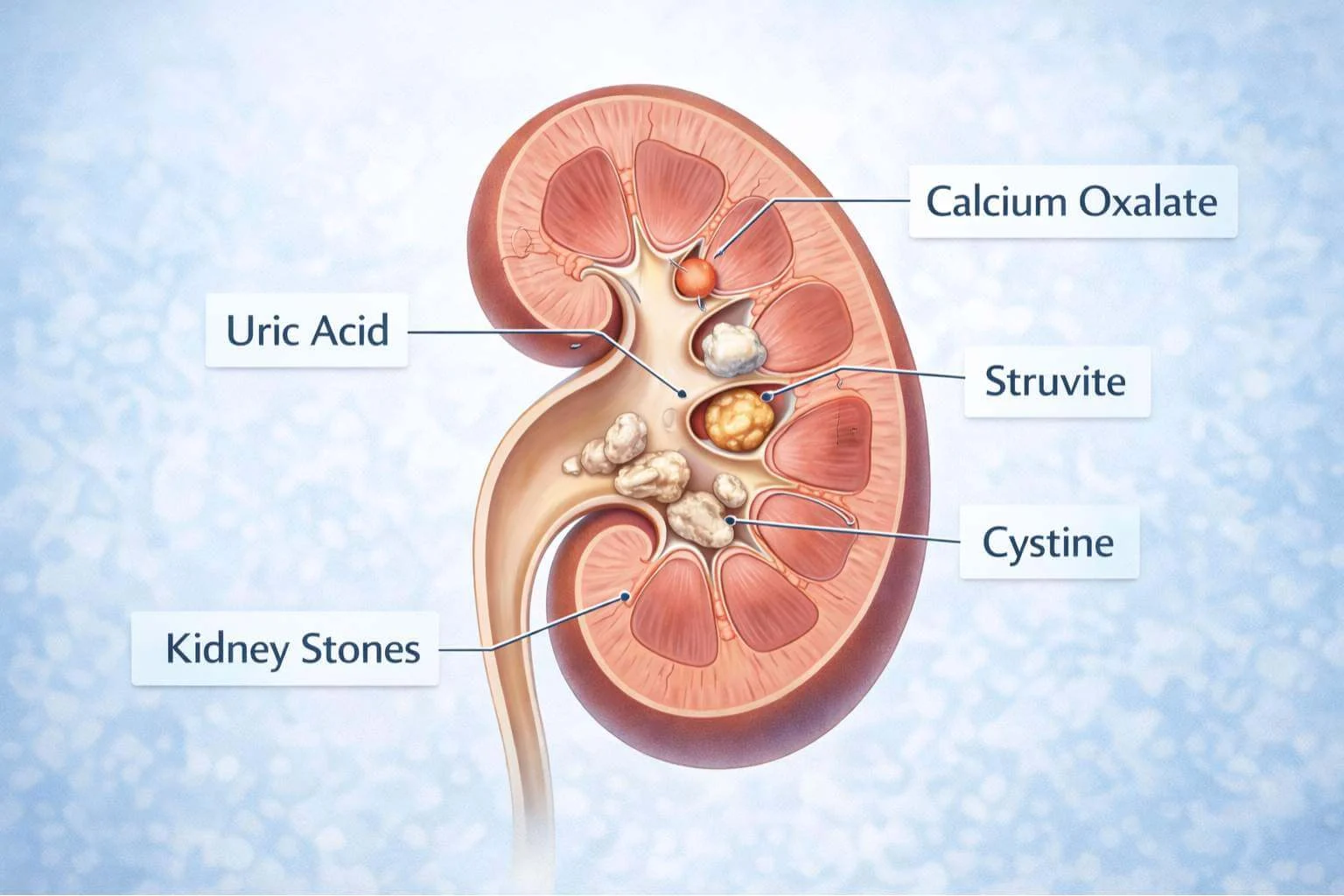
What Are Kidney Stones?
Kidney stones are hard deposits made of minerals and salts that form inside your kidneys when your urine contains too much of certain substances (calcium, oxalate, uric acid) and not enough fluid to dilute them.
The 4 Main Types of Kidney Stones
1. Calcium Oxalate Stones
Most Common (70-80%): Forms when calcium combines with oxalate in urine. Tip: Don't avoid calcium; pair calcium-rich foods with meals to block oxalate absorption.
2. Uric Acid Stones
Occurs in 5-10%: Forms when urine is too acidic. Common in people who eat high animal protein diets or have gout.
3. Struvite Stones
Infection Stones: Caused by urinary tract infections (UTIs). Can grow large quickly. More common in women.
4. Cystine Stones
Rare (<1%): Caused by a genetic disorder (cystinuria) leading to excess cystine in urine. Requires lifelong management.
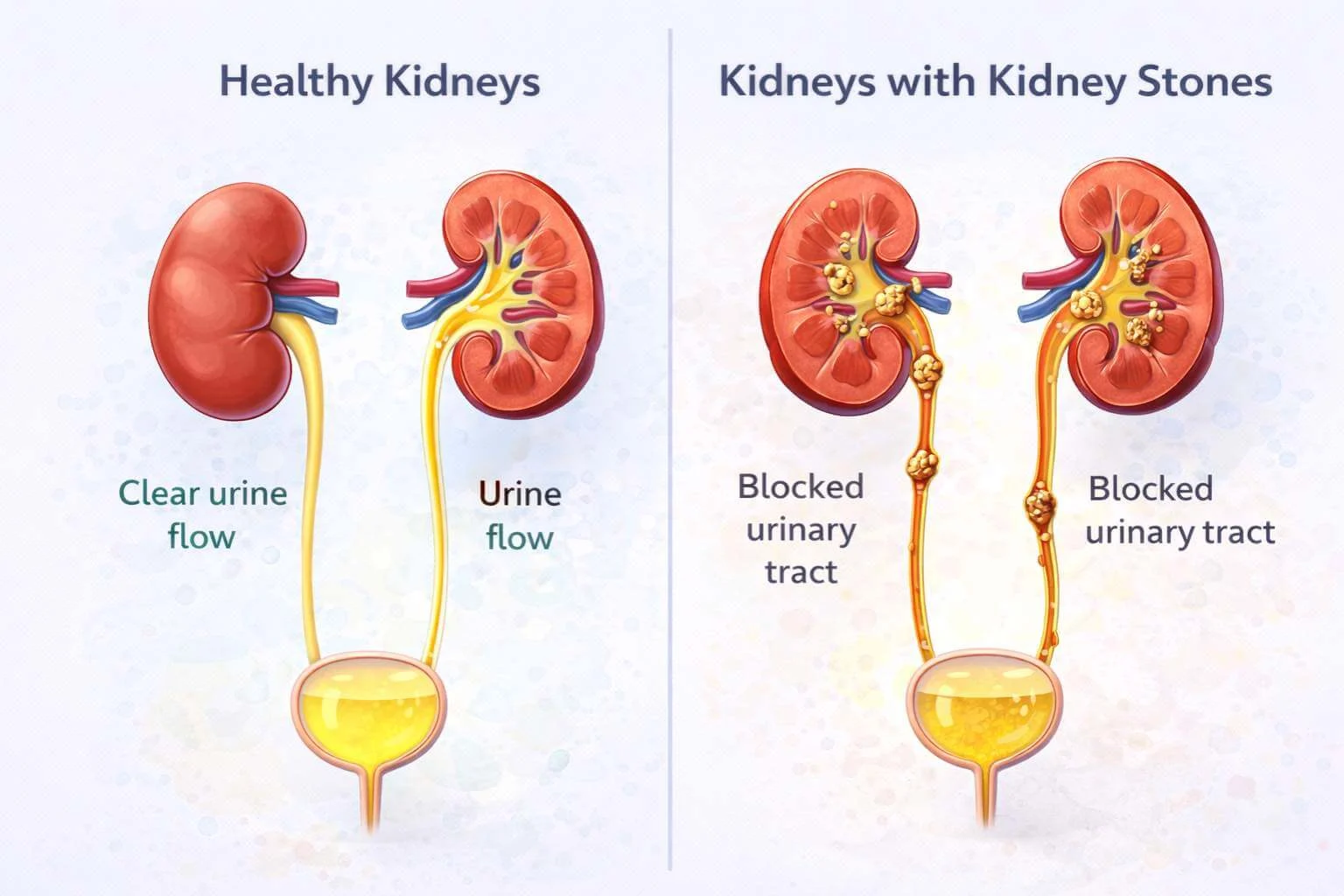
Kidney Stones vs. Gallstones: The Difference
Gallstones: Gallbladder (under liver).
Gallstones: Upper right abdomen, shoulder.
Gallstones: Nausea, vomiting, yellowing skin/eyes.
Common Symptoms
- Severe pain in back/side/groin (comes in waves)
- Blood in urine (pink/red/brown)
- Cloudy or foul-smelling urine
- Nausea and vomiting
- Fever and chills (requires immediate medical attention)

Diagnosis & Treatment
We use CT scans (gold standard) and ultrasounds for diagnosis. Treatments range from:
- Conservative: Drinking water and pain meds for small stones (<4mm).
- Shock Wave Lithotripsy (ESWL): Sound waves break stones.
- Ureteroscopy: Removal via a thin tube.
- Surgery (PCNL): For very large stones.
Prevention is Better Than Cure
Top Prevention Tips
- Hydrate: Drink 8-12 glasses of water daily.
- Limit Salt: Reduces calcium in urine.
- Moderate Protein: Limit animal protein to reduce stone risk.
- Calcium: Get it from food (dairy), not supplements.
Take Control of Your Kidney Health
Understanding your stone type is the key to prevention. Don't let stones control your life.
If you have symptoms or want to discuss prevention strategies, contact Arka Anugraha Hospital today.
Book Your Consultation Now