
What is PCOD Problem? Causes, Symptoms & Treatment Explained
A complete, doctor-reviewed guide to Polycystic Ovarian Disease — understand what PCOD is, why it happens, and how to manage it effectively.

If you have been experiencing irregular periods, sudden weight gain, or stubborn acne that won't go away, you may be dealing with a condition called PCOD. The PCOD problem is one of the most common hormonal disorders affecting women in India today — and the good news is, it is highly manageable once you understand it.
In this comprehensive guide, our experienced gynaecologists at Arka Anugraha Hospital, Bangalore explain everything you need to know about the PCOD problem — from what it is, to its causes, symptoms, diagnosis, treatment, diet plan, and cost. Whether you are trying to understand your own symptoms or researching for a loved one, this article will give you clear, medically-reviewed answers.
What is PCOD? Full Form and Meaning
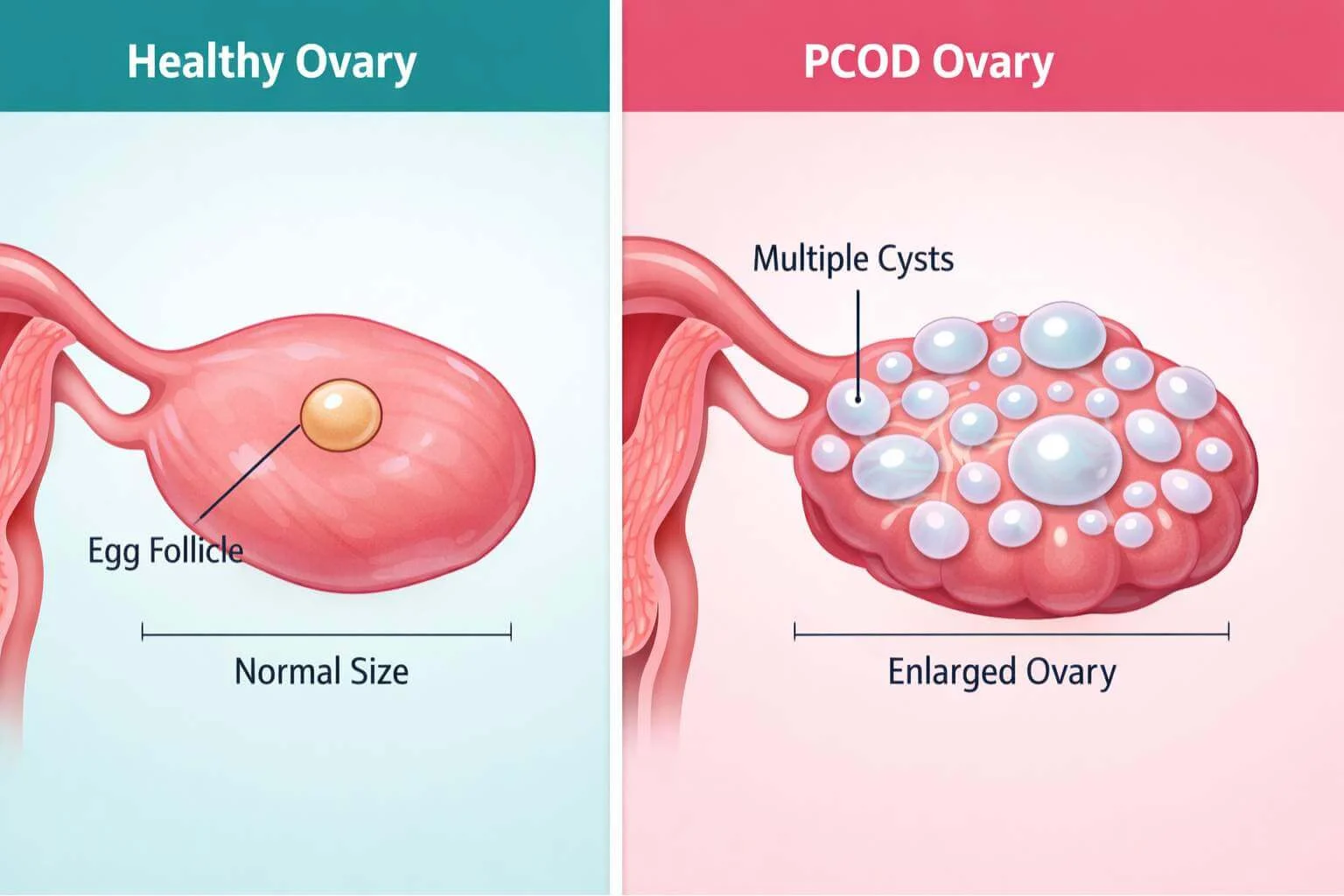
PCOD full form is Polycystic Ovarian Disease. It is a hormonal condition that affects women during their reproductive years (typically ages 12 to 45). In PCOD, the ovaries produce a large number of immature or partially mature eggs. Instead of being released during ovulation as they normally would, these eggs accumulate in the ovaries over time and form small fluid-filled sacs called cysts.
This disrupts the normal ovulation cycle, leads to hormonal imbalances, and causes a range of symptoms including irregular menstrual periods, weight gain, acne, and excess hair growth on the face and body.
Indian women are affected by PCOD, making it one of the most common hormonal disorders in the country. Studies estimate that 9% to 22% of Indian women have PCOD — higher than the global average.
Important: Having PCOD does not mean you have a serious disease. It is a manageable condition. With the right lifestyle changes and medical guidance, most women with PCOD lead completely normal, healthy lives and can conceive successfully.
PCOD vs PCOS: What's the Difference?
One of the most common questions women ask is whether PCOD and PCOS are the same thing. While the terms are often used interchangeably, they are different conditions. Both involve the ovaries and hormonal imbalance, but they differ in severity, causes, and long-term health impact.
| Factor | PCOD | PCOS |
|---|---|---|
| Full Form | Polycystic Ovarian Disease | Polycystic Ovary Syndrome |
| Nature | A condition involving the ovaries | A metabolic & endocrine disorder |
| Severity | Generally milder | More serious with systemic effects |
| How Common | Affects up to 1 in 3 women | Affects about 4–20% of women globally |
| What Happens | Ovaries release immature eggs that form cysts | Ovaries produce excess androgens; cysts accumulate and are not released |
| Hormonal Impact | Moderate hormonal imbalance | Higher androgen levels, greater insulin resistance |
| Effect on Fertility | Most women can conceive with management | Fertility challenges are more significant |
| Long-Term Risks | Weight gain, irregular periods, mild metabolic effects | Higher risk of diabetes, heart disease, endometrial cancer |
| Treatment Approach | Often manageable with lifestyle changes alone | Usually requires prolonged medication and hormonal treatment |
If you are unsure whether you have PCOD or PCOS, it is important to consult a qualified gynaecologist who can run the appropriate tests and give you an accurate diagnosis.
What Are the Symptoms of PCOD Problem?
The symptoms of the PCOD problem can vary from woman to woman. Some women experience mild signs, while others have more noticeable changes. Symptoms often begin around the time of a girl's first menstrual period, but many women don't recognise them until their 20s or 30s — especially when they start facing difficulty conceiving or managing weight.
Here are the most common signs and symptoms to watch for:
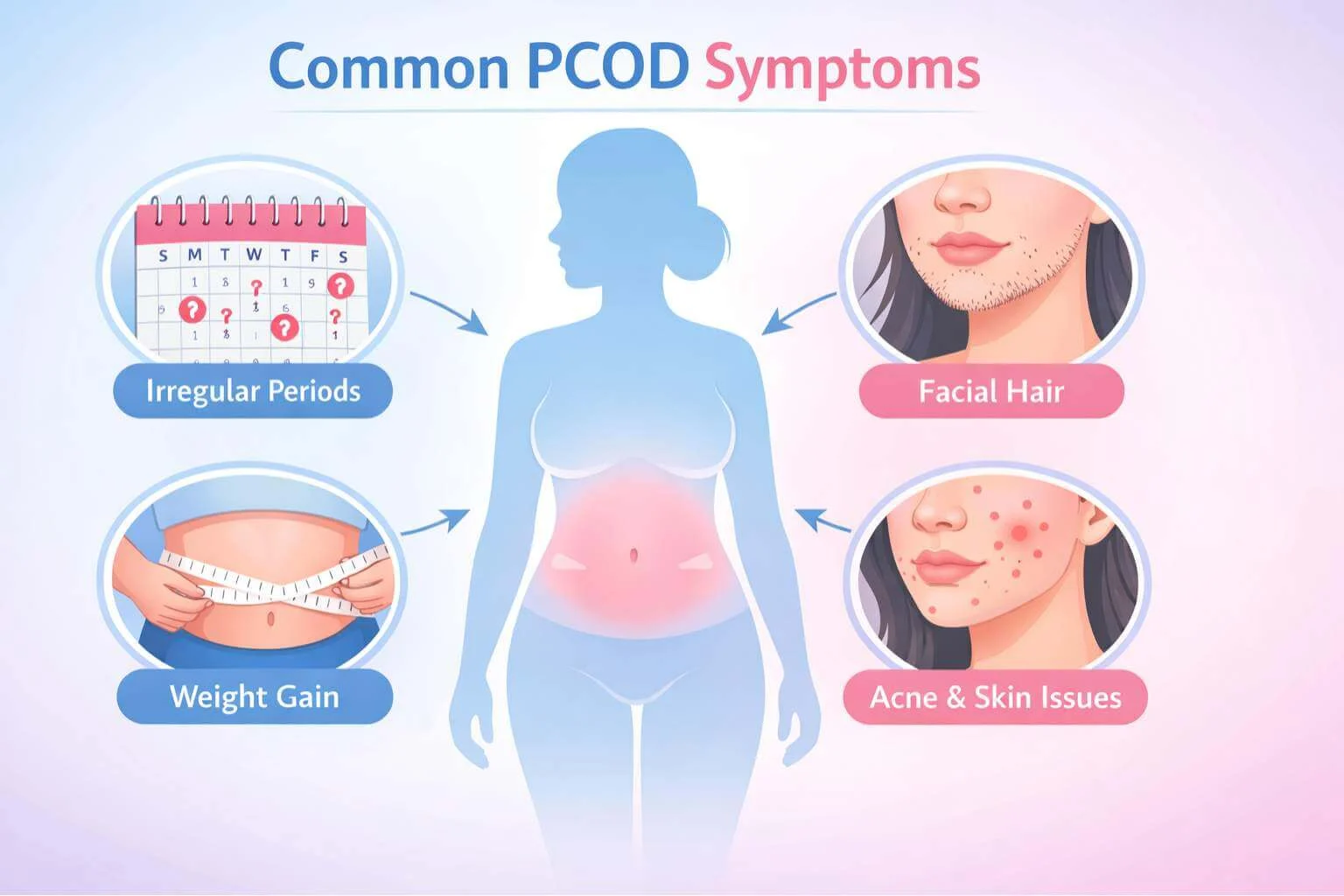
Menstrual Irregularities
Fewer than 9 periods a year, cycles longer than 35 days, very heavy bleeding, or completely missed periods. This is the most common sign of PCOD.
Excess Hair Growth (Hirsutism)
Unwanted hair on the face, chin, chest, back, and abdomen due to elevated androgen (male hormone) levels. Affects up to 70% of women with PCOD.
Weight Gain
Sudden or gradual weight gain, especially around the belly area. Difficulty losing weight despite diet and exercise is very common with PCOD.
Acne & Skin Changes
Persistent acne on the face, chest, and upper back. Dark patches of skin (acanthosis nigricans) around the neck, groin, and under breasts. Skin tags.
Hair Thinning
Thinning hair on the scalp or female-pattern hair loss, caused by the same excess androgens that cause body hair growth.
Emotional & Mental Health
Mood swings, anxiety, depression, and low self-esteem. About 34% of women with PCOD also experience depression, and nearly 45% report anxiety.
When to see a doctor: If you have at least two of these symptoms — especially irregular periods combined with weight gain or excess hair growth — you should consult a gynaecologist for evaluation. Early diagnosis makes management much easier.
What Causes PCOD Problem in Females?
The exact cause of the PCOD problem is not fully understood by medical science. However, research has identified several key factors that contribute to its development. In most cases, PCOD results from a combination of these factors rather than any single cause.
Hormonal Imbalance and Excess Androgens
The ovaries normally produce small amounts of androgens (often called male hormones). In women with PCOD, the ovaries produce higher-than-normal amounts of androgens like testosterone. This excess disrupts the normal ovulation process — eggs don't mature properly and instead accumulate as cysts in the ovaries. The result is irregular periods, acne, and excess hair growth.
Insulin Resistance
Insulin is a hormone produced by the pancreas that helps your body convert blood sugar (glucose) into energy. In many women with PCOD, the body's cells don't respond properly to insulin — a condition called insulin resistance. When this happens, the body produces even more insulin to compensate. High insulin levels then trigger the ovaries to produce excess androgens, creating a vicious cycle. Research suggests that up to 85% of women with PCOD/PCOS have some degree of insulin resistance.
Genetic and Family History
PCOD tends to run in families. If your mother, sister, or other close female relative has PCOD or PCOS, your risk of developing the condition is significantly higher. Recent studies have identified specific genetic sequences linked to hormonal imbalances and insulin resistance that may predispose certain women to PCOD.
Lifestyle Factors
Modern lifestyle plays a major role in triggering or worsening PCOD, particularly in urban Indian women. Key lifestyle factors include poor diet (excess processed foods, refined carbs, and sugary drinks), sedentary behaviour (long hours of sitting, lack of regular physical activity), chronic stress (work pressure, sleep deprivation, emotional stress), and environmental factors (exposure to endocrine-disrupting chemicals). These factors don't directly cause PCOD, but they can worsen insulin resistance and hormonal imbalances, making symptoms worse.
Low-Grade Chronic Inflammation
Research shows that women with PCOD often have low-grade chronic inflammation in their bodies. This inflammation stimulates the ovaries to produce more androgens, worsens insulin resistance, and increases the risk of cardiovascular complications over time. Inflammatory markers like C-reactive protein (CRP) are often elevated in women with PCOD.
How is PCOD Diagnosed?
Getting an accurate diagnosis is the first and most important step toward managing PCOD effectively. Your gynaecologist will use a combination of symptom assessment, physical examination, blood tests, and imaging to diagnose PCOD.
Symptom Assessment & Physical Exam
Your doctor will review your menstrual history, symptoms, weight changes, and family history. A physical examination checks for signs like excess hair growth, acne, skin changes, and body mass index (BMI).
Blood Tests (Hormone Panel)
Key blood tests include LH and FSH levels (LH:FSH ratio), total and free testosterone, Anti-Müllerian Hormone (AMH), thyroid function (TSH, T3, T4), fasting insulin and glucose levels, lipid profile, and prolactin. These help confirm hormonal imbalances and rule out other conditions.
Pelvic Ultrasound
A transvaginal or abdominal ultrasound examines the ovaries for the presence of multiple small cysts (typically 12 or more follicles per ovary) and measures the uterine lining thickness. Note: Not all women with PCOD have visible cysts — ultrasound alone does not confirm or rule out PCOD.
Rotterdam Criteria (Diagnosis Standard)
Doctors typically use the Rotterdam Criteria to diagnose PCOD/PCOS. A diagnosis is confirmed if you have at least 2 of 3 signs: irregular or absent ovulation, elevated androgen levels (clinical or blood test), and polycystic ovaries on ultrasound — after ruling out other conditions like thyroid disorders.
PCOD Treatment Options
The treatment for the PCOD problem depends on your specific symptoms, severity, age, and whether you are trying to conceive. Treatment typically combines lifestyle modifications with medication when needed. The goal is to manage symptoms, regulate hormones, and prevent long-term complications.
Lifestyle and Diet Changes (First Line of Treatment)
For the majority of women with PCOD, lifestyle modifications are the most effective first step — and in many cases, they are sufficient on their own. Even a 5–10% reduction in body weight can significantly improve hormone levels, restore regular ovulation, and reduce symptoms. Key lifestyle changes include regular physical activity (at least 150 minutes per week of moderate exercise like walking, swimming, or yoga), a balanced, low-glycemic index diet, stress management through meditation, yoga, or counselling, adequate sleep (7–8 hours per night), and reducing intake of processed foods, refined sugars, and excess caffeine.
Medications for PCOD
When lifestyle changes alone are not sufficient, your doctor may prescribe medications tailored to your symptoms:
- Metformin — Reduces insulin resistance, helps with weight management, and can restore ovulation. One of the most commonly prescribed medications for PCOD.
- Birth Control Pills (Oral Contraceptives) — Contain estrogen and progestin to regulate the menstrual cycle, reduce androgen levels, and help with acne and excess hair growth.
- Progestin Therapy — Prescribed for women with absent periods (amenorrhea) to induce menstrual cycles and protect the uterine lining from thickening.
- Anti-Androgen Medications — Such as Spironolactone, to reduce excess hair growth, acne, and scalp hair thinning caused by elevated androgens.
Fertility Treatment for PCOD
If you are trying to conceive, your fertility specialist may recommend specific ovulation-inducing medications and procedures, including Letrozole (currently considered the first-line ovulation induction agent for PCOD), Clomiphene Citrate to stimulate the ovaries to release eggs, Gonadotropin injections (FSH) for cases that don't respond to oral medications, Laparoscopic Ovarian Drilling (LOD) — a minimally invasive surgical procedure to reduce androgen production and restore ovulation, and IUI (Intrauterine Insemination) or IVF (In Vitro Fertilisation) for women who need additional assistance. Learn more about laparoscopic surgery options at Arka Anugraha Hospital.
PCOD Treatment Cost in Bangalore
Understanding the cost of PCOD treatment helps you plan your healthcare budget. Here is an estimated breakdown of PCOD diagnosis and treatment costs in Bangalore. Costs may vary based on the hospital, doctor, and specific treatment plan.
| Treatment / Test | Estimated Cost |
|---|---|
| Gynaecologist Consultation | ₹500 – ₹1,500 |
| Hormone Blood Tests (LH, FSH, Testosterone, Thyroid, AMH) | ₹2,000 – ₹5,000 |
| Pelvic Ultrasound | ₹800 – ₹2,000 |
| Fasting Insulin & Glucose Test | ₹500 – ₹1,000 |
| Metformin (per month) | ₹100 – ₹300 |
| Birth Control Pills (per month) | ₹200 – ₹600 |
| Letrozole / Clomiphene (per cycle) | ₹500 – ₹1,500 |
| Lifestyle / Diet Counselling (per session) | ₹500 – ₹2,000 |
| Laparoscopic Ovarian Drilling (if needed) | ₹40,000 – ₹80,000 |
| IUI (per cycle) | ₹10,000 – ₹20,000 |
| IVF (if needed for fertility) | ₹1,50,000 – ₹3,00,000 |
Note: At Arka Anugraha Hospital, we believe in transparent pricing and ethical care. We recommend only necessary tests and treatments — no unnecessary procedures or inflated bills. Contact us for an accurate cost estimate based on your specific needs.
Long-Term Complications of Untreated PCOD
While PCOD itself is not dangerous, leaving it untreated or unmanaged over a long period can increase the risk of several serious health complications. This is why early diagnosis and consistent management are so important.
Potential long-term complications include type 2 diabetes (insulin resistance worsens over time — studies show nearly 50% of women with untreated PCOD may develop prediabetes or diabetes by age 40), cardiovascular disease (elevated cholesterol, high blood pressure, and chronic inflammation increase heart disease risk), endometrial cancer (when ovulation does not occur regularly, the uterine lining thickens, increasing the risk of endometrial hyperplasia and cancer), infertility (irregular or absent ovulation makes it difficult to conceive without treatment), sleep apnea (especially in women who are overweight), depression and anxiety (hormonal imbalances and the physical symptoms of PCOD significantly affect mental health), and non-alcoholic fatty liver disease (NAFLD) (linked to insulin resistance and metabolic dysfunction).
The good news: All of these complications are preventable with early intervention. Regular monitoring, a healthy lifestyle, and working with a trusted endocrinologist or gynaecologist can significantly reduce your risk.
PCOD Diet: Foods to Eat and Avoid
Diet plays a critical role in managing the PCOD problem. A well-planned, low-glycemic index (GI) diet can help regulate insulin levels, reduce inflammation, manage weight, and improve hormonal balance. Here is a clear breakdown of what to eat and what to avoid.
✅ Foods to Eat
- Whole grains — brown rice, oats, quinoa, millets (ragi, jowar)
- Green leafy vegetables — spinach, kale, methi, broccoli
- Lean proteins — chicken, fish, eggs, tofu, lentils (dal)
- Healthy fats — nuts, seeds (flax, chia), olive oil, avocado
- Anti-inflammatory foods — turmeric, ginger, berries, green tea
- High-fibre fruits — apples, pears, oranges (whole, not juiced)
- Fermented foods — curd, buttermilk, idli, dosa
❌ Foods to Avoid
- Refined carbs — white bread, maida, white rice, pasta
- Sugary foods & drinks — soda, packaged juices, sweets, cake
- Processed & packaged foods — chips, biscuits, instant noodles
- Fried foods — samosa, pakora, deep-fried snacks
- Excess dairy — full-fat milk, paneer, cheese (in large amounts)
- Red meat & processed meat — sausages, bacon, salami
- Excess caffeine & alcohol
Diet tip: Focus on eating small, frequent meals throughout the day rather than 2–3 large meals. This helps maintain steady blood sugar levels and reduces insulin spikes. Pair every meal with a source of protein and healthy fat to slow glucose absorption.
Can PCOD Be Cured Permanently?
This is one of the most frequently searched questions about PCOD — and the honest answer is: PCOD cannot be "cured" permanently in the traditional sense, because it is a hormonal condition influenced by genetics, metabolism, and lifestyle rather than a one-time disease caused by an infection or injury.
However, the PCOD problem can be managed so effectively that many women become completely symptom-free and live entirely normal lives. With the right combination of a healthy, anti-inflammatory diet, regular exercise (150+ minutes per week), weight management (even a 5% weight reduction can restore ovulation), stress management and adequate sleep, and medication when prescribed by your doctor, most women experience significant improvement — regular periods return, weight becomes manageable, skin clears up, and fertility improves. In milder cases of PCOD, lifestyle changes alone can eliminate symptoms entirely without the need for long-term medication.
How Arka Anugraha Hospital Treats PCOD
At Arka Anugraha Hospital in JP Nagar, Bangalore, we take a comprehensive, patient-centred approach to diagnosing and managing PCOD. Our team of experienced specialists — including gynaecologists, endocrinologists, and nutritionists — work together to create a personalised treatment plan for every patient.
Here is what you can expect when you visit us:
Detailed Consultation
In-depth discussion of your symptoms, menstrual history, lifestyle, and health goals with our senior gynaecologist, Dr. Saraswati Ramesh (40+ years experience).
Accurate Diagnosis
Comprehensive hormone blood tests and pelvic ultrasound using our advanced diagnostic lab and imaging facilities.
Personalised Treatment Plan
A tailored combination of lifestyle guidance, diet planning, and medication (only when necessary) — designed around your specific symptoms and goals.
Long-Term Follow-Up
Regular monitoring through in-hospital visits or tele-consultation to track progress, adjust treatment, and prevent complications.
We focus on ethical, transparent care — no unnecessary tests, no inflated bills. Just honest medical guidance and long-term support to help you manage PCOD effectively.
Take the First Step Toward Hormonal Balance
PCOD is manageable. Our expert gynaecologists at Arka Anugraha Hospital, Bangalore are here to help you with accurate diagnosis, personalised treatment, and long-term support.
Call: +91 90197 04252Book Appointment Online
Frequently Asked Questions About PCOD
This article was medically reviewed by Dr. Saraswati Ramesh, Senior Obstetrician & Gynaecologist at Arka Anugraha Hospital, Bangalore. Last updated: February 2026.