
Symptoms of Piles in Female: 7 Warning Signs Every Woman Must Know
Piles (haemorrhoids) affect up to 40% of Indian women — yet most suffer in silence. Learn to recognise the early signs, understand pregnancy-related piles, and know exactly when to seek treatment. A doctor-reviewed guide by Arka Anugraha Hospital, Bangalore.
What Are Piles and Why Do Women Get Them?
Piles, medically known as haemorrhoids, are swollen and inflamed blood vessels in the rectum and around the anus. Think of them as similar to varicose veins — except they develop in a far more sensitive part of the body. While both men and women can develop piles, women face several unique risk factors that make them more susceptible to this condition.
In India, studies suggest that nearly 40% of the adult population may experience piles at some point, and women are disproportionately affected due to pregnancy, childbirth, and hormonal fluctuations. Understanding the symptoms of piles in female patients early can make the difference between simple lifestyle management and needing surgical intervention.
Causes of Piles in Women
Several factors specific to women's health contribute to the development of haemorrhoids:
- Pregnancy: The growing uterus puts increasing pressure on pelvic blood vessels, especially in the second and third trimesters. This is the single most common cause of piles in women.
- Childbirth: The intense straining during vaginal delivery can cause new piles or worsen existing ones significantly.
- Hormonal changes: Fluctuations in oestrogen and progesterone during menstruation, pregnancy, and menopause can weaken blood vessel walls and cause constipation.
- Chronic constipation: A low-fibre diet, inadequate water intake, or ignoring the urge to pass stool all lead to straining — a primary trigger for piles.
- Prolonged sitting: Women with desk jobs or sedentary lifestyles experience reduced blood flow to the pelvic region.
- Obesity: Excess body weight increases pressure on the pelvic veins, raising the risk of haemorrhoid development.
Key takeaway: Women are at higher risk of developing piles due to pregnancy, hormonal changes, and childbirth. Early recognition of symptoms is essential for effective, non-surgical management.

Types and Grades of Piles in Females
Understanding the type and grade of piles helps determine the most appropriate treatment. Piles are classified based on their location and severity.
Internal Piles vs. External Piles in Women
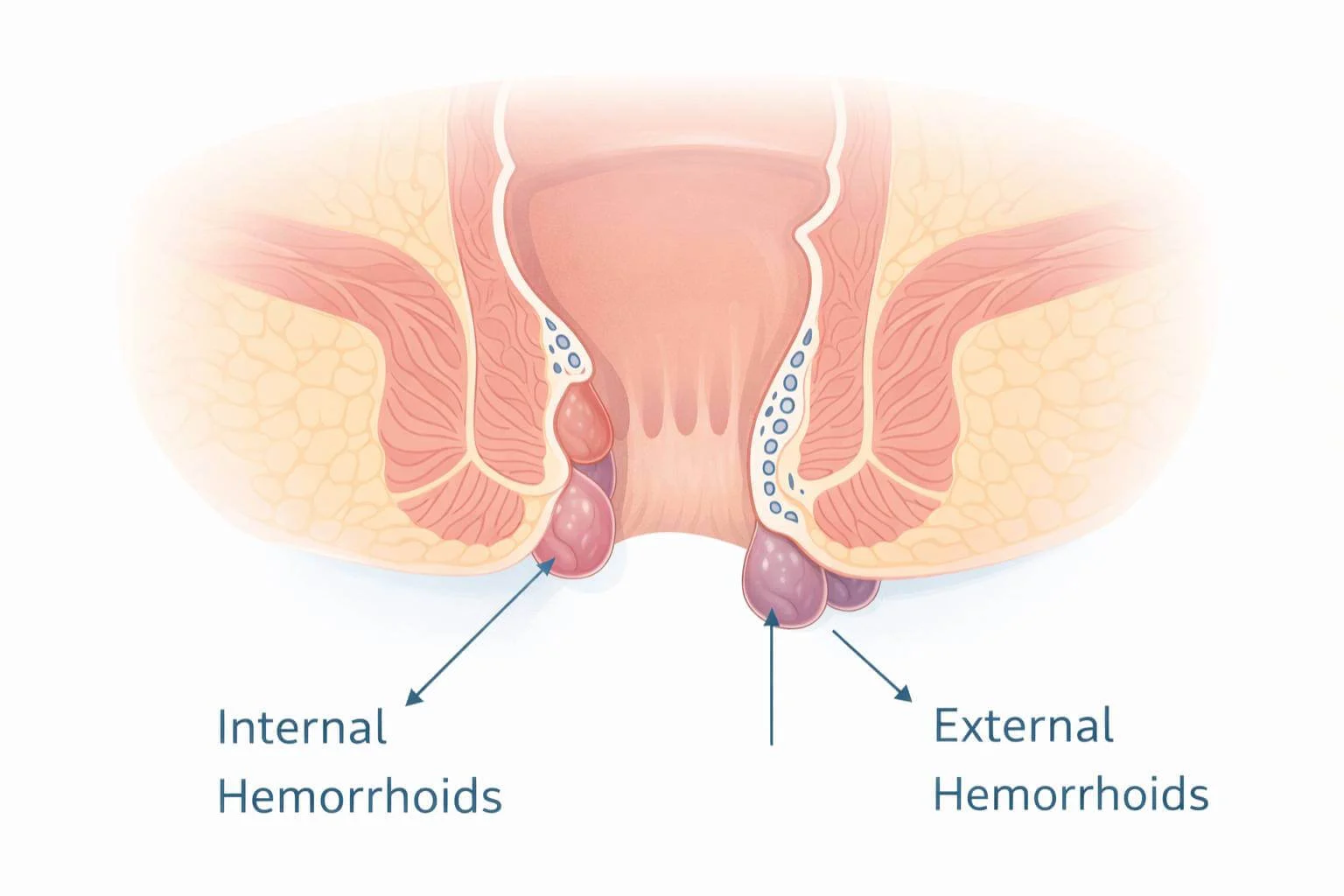
Internal piles develop inside the rectum, above the dentate line. They are usually painless but may cause bleeding during bowel movements. Women may not even realise they have internal piles until they see bright red blood on toilet paper.
External piles form under the skin around the anus and are visible as small lumps. They tend to be more painful than internal piles, especially when sitting, walking, or during bowel movements. External haemorrhoids in women can sometimes develop blood clots (thrombosed haemorrhoids), causing sudden, severe pain.
4 Grades of Haemorrhoids
| Grade | Description | Symptoms in Females | Treatment Approach |
|---|---|---|---|
| Grade 1 | Small swelling inside the anal canal; not visible externally | Painless bleeding, mild discomfort | Lifestyle changes, fibre supplements |
| Grade 2 | Protrudes during bowel movement but retracts on its own | Bleeding, itching, feeling of incomplete emptying | Medications, rubber band ligation |
| Grade 3 | Protrudes and needs to be pushed back manually | Pain, significant bleeding, mucus discharge | Sclerotherapy, laser treatment |
| Grade 4 | Permanently prolapsed; cannot be pushed back | Severe pain, continuous discomfort, possible thrombosis | Surgical removal (hemorrhoidectomy) |
7 Key Symptoms of Piles in Females
Recognising the symptoms of piles in female patients early is crucial for timely treatment. Here are the seven most common signs that every woman should watch for:
Rectal Bleeding
Bright red blood on toilet paper, in the toilet bowl, or on the surface of stool is the most common early symptom. The bleeding is usually painless with internal piles and occurs during or after bowel movements.
Pain and Discomfort
External piles cause pain ranging from a dull ache to sharp discomfort — especially while sitting, walking, or passing stool. Many women describe it as feeling like sitting on a small hard object.
Itching and Irritation
Persistent anal itching is caused by mucus discharge and moisture around the anus. This is one of the most bothersome piles symptoms in women, often worsening at night or after prolonged sitting.
Lumps Near the Anus
You may feel soft, grape-sized lumps around the anal opening. With external piles, these are visible bumps. Internal piles may prolapse (push through the opening), especially during bowel movements.
Mucus Discharge
A slimy, clear mucus discharge from the anus can make hygiene difficult. This discharge may stain undergarments and contribute to continuous itching and skin irritation in the anal area.
Feeling of Incomplete Emptying
Internal haemorrhoids can create a persistent sensation that you haven't fully emptied your bowels. This feeling leads to repeated straining, which worsens the condition further.
Burning Sensation
A burning or stinging feeling during and after bowel movements, particularly common with inflamed external piles. The burning may intensify after consuming spicy foods or during menstruation.
If you experience heavy bleeding, sudden severe pain, or a hard, painful lump near the anus, seek medical attention immediately. These may indicate a thrombosed haemorrhoid or another condition that requires urgent evaluation.
Piles During Pregnancy: Symptoms and Safe Management
Pregnancy is one of the most common triggers for haemorrhoids in women. Studies suggest that 35-50% of pregnant women develop piles, particularly during the second and third trimesters. Understanding piles during pregnancy symptoms helps you distinguish normal discomfort from something that needs medical attention.
Why Pregnancy Causes Piles
Multiple pregnancy-related changes work together to increase haemorrhoid risk. The growing uterus puts direct pressure on the inferior vena cava and pelvic blood vessels, slowing blood return from the lower body. Pregnancy hormones — particularly progesterone — relax blood vessel walls, making veins more prone to swelling. The increased blood volume during pregnancy adds extra pressure on all veins. Additionally, constipation is extremely common during pregnancy due to hormonal changes, iron supplements, and reduced physical activity.
Common Pregnancy Piles Symptoms
- Swelling around the anus that worsens as the day progresses
- Increased discomfort during the third trimester as the baby grows
- Rectal bleeding, which may be alarming during pregnancy but is usually benign
- Difficulty sitting comfortably for extended periods
- Constipation that makes symptoms worse with each bowel movement
Safe Home Remedies During Pregnancy
Increase fibre intake — eat papaya, banana, oats, leafy vegetables, and whole grains to keep stools soft.
Drink 10-12 glasses of water daily — proper hydration is essential for preventing constipation during pregnancy.
Warm sitz baths — sit in warm water for 10-15 minutes, 2-3 times daily to reduce swelling safely.
Gentle walking — 20-30 minutes of walking daily improves circulation and promotes regular bowel movements.
Sleep on your left side — this reduces pressure on the rectal veins by improving blood flow from the lower body.
Cold compresses — apply an ice pack wrapped in cloth for 10 minutes to reduce swelling and numb discomfort.
When to see your OB-GYN: Contact your doctor if you experience heavy bleeding, severe pain that interferes with daily activities, signs of infection (fever, redness), or lumps that suddenly become very hard or large. The obstetrics team at Arka Anugraha Hospital can recommend pregnancy-safe treatments.
Piles After Delivery: The Postpartum Period
Many women develop or experience worsened piles after delivery, regardless of whether they had haemorrhoids during pregnancy. The intense pushing during vaginal childbirth puts enormous strain on the pelvic floor and rectal blood vessels.
Why Delivery Causes or Worsens Piles
During the pushing stage of labour, pressure in the anal and rectal blood vessels increases dramatically. The longer the pushing phase, the greater the risk. C-section deliveries carry a lower risk but can still cause piles due to pregnancy-related pressure. Postpartum constipation — often from pain medications, dehydration, or fear of straining after delivery — further aggravates the condition.
Postpartum Piles Relief Tips
- Sitz baths: Sit in warm water for 10-15 minutes, several times daily — this is the most effective home remedy.
- Ice packs: Apply for 10 minutes at a time to reduce swelling and provide numbing relief.
- Donut cushion: Use a ring-shaped pillow when sitting to take pressure off the affected area.
- Stay hydrated: Drink extra water, especially if breastfeeding, to prevent hard stools.
- Stool softeners: Ask your doctor about safe stool softeners to reduce straining.
- Gentle cleansing: Use fragrance-free wet wipes or a peri-bottle instead of dry toilet paper.
If you are breastfeeding, always check with your doctor before using any topical creams or oral medications for piles. Dr. Saraswati Ramesh at Arka Anugraha Hospital specialises in women's health and can recommend breastfeeding-safe treatment options.
Piles vs. Fissure in Women: How to Tell the Difference
Many women confuse piles with anal fissures because both conditions involve the anal area and share some overlapping symptoms. However, the two conditions are fundamentally different and require different treatment approaches.
| Feature | Piles (Haemorrhoids) | Anal Fissure |
|---|---|---|
| What it is | Swollen blood vessels | Small tear in anal lining |
| Pain type | Dull ache, pressure, itching | Sharp, cutting pain during stool |
| Bleeding | Painless, bright red drops | Small amount with intense pain |
| Lumps | Visible lumps around anus | No lumps typically |
| Itching | Common and persistent | Less common |
| Main trigger | Straining, pregnancy, sitting | Hard stools, constipation |
If you are unsure whether your symptoms indicate piles or a fissure, a proper examination by a gastroenterologist like Dr. Gaurang Ramesh can give you a definitive diagnosis.
When Should a Woman See a Doctor for Piles?
While mild piles often resolve with home care, certain symptoms of piles in female patients require prompt medical evaluation. Do not delay consulting a doctor if you experience any of the following:
- Persistent rectal bleeding — especially if it lasts more than a few days or is heavy
- Severe pain that does not improve with over-the-counter remedies or sitz baths
- A hard, painful lump near the anus (may indicate thrombosed haemorrhoid)
- Signs of infection — fever, redness, pus, or increasing warmth around the anus
- Symptoms lasting more than 2 weeks despite home treatment
- Changes in bowel habits — new onset constipation or diarrhoea lasting more than a few days
- Age over 40 with rectal bleeding — to rule out more serious conditions like colorectal issues
At Arka Anugraha Hospital, we provide a private, comfortable environment for women to discuss sensitive symptoms. Our team includes experienced GI surgeon Dr. Ramesh Makam (45+ years experience) and gynaecologist Dr. Saraswati Ramesh (40+ years experience) who specialise in treating women with piles.
Treatment Options and Cost of Piles Treatment in Bangalore
Treatment for piles depends on the grade, severity of symptoms, and the patient's overall health. At Arka Anugraha Hospital — rated among the best hospitals for piles in Bangalore — we follow a step-by-step approach, starting with the least invasive option.
Non-Surgical Treatments (Grade 1 & 2)
- Lifestyle modifications: High-fibre diet, increased water intake, regular exercise
- Topical medications: Haemorrhoid creams, suppositories, and witch hazel pads
- Rubber band ligation: A small rubber band is placed around the base of the pile to cut off blood supply
- Sclerotherapy: A chemical solution is injected to shrink the haemorrhoid
- Infrared coagulation: Heat is used to shrink internal haemorrhoids
Surgical Treatments (Grade 3 & 4)
- Laser haemorrhoid treatment: Minimally invasive with faster recovery
- Stapled hemorrhoidopexy: Repositions prolapsed piles using a circular stapler
- Hemorrhoidectomy: Complete surgical removal for severe cases
Piles Treatment Cost in Bangalore (2026 Estimates)

| Treatment | Estimated Cost (₹) | Recovery Time | Insurance |
|---|---|---|---|
| Doctor Consultation | ₹500 – ₹1,500 | – | Usually not covered |
| Rubber Band Ligation | ₹5,000 – ₹15,000 | 1-2 days | May be covered |
| Sclerotherapy | ₹8,000 – ₹20,000 | 1-2 days | May be covered |
| Laser Piles Treatment | ₹35,000 – ₹60,000 | 2-3 days | Covered |
| Stapled Hemorrhoidopexy | ₹40,000 – ₹70,000 | 3-5 days | Covered |
| Open Hemorrhoidectomy | ₹25,000 – ₹50,000 | 2-4 weeks | Covered |
Note: Costs are approximate and may vary based on severity, hospital stay, and individual requirements. Arka Anugraha Hospital offers transparent pricing and helps with insurance processing.
How to Prevent Piles: Tips Specifically for Women
Prevention is always better than treatment. The following habits can significantly reduce your risk of developing piles — or prevent them from recurring if you have already experienced them.
Dietary Changes for Piles Prevention
- Eat 25-30 grams of fibre daily from fruits (papaya, guava, apple with skin, banana), vegetables (spinach, broccoli, beans, carrots), and whole grains (oats, brown rice, ragi, whole wheat roti).
- Drink 8-10 glasses of water daily — more if you are pregnant or breastfeeding.
- Include probiotics like curd, buttermilk, or fermented foods for healthy gut function.
- Limit excessive tea, coffee, and spicy foods, which can irritate the digestive tract.
Healthy Bathroom Habits
- Never ignore the urge to pass stool — delaying leads to harder stools and more straining.
- Limit toilet time to 5-10 minutes — avoid scrolling your phone or reading on the toilet.
- Do not strain or hold your breath while passing stool.
- Consider using a squatting position or a toilet stool to align the rectum for easier passage.
Exercise and Lifestyle
- Walk for at least 30 minutes daily — this improves blood circulation and promotes regular bowel movements.
- Practice yoga and pelvic floor exercises (Kegel exercises) to strengthen the muscles that support the rectum.
- If you have a desk job, stand up and move every 60 minutes.
- Maintain a healthy BMI — excess weight puts additional pressure on pelvic veins.
Common Myths About Piles in Women — Busted
Frequently Asked Questions
Experiencing Symptoms of Piles?
Don't suffer in silence. Our experienced doctors at Arka Anugraha Hospital provide compassionate, private consultations with transparent treatment plans.
Arka Anugraha Hospital, JP Nagar Phase 6, Bengaluru — 560078