
Types & Stages of Piles Explained: A Complete Guide by Arka Anugraha Hospital
What Are Piles and Why Should You Care?
Piles, also called hemorrhoids, are swollen blood vessels in and around your bottom area. If you have been experiencing pain, bleeding, or discomfort when passing stools, you might be dealing with piles. This condition affects millions of people worldwide, yet many feel too embarrassed to seek help.
At Arka Anugraha Hospital in Bangalore, we understand that talking about piles can feel uncomfortable. However, knowing about the different types of piles and their stages is the first step toward getting proper treatment and relief. This guide will help you understand everything about piles in simple, easy-to-understand language.
Understanding the Different Types of Piles
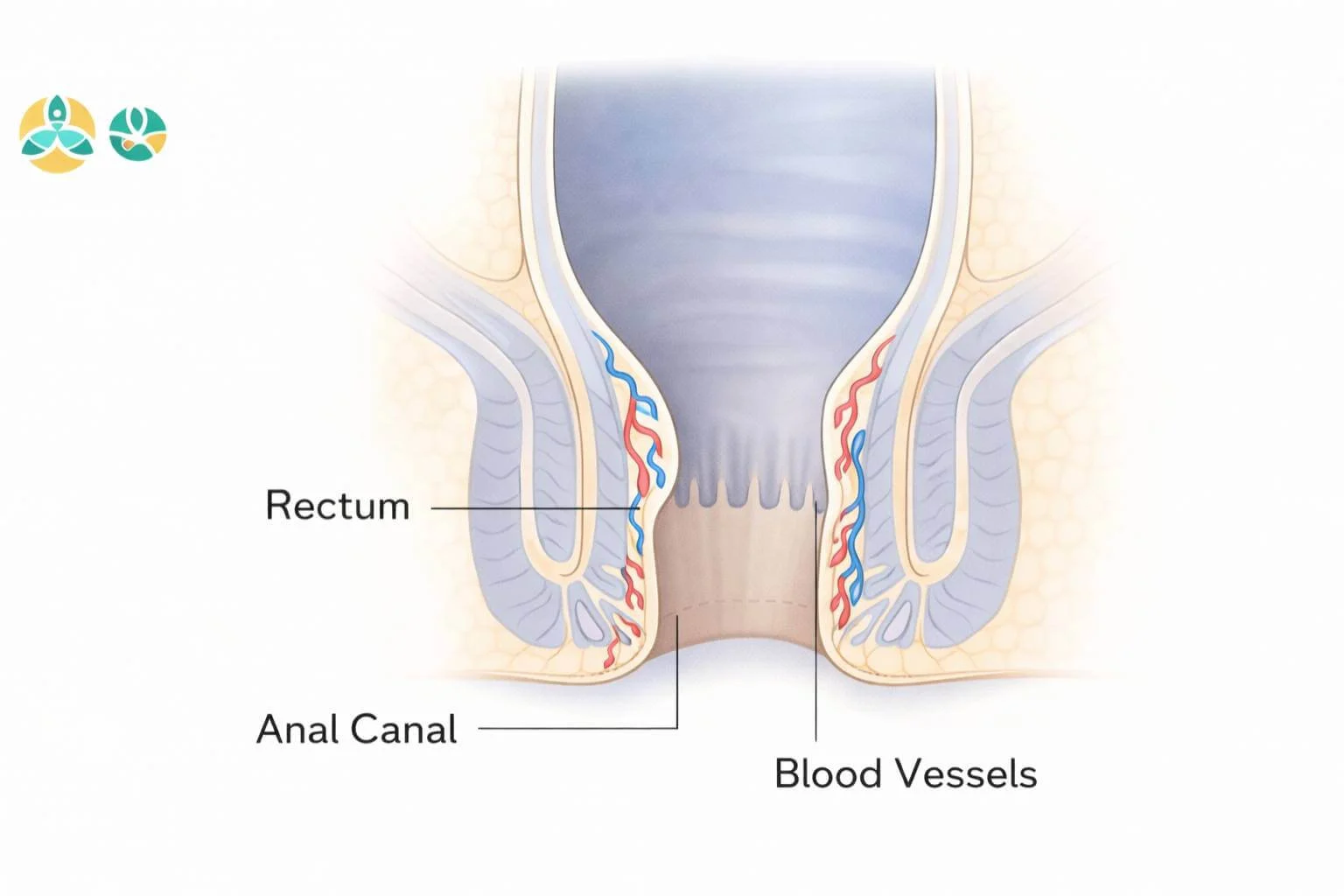
Before we discuss the stages, it is important to know that there are different types of piles. The location of the swollen blood vessels determines what type you have.
What Are Internal Piles?
Internal piles develop inside your rectum. Because they form inside, you usually cannot see or feel them. They often do not hurt in the early stages.
Main signs:
- Bright red blood on toilet paper
- Feeling of incomplete bowel emptying
- A lump that hangs out (advanced stages)
- Mucus discharge
- Little to no pain
What Are External Piles?
External piles develop under the skin around your anus. You can usually see and feel them as lumps or swellings. They can be quite painful.
Main signs:
- Visible lumps or swelling
- Itching or irritation
- Pain or discomfort, especially when sitting
- Bleeding when passing stools
- A hard, painful lump (if a clot forms)
Can You Have Both Types of Piles at Once?
Yes, it is quite common to have both internal piles and external piles at the same time. This is called mixed hemorrhoids. When you have both types, you might experience symptoms from both conditions, such as bleeding from internal piles and pain from external piles.
The 4 Stages of Piles: A Detailed Explanation
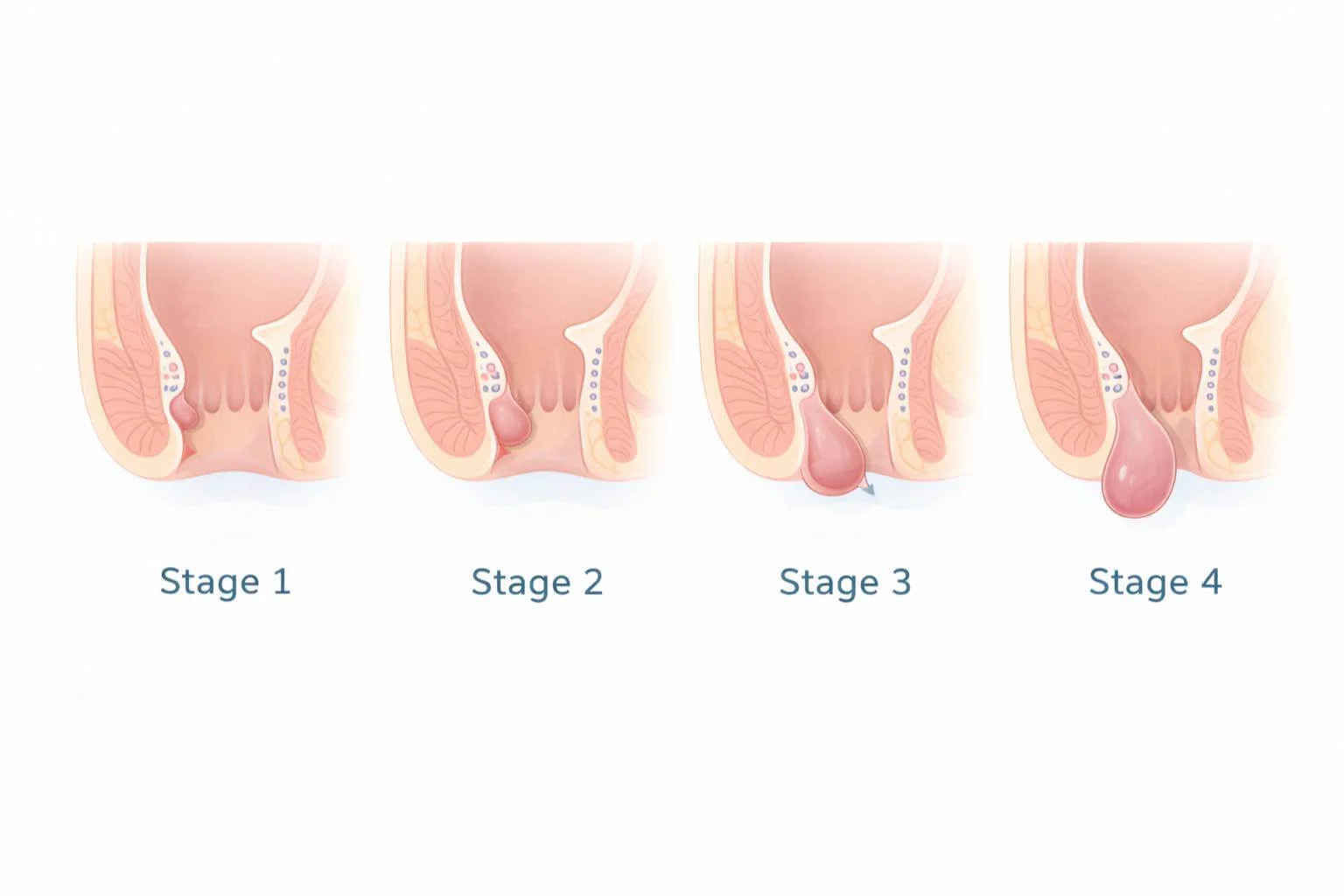
The staging system applies specifically to internal piles. Understanding which stage you are in helps your doctor recommend the most appropriate treatment for your condition.
The Beginning Stage
In stage 1, the piles are small and remain completely inside your rectum. They do not come out through your anus at all. At this early stage, you might not even know you have piles unless you experience some bleeding.
Treatment: Stage 1 piles often improve with simple lifestyle changes like eating more fiber, drinking plenty of water, and using over-the-counter creams.
The Prolapsing Stage
In stage 2, the piles are larger and might come out of your anus when you pass stools or strain. However, they go back inside on their own without you having to push them back.
Treatment: Along with lifestyle changes, your doctor might suggest procedures like rubber band ligation or injection therapy. These are simple procedures done in a clinic.
The Manual Reduction Stage
Stage 3 piles come out of your anus during bowel movements or physical activity, but they do not go back inside on their own. You need to gently push them back inside with your finger.
Treatment: At this stage, non-surgical treatments might not be enough. Your doctor might recommend procedures like stapled hemorrhoidopexy or laser treatment.
The Permanent Prolapse Stage
Stage 4 is the most advanced stage. At this point, the piles stay outside your anus all the time. You cannot push them back inside, no matter how hard you try. They pose a high risk of blood clots and severe pain.
Treatment: Stage 4 piles usually require surgical treatment. Modern techniques like laser hemorrhoidectomy offer faster recovery and less pain.
Piles Stages with Pictures: Visual Understanding
While we cannot show actual medical photographs in this blog, it is helpful to understand what healthcare providers look for when diagnosing the stage of your piles:
- Stage 1: Small cushions of swollen tissue inside the rectum. Nothing is visible from outside.
- Stage 2: Tissue comes out during straining but slides back inside by itself.
- Stage 3: Tissue protrudes out and remains visible. It can be gently pushed back inside.
- Stage 4: Tissue is permanently visible outside. Even with pressure, it will not stay inside.
What Causes Piles to Progress?
Understanding why piles get worse can help you prevent progression. Factors include:
- Chronic straining: Puts pressure on blood vessels.
- Constipation: Hard stools worsen existing piles and cause new ones.
- Prolonged sitting: Puts constant pressure on rectal veins.
- Aging: Supporting tissues weaken over time.
- Pregnancy: Weight of the baby and hormonal changes increase pressure.
- Heavy lifting: Increases abdominal pressure.
- Low-fiber diet: Leads to hard stools and straining.
How to Prevent Piles from Getting Worse
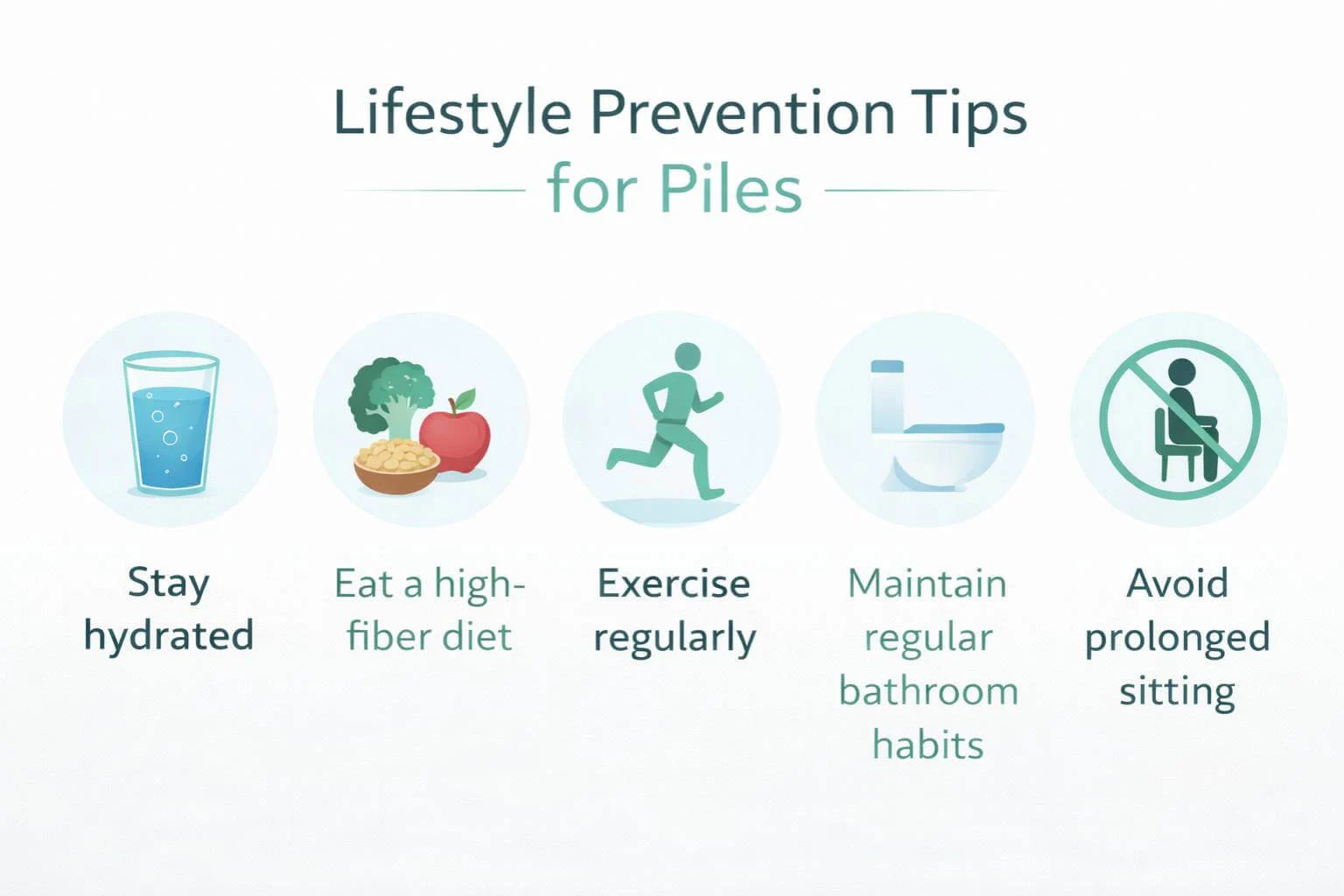
Whether you are in the early stages or want to prevent piles, these tips can help:
- Increase your fiber intake (fruits, vegetables, whole grains).
- Stay well hydrated (at least 8 glasses of water daily).
- Exercise regularly to prevent constipation.
- Do not delay bowel movements; go when you feel the urge.
- Avoid straining on the toilet.
- Maintain a healthy weight.
- Take breaks from sitting every 30-60 minutes.
- Do not read or use your phone while on the toilet.
When Should You Visit a Doctor?
You should visit Arka Anugraha Hospital if you experience:
- Persistent bleeding for more than a week
- Severe pain that interferes with daily activities
- Large prolapse that cannot be pushed back inside
- Unexplained changes in bowel habits
- Signs of infection (fever, pus, increasing pain)
- Lack of improvement after two weeks of home remedies
Modern Treatment Options at Arka Anugraha Hospital
At Arka Anugraha Hospital, we offer a full range of treatments for all types and stages of piles. Our experienced doctors will recommend the most appropriate treatment.
For early-stage piles (Stages 1 and 2):
- Dietary and lifestyle counseling
- Medications
- Rubber band ligation
- Injection sclerotherapy
- Infrared coagulation
For advanced piles (Stages 3 and 4):
- Laser hemorrhoidectomy (painless and quick recovery)
- Stapled hemorrhoidopexy
- Radiofrequency ablation
- Traditional surgical hemorrhoidectomy (when necessary)
Take Control of Your Piles Today
Understanding the types and stages of piles empowers you to take action early. The key is not to suffer in silence or feel embarrassed about seeking help.
At Arka Anugraha Hospital in Bangalore, we treat piles with compassion, expertise, and the latest medical technology. Schedule a consultation with our specialists today and take the first step toward relief.
Book Your Appointment Now